Overview
Jong Jae Kim is a South Korean professional mixed martial artist who represented DK Gym, one of Korea’s better-known regional MMA teams.
Although his professional record consists of only two documented bouts, Jong Jae Kim competed during a period when Korea’s regional MMA scene was rebuilding through local promotions that served as developmental platforms for aspiring professionals. Standing 6 feet tall, he competed primarily in the featherweight division, utilizing a frame that offered natural length against many opponents in the weight class.
Kim made his professional debut in 2015 before returning for his second and final recorded bout in 2021, demonstrating the stop-and-start career path that many regional Korean fighters experience while balancing competition with work, military obligations, or coaching responsibilities. Despite his limited professional résumé, representing DK Gym placed him within a respected training environment that has produced numerous competitors across domestic promotions.
Early Life & Background
Little publicly documented information exists regarding Jong Jae Kim’s upbringing or martial arts background. Like many Korean regional fighters from the mid-2010s, much of his early development occurred outside of widespread media coverage.
Jong Jae Kim eventually joined DK Gym, where he trained alongside active professional competitors and coaches with experience in Korea’s evolving MMA landscape. The gym has established itself as a respected organization that emphasizes well-rounded mixed martial arts fundamentals while producing athletes capable of competing in domestic promotions.
His decision to pursue professional MMA reflected the growing popularity of the sport in South Korea during the 2010s, when organizations such as ROAD FC, TOP FC, and numerous regional promotions expanded opportunities for developing athletes.
Fighting Style
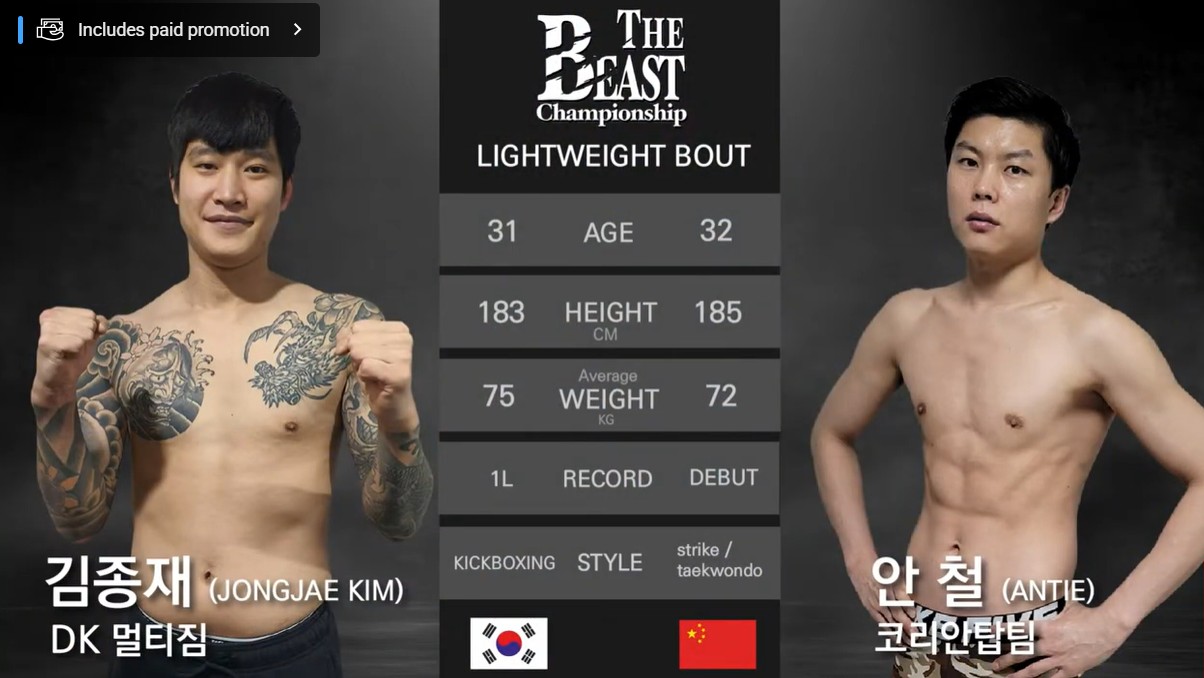
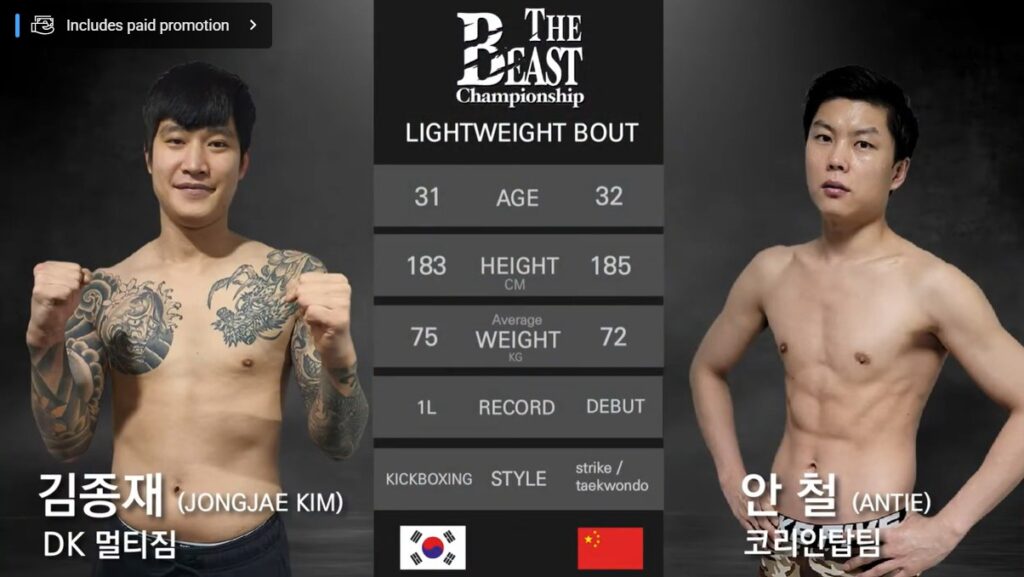
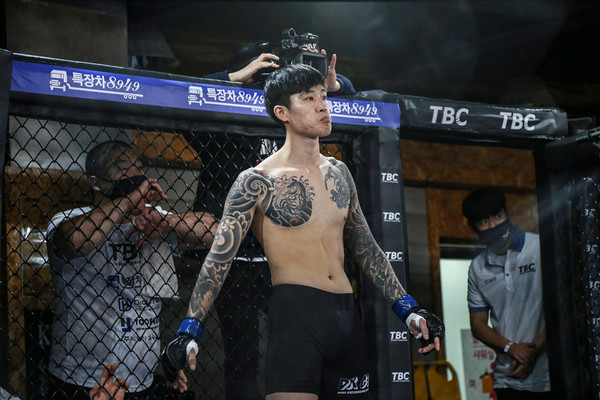
Standing 6’0″ (183 cm), Jong Jae Kim possessed above-average height for a featherweight, providing natural reach advantages despite no official reach measurement being available.
Because of his limited number of professional contests, there is insufficient footage to define a signature technical style. His recorded losses came by rear naked choke and ground-and-pound TKO, suggesting he faced experienced opponents who capitalized during grappling exchanges. While these outcomes do not fully represent his overall abilities, they indicate the challenges faced by newer professionals competing against seasoned regional veterans.
Training under DK Gym likely exposed him to a balanced MMA curriculum that incorporated striking, wrestling, and submission grappling, reflecting the modern approach adopted by many Korean gyms.
Professional Career
Jong Jae Kim made his professional debut on March 28, 2015, competing at Korean All MMA Association 9, where he faced Myung Gu Kim in a lightweight contest. Although he was defeated by first-round TKO via ground-and-pound, the bout marked his introduction to professional mixed martial arts.
Following a lengthy absence from professional competition, Jong Jae Kim returned nearly six years later at The Beast Championship 1 on February 27, 2021. Competing as a featherweight, he faced Chul Ahn and was submitted by rear naked choke during the opening round.
While his professional career concluded with an 0–2 record, Kim’s willingness to continue competing after a long layoff reflects the perseverance common among athletes competing on Korea’s regional circuit, where opportunities can be limited and careers often develop outside the international spotlight.
Career Highlights
- Professional MMA debut at Korean All MMA Association 9 (2015).
- Represented DK Gym, one of South Korea’s established MMA teams.
- Competed professionally in both lightweight and featherweight divisions.
- Returned to professional competition after nearly a six-year hiatus.
- Competed during the developmental era of Korea’s expanding regional MMA scene.
Summary & Trajectory
Jong Jae Kim’s professional record does not fully reflect the dedication required to reach the professional level of mixed martial arts. Like many Korean regional fighters, his documented career consisted of limited opportunities spread over several years rather than a continuous competitive schedule.
Although his time as a professional competitor was brief, his association with DK Gym and willingness to compete in Korea’s regional promotions represent the foundation upon which the country’s MMA ecosystem continues to grow. Fighters with careers similar to Kim’s often contribute to the sport beyond their records by strengthening local gyms, serving as training partners, and helping develop the next generation of Korean talent.
Jong Jae Kim represents one of the many regional professionals who helped build South Korea's MMA scene during its developmental years. While his professional record was limited, reaching the professional level itself reflects years of training and commitment. His experience at DK Gym and participation in domestic promotions make him part of the broader generation of athletes who contributed to the steady growth of Korean mixed martial arts, even if their careers never reached the international stage.
 Sang Kwon Han
 Dae Hwan Kim
 Da Eun Jung