
HANPUNCH EXCLUSIVE — EDITOR GUIDE
Set the post title above, use Excerpt for the cover deck/subtitle, and choose a Featured Image for the cover photograph. Replace the generic labels and placeholders below. This guide is hidden automatically on the published article.
SUBJECT
YOONSEO HA
ROLE
JIU-JITSU BLACK BELT
BASED
SEOUL, SOUTH KOREA
INTERVIEW
SEPTEMBER 2026
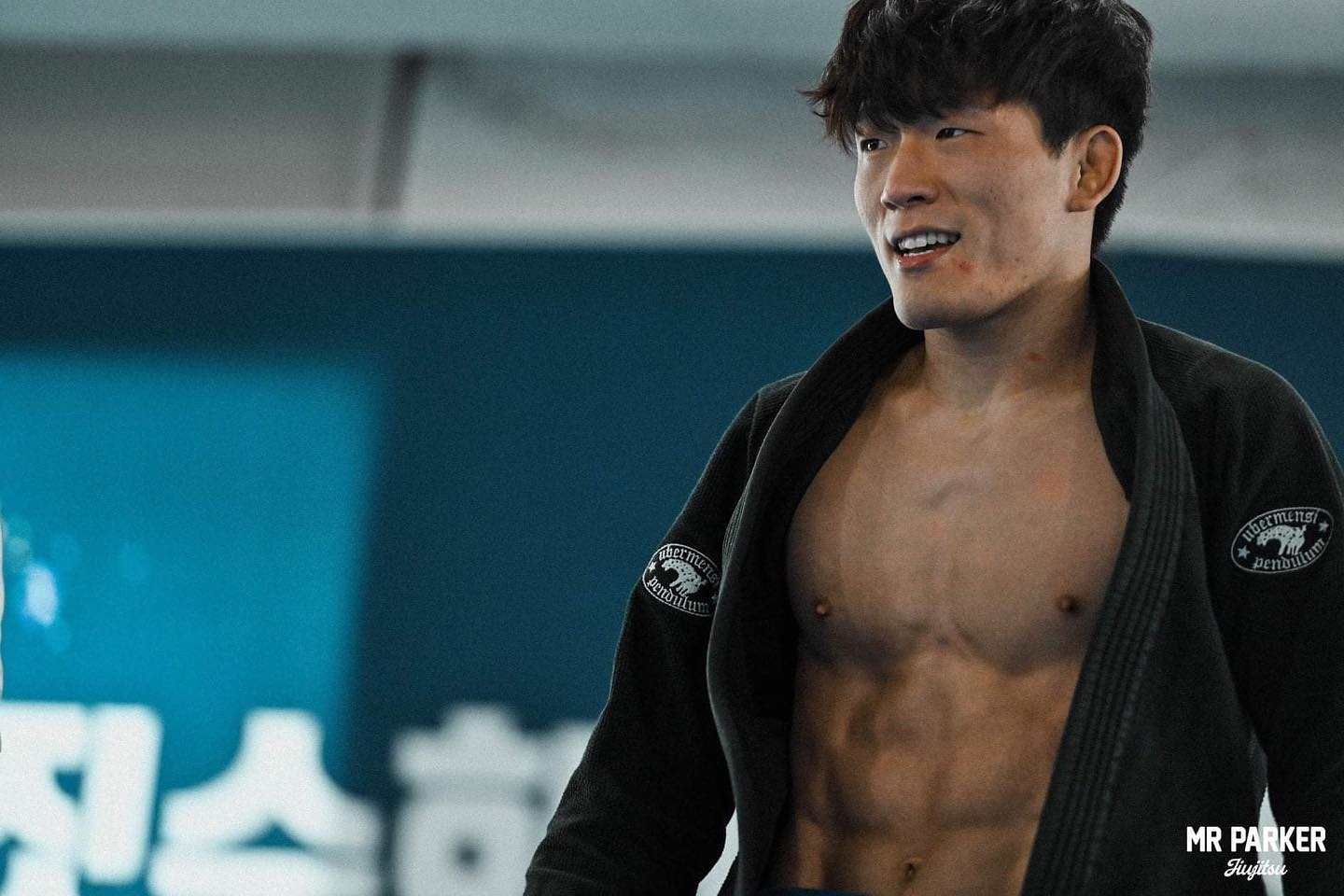
Yoonseo Ha’s competitive career has unfolded across two demanding arenas.
As a member of the Korean National Jiu-Jitsu Team, he competed at the Asian Championship, the Jiu-Jitsu World Championship, and multiple national-team selection tournaments in the men’s –62-kilogram division. His results included first place in the second-round selection tournament for the 2022 Hangzhou Asian Games and a bronze medal at the 2023 Asian Jiu-Jitsu Championship in Thailand.
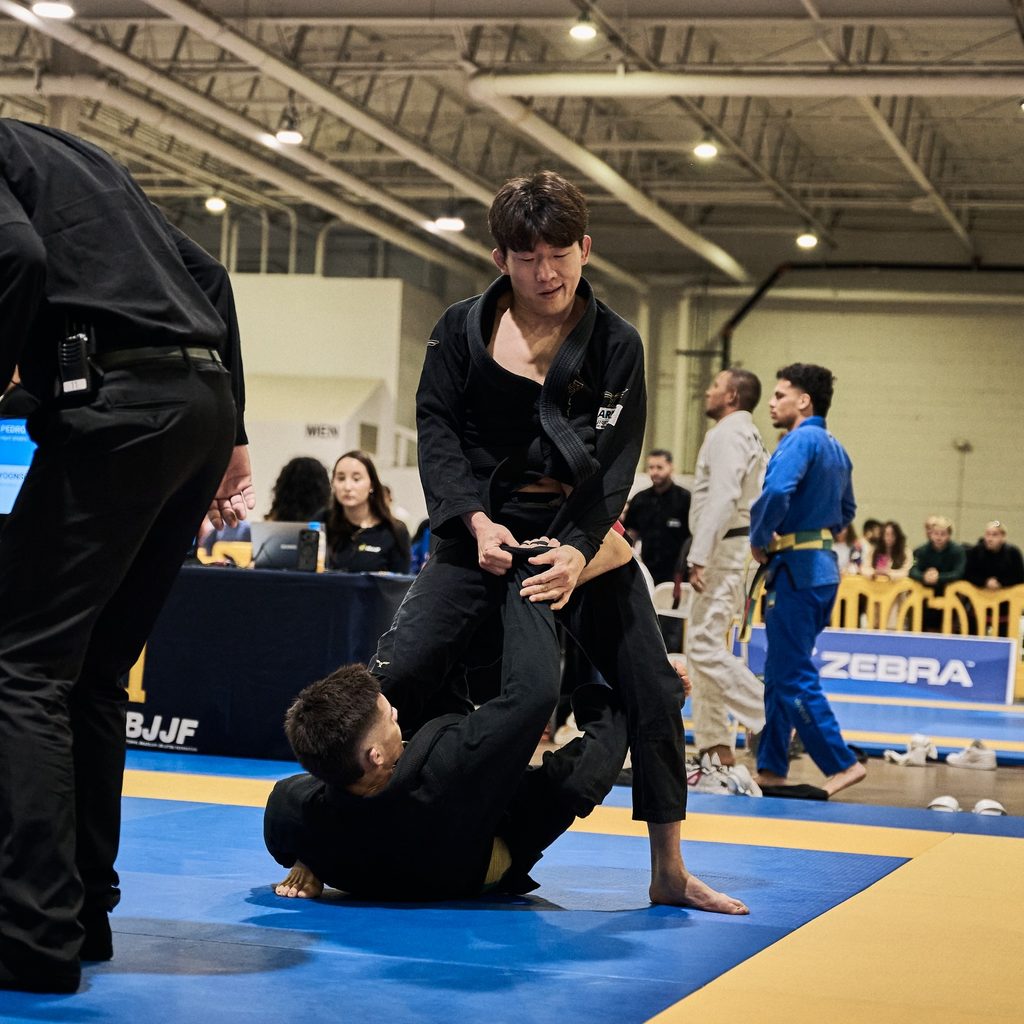
At the same time, Ha continued developing his career within the IBJJF circuit. After reaching the podium as a brown belt at the 2022 Denver International Open, he went on to earn black-belt medals throughout Asia, Europe, Australia, and the United States. His accomplishments include winning the 2024 Pan Pacific No-Gi Championship, placing third at the 2026 Pan Championship, and capturing gold at the 2026 New York Spring International Open.
Those results tell only part of the story. Behind them is an athlete who has experienced national-team pressure, international travel, the unforgiving margins of black-belt competition, and the constant need to evolve.
In this HanPunch Exclusive, Yoonseo Ha reflects on representing South Korea, competing across different rulesets, rebuilding after difficult results, and continuing to pursue the next level of his career.
01 / ORIGIN
BEGINNING THE JIU-JITSU JOURNEY
01. How did your journey in jiu-jitsu begin, and when did you first believe you could compete at an elite level?
I began training in Brazilian Jiu-Jitsu while working as a police officer. I thought learning jiu-jitsu would help me restrain suspects more safely while performing my duties.
At first, I trained hard simply because I enjoyed it. Over time, however, I became increasingly drawn to the sport. Jiu-jitsu helped me grow both physically and mentally, and it became something I wanted to pursue more deeply and challenge myself in.
While serving as a police officer, I continued to train and compete consistently. Then, after jiu-jitsu was added to the Asian Games, a tournament was held to select the athletes who would represent Korea.
I had started jiu-jitsu relatively late, and my police duties prevented me from focusing entirely on training, so I did not enter the tournament with particularly high expectations. However, I earned a place on the podium. That result gave me greater confidence in my ability to compete as an athlete.
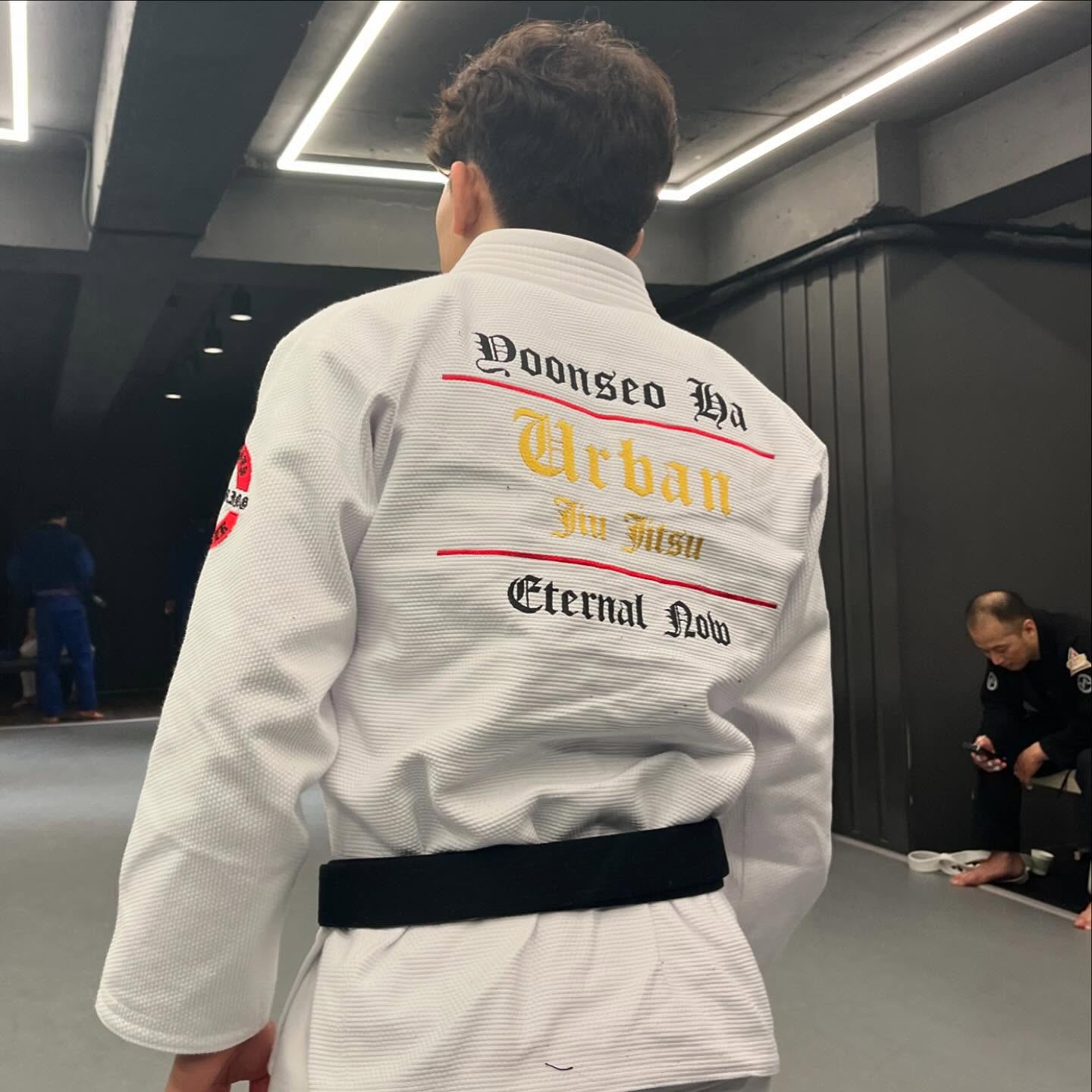
02. Who were the coaches, teammates, or mentors who had the greatest influence on your development?
I have been influenced by everyone I have met through jiu-jitsu, but if I had to name one person, it would be Wan Gi Chae.
Beyond the technical side of jiu-jitsu, I was deeply inspired by his passion for the sport. Watching his dedication continually motivated me to improve.
Jiu-jitsu helped me grow both physically and mentally, and it became something I wanted to pursue more deeply and challenge myself in.
– Yoonseo Ha, Jiu-Jitsu Black Belt
02 / THE STORY
REPRESENTING SOUTH KOREA
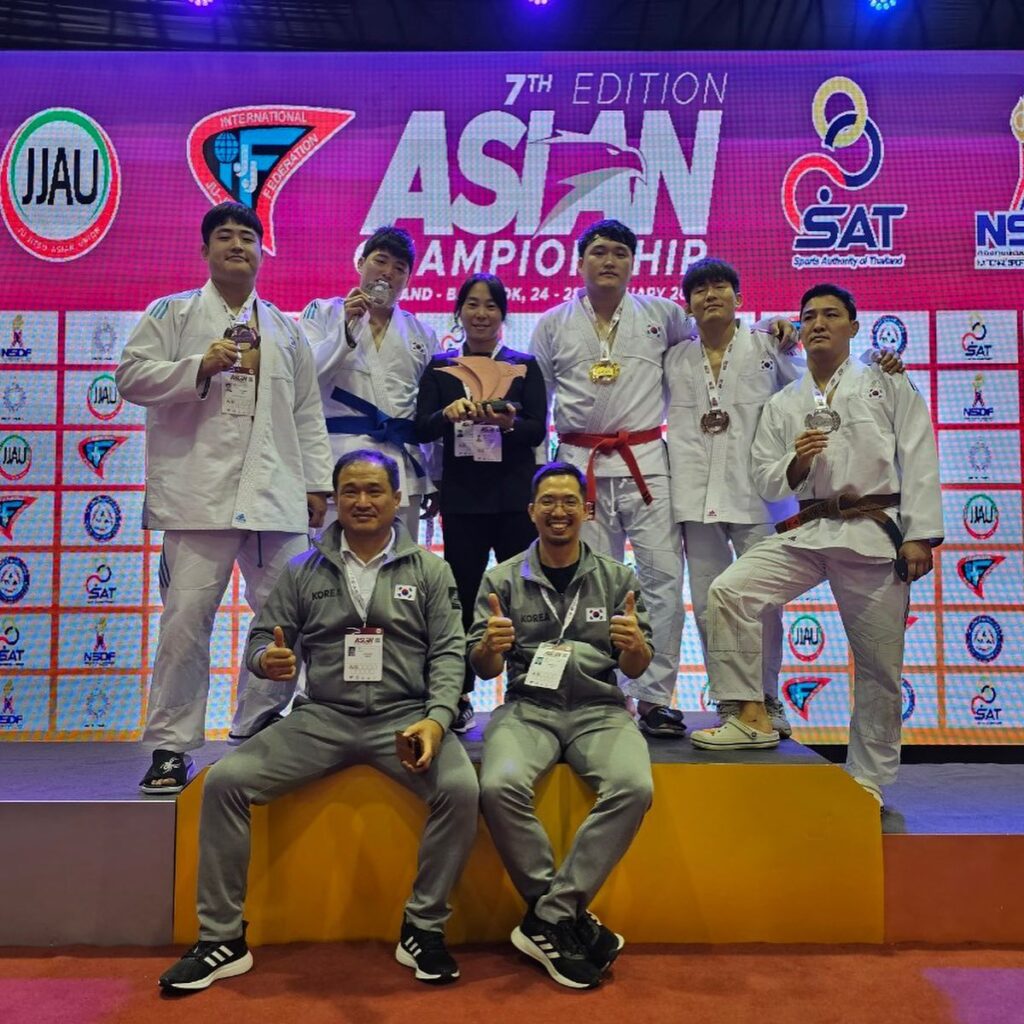
03. What did earning a place on the Korean National Team and representing South Korea internationally mean to you?
It was an incredible honor.
Representing my country also came with pressure to produce a strong result, but I felt both grateful and happy that I could compete for Korea through something I love as much as jiu-jitsu.
Korean jiu-jitsu does not yet have a long history on the international stage. Because of that, I believed the results achieved by each individual athlete could influence how Korean jiu-jitsu would be viewed in the future.
There was certainly pressure, but above all, I felt an immense sense of pride in being able to compete for South Korea.
04. You earned a bronze medal while representing South Korea at the 2023 Asian Jiu-Jitsu Championship in Thailand. How did the responsibility of competing for your country shape your preparation and experience at that tournament?
Winning the medal was naturally memorable, but what stays with me most is the entire process of preparing for and competing at the championship.
Representing the national team brought a different kind of pressure from competing as an individual or for my academy. I felt responsible not only for performing well, but also for representing South Korea. When competing against athletes from other countries, I knew I would be seen as a Korean athlete, and I wanted to show that Korean competitors were fully capable of succeeding on the international stage.
That responsibility created additional pressure, but it also became a source of focus and motivated me to prepare more thoroughly. Although I ultimately earned a bronze medal, the experience reminded me that a medal is never produced by the match alone. Training, weight management, physical conditioning, and even the smallest decisions made on competition day are all connected.
That experience had a major influence on how I approached subsequent international competitions.
03 / THE WORK
THE BLACK BELT JOURNEY
05. You have earned IBJJF black-belt medals across Asia, Europe, Australia, and the United States. How has competing in so many different environments shaped you?
Training and competing around the world has helped me understand myself more clearly.
Those experiences gave me an opportunity to identify my strengths and weaknesses and prepare accordingly. Meeting and exchanging ideas with people from different backgrounds also helped me continue growing.
More importantly, competing internationally allowed me to evaluate my level more objectively. Something I considered a strength in Korea might be relatively ordinary on the international stage. At the same time, I also discovered areas of my game that remained competitive even when measured against world-class athletes.
As those experiences accumulated, I learned not to be overly affected by the outcome of a single match. Instead, I began thinking more about the areas I needed to develop over the long term.
I believe competing in different countries has ultimately made me a more adaptable and realistic athlete.
06. In 2024, you won the Pan Pacific No-Gi Championship and placed second in the gi competition. What made that tournament such a successful performance for you?
The biggest factor was the confidence I had developed in my jiu-jitsu throughout the preparation process.
At the black-belt level, knowing a large number of techniques is not enough. What matters is how precisely you can execute the game in which you have the most confidence. At that time, I clearly understood my strengths and knew the types of situations I wanted to create during my matches.
Another factor was that my previous international experience had helped me manage the pressure of competition more effectively. In the past, I would think extensively about the outcome before an important match. At the Pan Pacific Championship, I tried instead to remain focused on the immediate moment—the next position and the next technique.
Winning the no-gi division and finishing second in the gi division were both rewarding, but what mattered most to me was being able to perform well in both disciplines. That experience gave me confidence that my jiu-jitsu was not effective only under one particular set of conditions, but could remain competitive across different formats.
07. At the black-belt level, matches are often decided by very small details. What do you believe separates a good black belt from an international champion?
I still have many areas in which I need to improve, and I am continuing to learn. In my view, however, the difference between a good black belt and a champion ultimately comes down to how completely an athlete can trust and execute their jiu-jitsu in the decisive moments.
At the black-belt level, almost every athlete is technically exceptional. What separates a strong competitor from a champion is therefore often not the number of techniques they know, but their judgment, match management and ability to minimize mistakes under pressure.
In international competition, one small mistake can immediately lead to defeat. A good athlete may be capable of displaying excellent technique, but a champion is someone who can make the right decision at the most important moment.
That is something I am still learning as well. Ultimately, I do not believe the athletes who reach the top are necessarily those with one extraordinary technique. They are the athletes who remain composed in critical moments and continue executing their game until the very end.
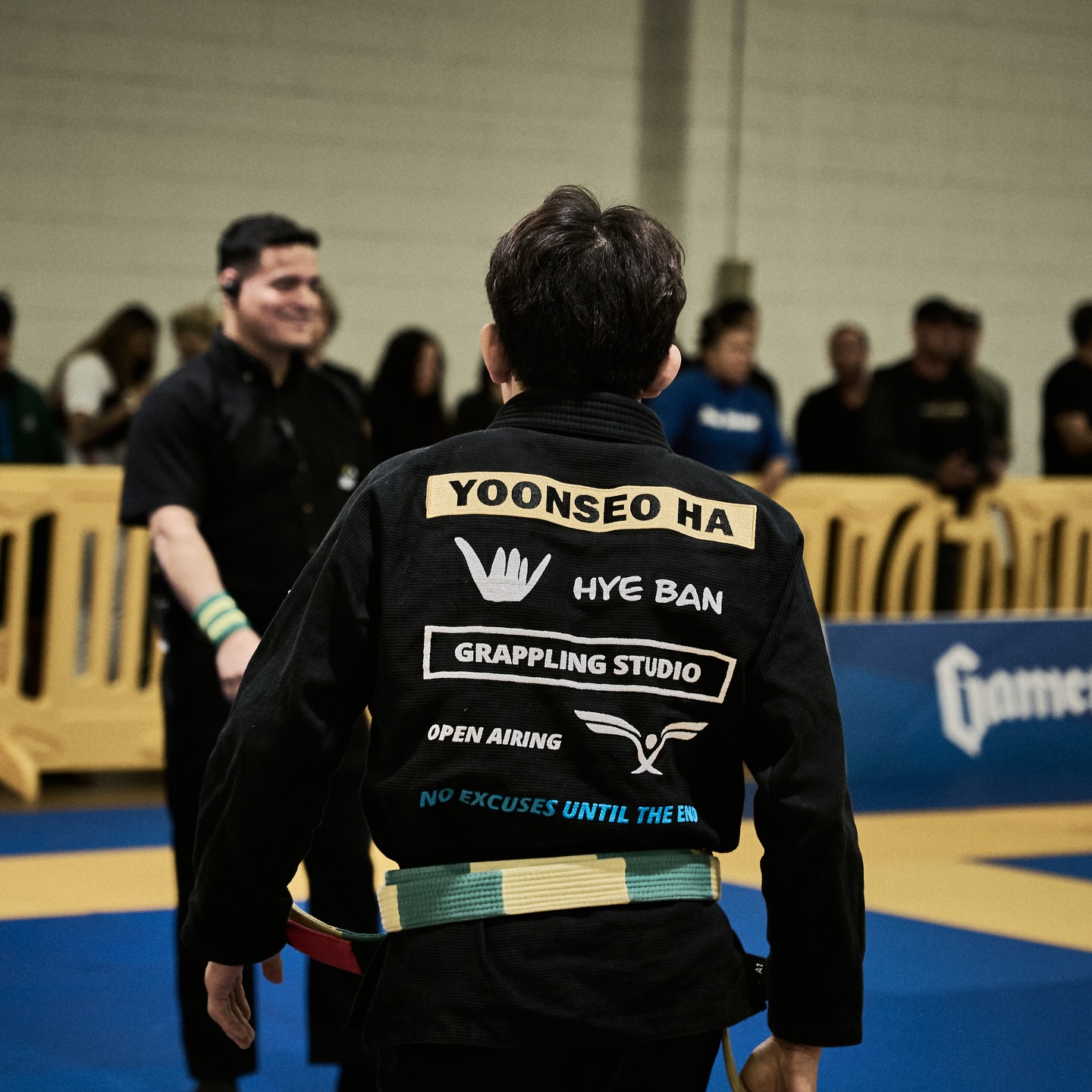
There was certainly pressure, but above all, I felt an immense sense of pride in being able to compete for South Korea.
– Yoonseo Ha, Jiu-Jitsu Black Belt
04 / THE MOMENT
THE 2026 SEASON
08. Your 2026 season has included bronze at the Pan Championship, gold in New York, silver in Atlanta, and additional podium finishes in Dallas and Seoul. How would you evaluate your season so far?
I consider 2026 a meaningful season, both in terms of results and experience.
By competing consistently at the Pan Championship and in New York, Atlanta, Dallas and Seoul, I was able to demonstrate my competitiveness across an entire season rather than relying on the result of a single tournament. That has been the most encouraging part of the year.
Winning the New York Spring International Open gave me a great deal of confidence. The bronze medal at the Pan Championship also confirmed that I remain capable of competing against athletes at a very high level.
Of course, I am not completely satisfied with every result. There were disappointing matches and moments when I believed I could have achieved more. Even so, those experiences helped make this a season in which the direction I need to take as an athlete became clearer.
At this stage, I believe it is more important to become an athlete who can compete consistently in any environment than someone who produces one outstanding result.
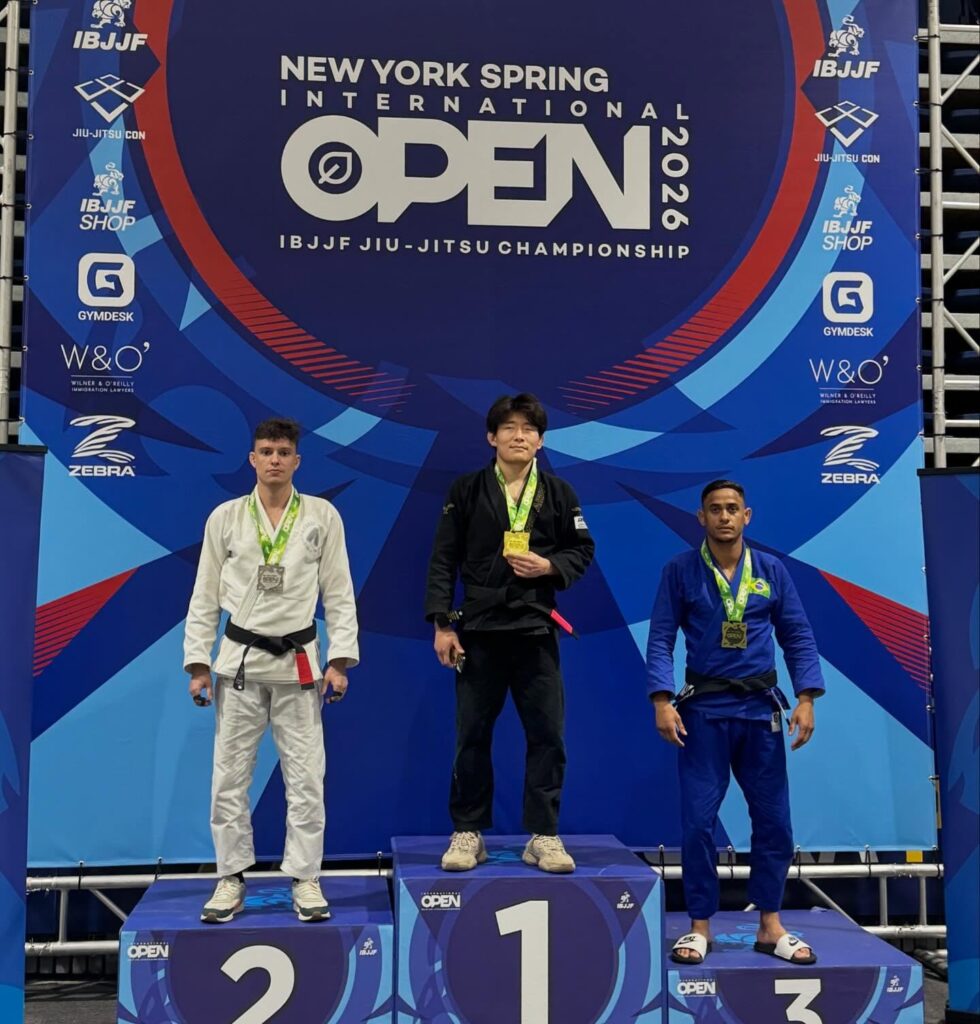
09. Which of your 2026 performances best represents the competitor you are today, and why?
The match that stands out most was the one that led to my victory at the New York Spring International Open.
I did not choose it simply because I won. I believe that match reflected the style and approach I had spent a long time developing through training.
Rather than following the current trend of building a match primarily around points, I tried to impose the top game I wanted and actively pursue submissions. Through that approach, I was able to demonstrate my strengths.
I try not to become overly fixated on individual techniques or points. Instead, I place great importance on trusting myself, remaining composed and not allowing the circumstances of a match to dictate my mindset.
That performance best demonstrated how I want to compete today and the kind of athlete I hope to become in the future.
HANPUNCH / FILM
IN FOCUS: YOONSEO HA
From representing South Korea to competing on the international black-belt circuit, Yoonseo Ha has built his career through constant competition. In this HanPunch IN FOCUS, Ha reflects on the pressure of representing his country, the evolution of his jiu-jitsu, and the pursuit that continues to drive him forward.
05 / THE FUTURE
WHAT COMES NEXT
10. What are the principal goals you are pursuing during the next stage of your career, and how important is competing in the United States to those plans?
My most important goal is to compete consistently on higher-level international stages and produce meaningful results against world-class athletes.
Since becoming a black belt and competing in different countries, I have realized that continued growth requires me to keep challenging myself on bigger stages. Producing good results in a familiar environment is important, but athletes ultimately grow by testing themselves in unfamiliar settings, against new opponents and within increasingly demanding levels of competition.
For that reason, training and competing in the United States are extremely important to me. The United States is home to many world-class jiu-jitsu athletes and academies, and competitions are held regularly, creating more opportunities to gain valuable experience.
My goal is not simply to say that I trained in the United States. I want to train every day with higher-level athletes, compete more frequently and discover firsthand how far my jiu-jitsu can develop.
To me, the next stage of my career is not about choosing a comfortable environment. It is about placing myself in the middle of greater competition.
11. You have represented your country and earned black-belt medals around the world. What do you still feel you need to prove to yourself?
The results I have achieved have reduced the need I once felt to prove myself to other people. Now, I am more interested in discovering how far I can go.
I was not an athlete who grew up within an elite sports system from an early age. That makes everything I have experienced along the way even more meaningful to me. I reached this point by refusing to become satisfied with my circumstances and continually challenging myself on new stages.
There is one thing I want to prove to myself: that what I have accomplished so far does not represent my limit.
I do not want to define my own limitations according to my age, environment, nationality or career path. I began in Korea, became a national-team athlete, competed as a black belt in countries around the world and continued pursuing opportunities on larger stages, including in the United States. That journey itself is a form of proof.
Ultimately, I am less interested in discovering how famous I can become than in discovering how far I can go when I truly give everything I have.
Regardless of whether the results are good or bad, I intend to continue challenging myself. If there comes a time when I can feel satisfied with my career, it will not be because I proved that I was better than someone else. It will be because I can honestly say that I explored the full extent of my potential.
To me, the next stage of my career is not about choosing a comfortable environment. It is about placing myself in the middle of greater competition.
– Yoonseo Ha, Jiu-Jitsu Black Belt
Yoonseo Ha’s story is still being written.
After representing South Korea and earning black-belt medals around the world, his focus is now on what comes next: higher-level competition, more time on the international circuit, and the opportunity to continue testing himself in the United States.
HanPunch will continue following the next chapter of his journey.



🔥🔥🔥🔥🔥🔥
Awesome post brother
love the promo