
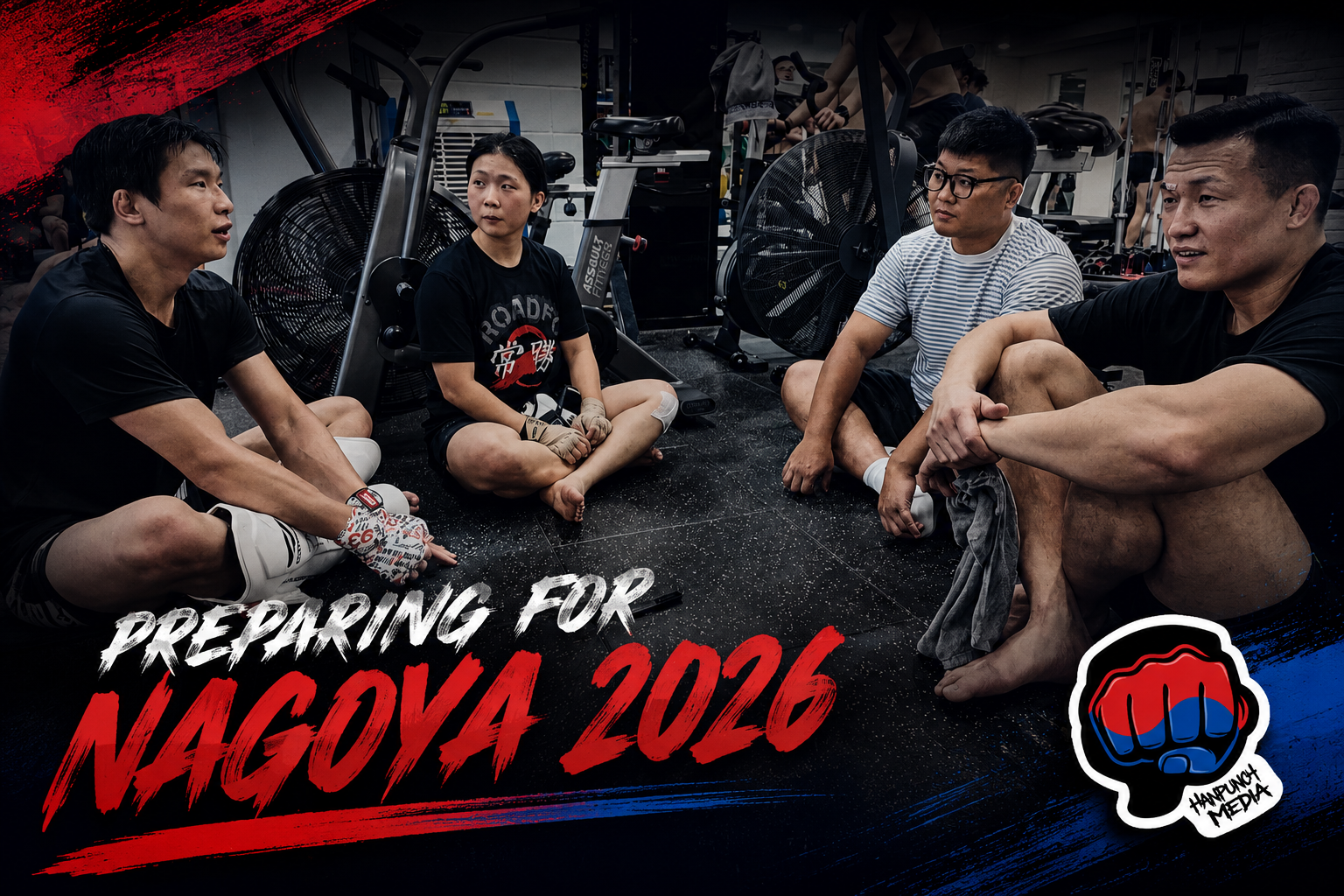
Chan Sung Jung welcomed South Korea’s MMA national team to Korean Zombie MMA, sharing technical insights on the Asian Games ruleset while emphasizing grappling as the team’s biggest area for improvement ahead of Nagoya 2026.
As South Korea prepares for mixed martial arts’ historic debut at the 2026 Asian Games, former UFC title challenger Chan Sung Jung has stepped into a new role, helping members of the country’s national team prepare for one of the biggest moments in Korean MMA history.
Former UFC title challenger Chan Sung Jung, better known worldwide as The Korean Zombie, recently welcomed members of South Korea’s MMA national team to Korean Zombie MMA for a special training session focused on the unique rule set that will be used at the Asian Games.
The session was organized at the request of Fighter100 representatives, who asked Jung to work with national team athletes Eun Seok Choi and Bo Mi Lee as they continue preparations for Nagoya. While the athletes have already secured their places on the national team, the goal of the visit was clear: gain insight from one of Korea’s most experienced mixed martial artists and better prepare for an international ruleset unfamiliar to many professional fighters.
Preparing for a Different Version of MMA
Before stepping onto the mats, Jung explained that the Asian Games competition format differs significantly from the Unified Rules used in promotions such as the UFC.
According to Jung, the tournament will feature three three-minute rounds under the 10-point must scoring system, but competitors will fight on an open mat rather than inside a cage. Active ground exchanges are limited to approximately 20 seconds before a stand-up if no meaningful progress is being made, while elbows and soccer kicks to the head are only permitted during the championship final. Fighters who intentionally step out of bounds three times in a single round are disqualified.
Jung noted that these differences dramatically change how athletes must approach a fight.
Without a cage, wrestlers lose one of their most effective tools for controlling opponents against the fence. Instead, takedowns must rely on timing, speed, and clean technique, making explosive entries and judo-style throws considerably more valuable. On the feet, Jung believes fighters must prioritize volume and activity to accumulate points, while grapplers need to attack submissions immediately after securing a takedown due to the limited time available on the ground.
His breakdown offered a rare look into the tactical adjustments required for MMA’s debut at the Asian Games and highlighted why specialized preparation will be essential for every participating nation.
Sparring Provides Valuable Feedback
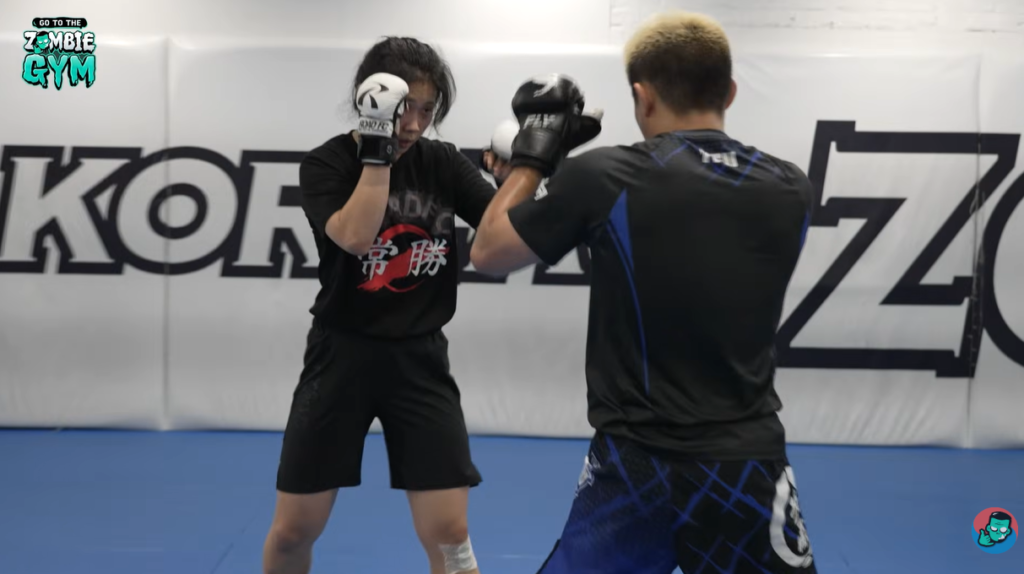
Jung later shared the mats with national team member Eun Seok Choi for several rounds of sparring, coaching continuously throughout the session.
Rather than simply observing, the former UFC star instructed Choi to maintain constant movement, increase his striking output, initiate the clinch with confidence, and avoid becoming stationary after exchanges.
The intensity of the rounds surprised even Jung himself.
Afterward, he admitted it had been years since he experienced sparring at that level of urgency, joking that he felt as though he was “fighting for his life” again.
Korean Zombie Identifies Grappling as the Biggest Area for Improvement
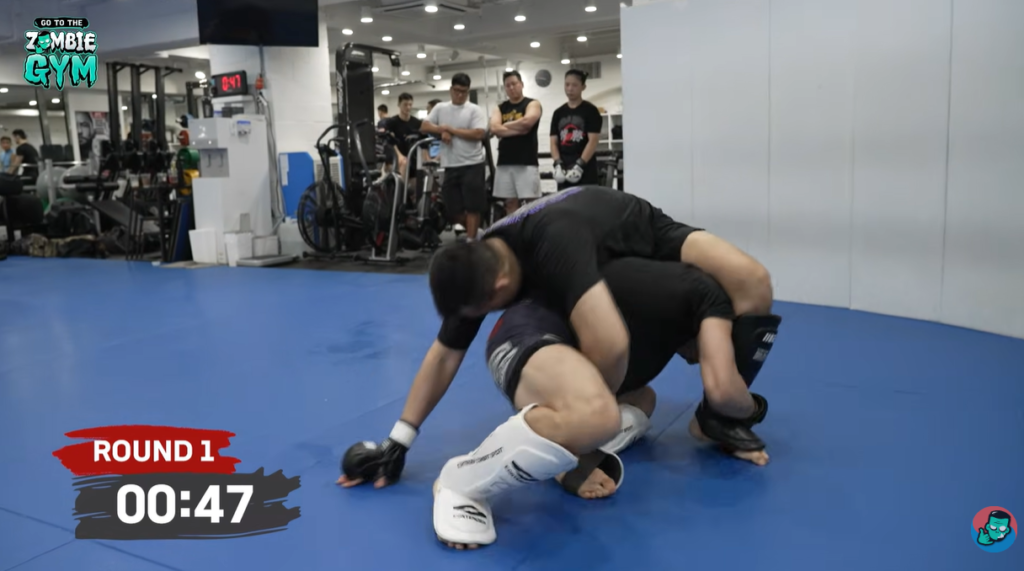
Although Jung praised the team’s striking ability, his most notable takeaway centered on grappling.
He explained that Choi’s stand-up skills and confidence were already at a high level, but warned that wrestling, clinch work, submission awareness, and overall grappling remain the areas that require the most development before the Asian Games.
Jung spoke candidly about the difference, explaining that while the striking appeared competition-ready, the grappling would need significant improvement to compete successfully against elite international opponents.
Throughout the sparring session, he repeatedly emphasized movement, initiating the clinch first, and continuing to attack rather than freezing during grappling exchanges. In his view, those habits become even more important under the Asian Games ruleset, where limited ground time means every transition must be decisive.
Rather than offering criticism for its own sake, Jung framed the assessment as the primary reason he agreed to help.
A Commitment to Korean MMA’s Future
The session concluded with Jung extending an open invitation for the national team to continue training at Korean Zombie MMA in the months leading up to the Games.
He offered access to his coaching staff, experienced training partners, and even suggested the athletes could spend multiple days at the gym if additional preparation was needed.
For Jung, the opportunity represents something larger than individual athletes or promotions.
With MMA set to award medals at the Asian Games for the first time, he described helping the national team as a responsibility to Korean mixed martial arts as a whole.
As preparations continue for Nagoya, South Korea’s athletes now have one of the country’s greatest fighters investing directly in their development. If Jung’s first session is any indication, the focus moving forward will be clear: refine the grappling, adapt to the unique rules, and ensure Korea is ready for one of the most significant moments in the sport’s history.
Full video courtesy of Korean Zombie Youtube Channel
About The Author


Join the Conversation