

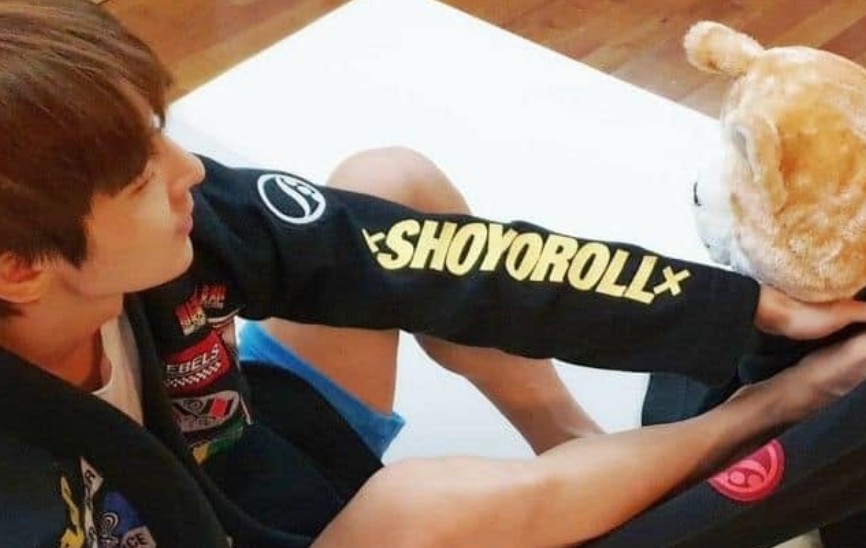
Korean Jiu-Jitsu is having a moment, and it is not subtle. What started as a niche martial art tucked inside small gyms has exploded into a full cultural movement powered by actors, singers, athletes, and global stars. Around the world, celebrities like Tom Hardy, Keanu Reeves, and Mario Lopez have helped push Brazilian Jiu‑Jitsu into the mainstream. Ed O’Neill earned his black belt under Rorion Gracie, and Ashton Kutcher received his under Rigan Machado. When Hollywood rolls, the world pays attention.
Now Korea is experiencing the same surge and Korean Jiu‑Jitsu is becoming a defining part of the country’s fitness and entertainment culture.
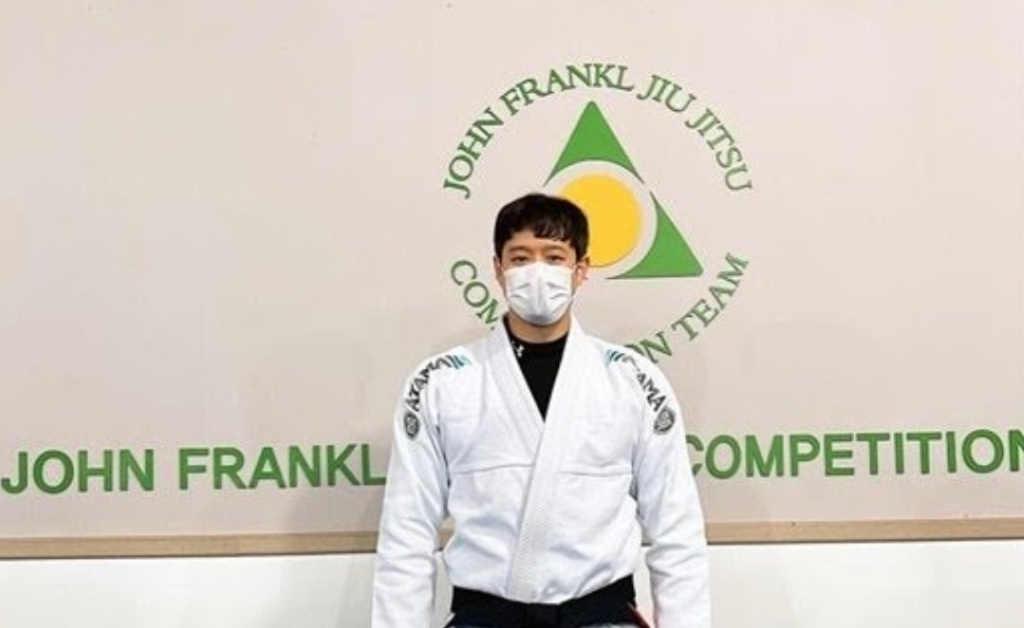
One of the biggest names leading this movement is actor Chun Jung Myung, one of the most respected Korean Jiu‑Jitsu practitioners in the entertainment industry. Known for Cinderella’s Sister and Heart to Heart, Chun trained for more than eleven years before earning his black belt. His dedication has made him a symbol of how deeply Korean celebrities are embracing the sport.
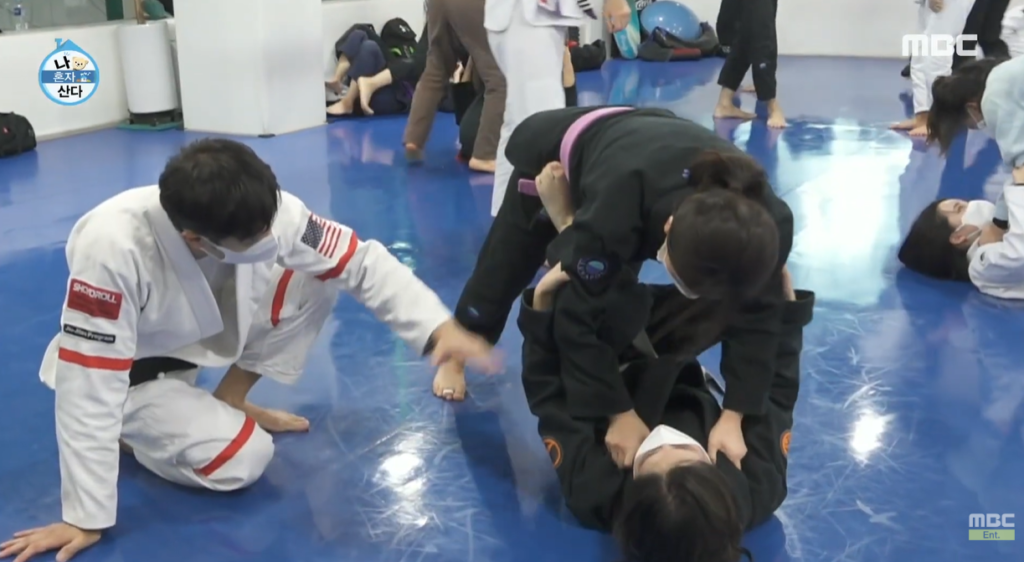
In 2022, Chun Jung Myung appeared on the popular Korean variety show I Live Alone, where he opened up about his long‑time passion for Jiu‑Jitsu. The episode even showed a glimpse of him teaching on the mats, giving viewers a rare look at how deeply the sport is woven into his daily life. He continues to train at the John Frankl Jiu‑Jitsu Gangnam Sinsa Academy, one of the most respected BJJ schools in South Korea.
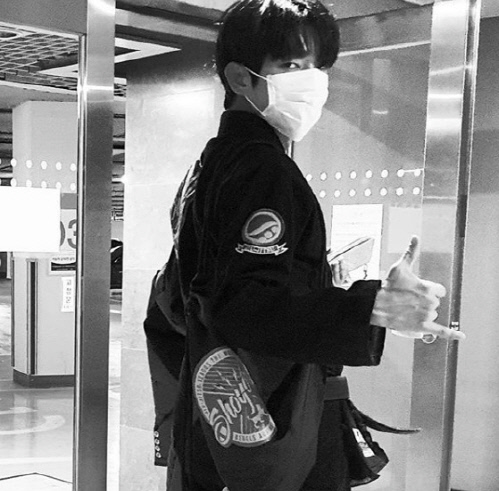
Action star Lee Joon Gi is another major figure in the Korean Jiu‑Jitsu wave. Already a black belt in Taekwondo and Hapkido, he added BJJ to his training to elevate his stunt work and on‑screen realism. His commitment to the mats is one of the reasons his fight scenes feel so authentic.
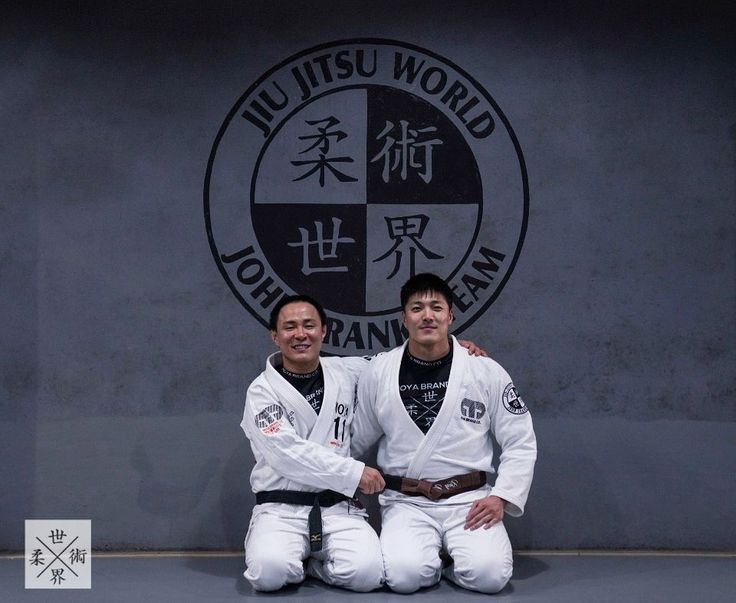
Actor Lee Jae Yoon, known for his athletic roles and his appearances on Cool Kiz on the Block, has also been training in Korean Jiu‑Jitsu for years. His strength and conditioning are well known, but those who have rolled with him say his grappling pressure is even more impressive.
Even singers are joining the movement. Heo Gak, famous for his emotional ballads, has shared his Korean Jiu‑Jitsu journey publicly, using the sport as a way to stay healthy and grounded. His story shows how BJJ appeals to people far beyond action stars and athletes.
The rise of Korean Jiu‑Jitsu is also visible across entertainment. Variety shows, survival programs, and reality competitions have embraced grappling as part of their physical challenges. Netflix’s Physical 100 and Physical Asia feature contestants using BJJ‑style takedowns and submissions during intense one‑on‑one battles. Korean MMA fighters, wrestlers, and judokas bring grappling into the spotlight every time they appear on screen.
Even scripted content is catching up. The Netflix drama As You Stood By surprised viewers by showing the lead investigator training in a Jiu‑Jitsu Gi as a form of stress relief. And the independent web series JIU JITEIRO is one of the first Korean dramas dedicated entirely to the lifestyle and philosophy of Korean Jiu‑Jitsu.
What makes this moment powerful is that Korean Jiu‑Jitsu is no longer a subculture. It is becoming part of Korea’s athletic identity. It is a place where celebrities train next to office workers, where actors get tapped out by teenagers, and where fame disappears the moment you step onto the mat. That humility, that shared struggle, is exactly why the sport is exploding.
Korea has always been a martial arts nation. Taekwondo, Hapkido, Ssireum, and now MMA have deep roots. But Korean Jiu‑Jitsu brings something different. It brings community. It brings problem solving. It brings a sense of personal growth that resonates with a generation looking for challenge and meaning.
As more celebrities embrace the sport, more fans follow. And as more fans follow, the mats get fuller, the gyms get louder, and Korean Jiu‑Jitsu continues its rise into the mainstream.
For those interested in the I live Alone episode:
About The Author





Join the Conversation