
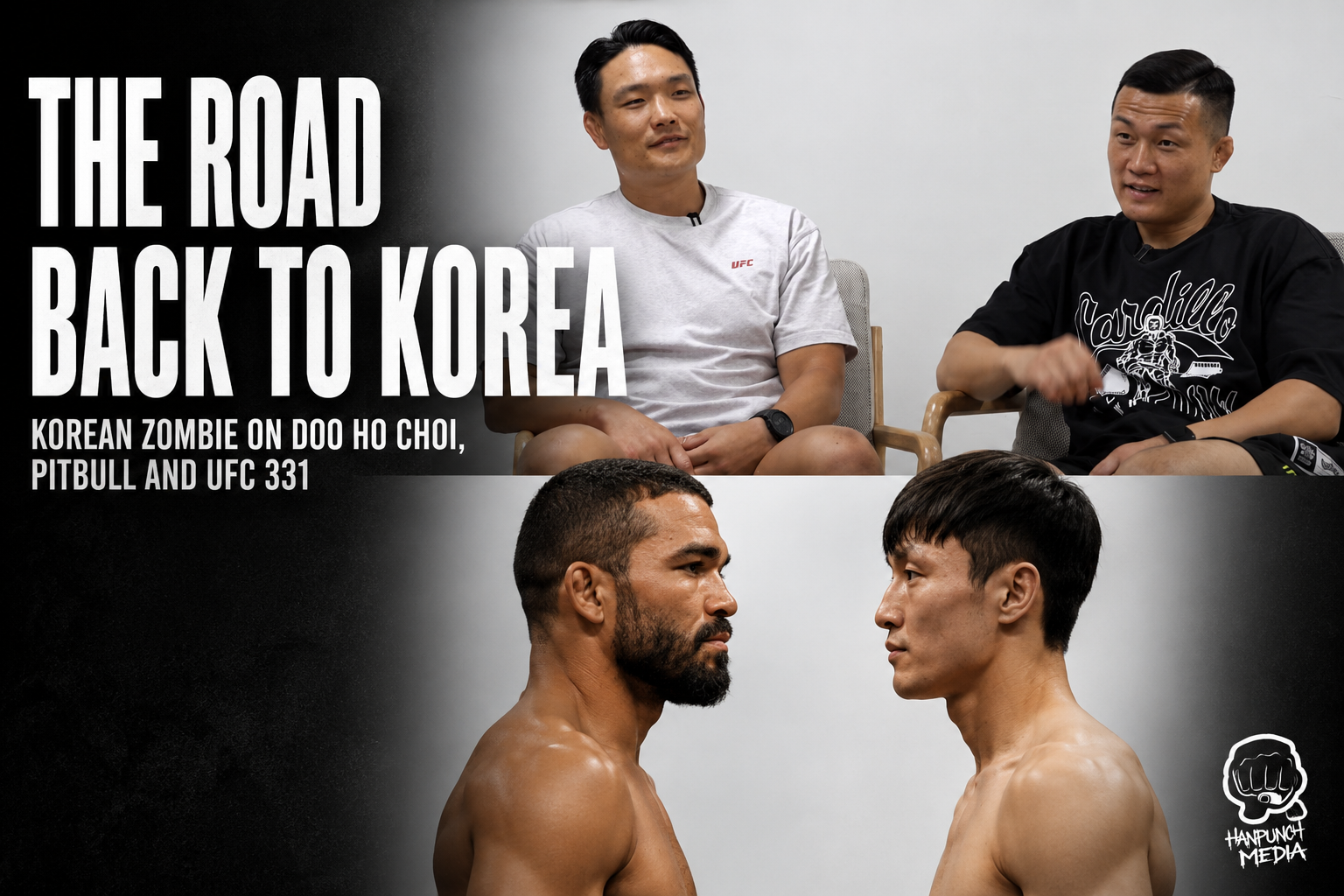
One month before UFC 331, Chan Sung Jung (Korean Zombie) explains why Doo Ho Choi’s fight with Patrício Pitbull matters far beyond the rankings — and why the UFC appears to be watching Korea again.
For Doo Ho Choi, UFC 331 is already a massive fight.
Across the Octagon will be Patrício “Pitbull” Freire, the former Bellator champion who spent years as one of the best featherweights outside the UFC.
But according to Chan Sung Jung, there may be something much bigger riding on Choi’s September 19 fight in Los Angeles.
The Korean Zombie believes Choi could become an important piece of the UFC’s renewed interest in the Korean market and a win at UFC 331 could bring Korea one step closer to hosting another UFC event.
Choi Wasn’t Put in Los Angeles by Accident
When UFC 331 was announced for Los Angeles, Korean fans immediately recognized the obvious connection.
Los Angeles has one of the largest Korean communities outside Korea.
According to Jung, however, that connection wasn’t something fans imagined after the card was announced. The UFC was thinking about it too.
Jung recalled a previous meeting with UFC Chief Business Officer Hunter Campbell in which Campbell discussed the promotion’s plans for Los Angeles.
During that conversation, Jung says Campbell specifically brought up Choi.
The UFC knew about the Korean population in Los Angeles and wanted Choi involved in the event.
That conversation happened well before the fight was officially announced.
For Jung, it was another indication that UFC leadership understands the Korean market better than many fans might assume.
“They know everything,” Jung explained, noting that Campbell was familiar not only with the Korean audience but even some of the challenges Jung has faced promoting MMA events in Korea.
And Jung believes the UFC’s interest is growing.
“The more meetings I have, the more I feel like they’re thinking about the Korean market,” he said.
What Would It Take to Bring the UFC Back to Korea?
Jung has pushed for another UFC event in Korea.
But as someone who now operates on the promotional side of the sport himself, he is also realistic about the business.
At this moment, Jung doesn’t necessarily believe a Korean UFC event makes financial sense.
That could change quickly.
His rough calculation?
Two more wins.
If Choi defeats Pitbull and enters the UFC featherweight rankings, Jung believes the conversation becomes much more realistic. Another significant victory after that could give the UFC something it currently lacks: a ranked Korean fighter capable of anchoring a major event.
For Jung, there is precedent.
The UFC has increasingly demonstrated a willingness to build events around internationally relevant fighters when there is a strong local market behind them.
Choi doesn’t necessarily need to become champion before Korea becomes viable again.
He needs momentum.
And Pitbull represents an enormous opportunity to create it.
First, He Has to Beat Patrício Pitbull
None of that matters if Choi can’t get through UFC 331.
And Jung isn’t pretending Pitbull is an ordinary opponent.
The Brazilian built one of the most decorated careers in Bellator history, becoming a three-time featherweight champion and capturing the lightweight championship as well.
He’s also approaching 50 professional fights.
“You don’t fight 50 times and become Bellator champion three times without having something,” Jung said.
Still, after studying Pitbull’s recent performances, Jung sees reasons for optimism.
In fact, he believes this may be one of the more favorable stylistic matchups Choi has received recently.
Pitbull is shorter, relatively measured in his movement and no longer appears to consistently find some of the timing that made him so dangerous earlier in his career.
Choi, meanwhile, possesses advantages in height, reach, movement and athleticism.
That has changed the philosophy of the camp.
This Camp Is About Choi’s Strengths
Jung says many of Choi’s recent camps were built around solving problems.
Against Kyle Nelson, there was extensive preparation for Nelson’s clinch and dirty boxing.
Against Daniel Santos, the team worked heavily on dealing with his movement, combinations and tendency to mix different phases of the fight.
The philosophy was straightforward: identify what the opponent does well, find where Choi could be vulnerable to it and eliminate the weakness.
Pitbull is different.
There are still specific dangers the team is preparing for, but Jung believes Choi’s natural weapons match up extremely well with the former Bellator champion.
So rather than spending the entire camp reacting to Pitbull, they’re spending considerably more time sharpening Choi.
There is one exception.
Jung believes he has identified a particular habit in Choi’s game that Pitbull’s team may attempt to exploit.
He wouldn’t reveal it.
But because Jung has previously interacted with members of Pitbull’s team, including coach Eric Albarracin, he believes he has a reasonable idea of what they will see when studying Choi.
Every training session includes time devoted specifically to fixing that vulnerability.
It’s a reminder of the contradiction surrounding this matchup.
Jung likes it.
But he doesn’t trust it.
Not against someone with Pitbull’s experience.
The “Korean Superboy” Looks Different Now
Perhaps the biggest difference isn’t tactical.
It’s Choi himself.
The spectacular young featherweight who once built his reputation through violent first-round finishes is now a veteran approaching this stage of his career with a much healthier body.
Jung jokingly gave him a new nickname during the conversation:
The “Well-Being Korean Superboy.”
Behind the joke is something that has become increasingly important to Choi’s resurgence.
He can train consistently.
Jung considers physical preparation one of the biggest strengths of his gym, particularly the ability to monitor fighters daily rather than simply hand them a conditioning program and expect them to complete it.
That individualized attention is part of why Choi has chosen to conduct his camp with Jung.
It’s also part of a larger coaching philosophy Jung developed through his own career.
Korean Training Meets American Experience
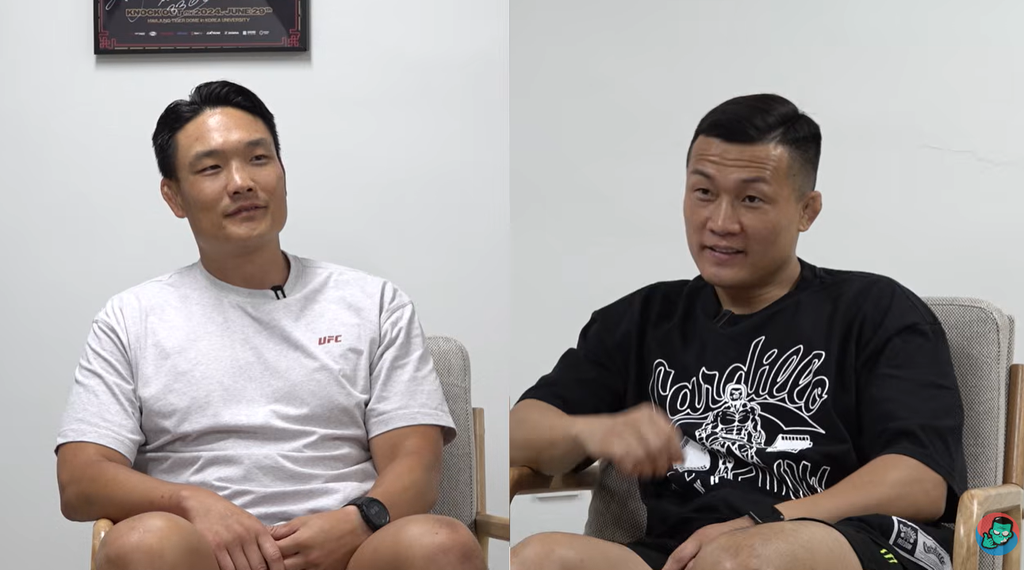
Jung spent years traveling between Korea and some of America’s most respected MMA gyms.
Earlier in his career, he admits he sometimes assumed American camps simply knew more.
Experience changed his opinion.
There were things he loved about training in America. There were also things he didn’t.
And for many Korean fighters, joining a famous American gym comes with an overlooked disadvantage.
They’re one fighter among many.
At home, they can have an entire team watching their conditioning, recovery, technique and daily progression.
Jung’s answer isn’t choosing one system over the other.
It’s combining them.
He has taken concepts he learned during his American camps and blended them with the individualized structure available to fighters training in Korea.
Choi may be the clearest example yet of that experiment.
UFC 331 Could Be Bigger Than One Fight
There is another Korean fighter going through that system right now.
Joo Sang Yoo is also preparing under Jung for UFC 331, giving Korea representation at opposite ends of the card.
Yoo represents the emerging generation.
Choi represents something different.
He is one of the few remaining Korean fighters with name recognition built during the country’s previous UFC boom.
And unlike Jung, he’s still fighting.
That’s what makes September 19 so interesting.
Beating Patrício Pitbull would be significant on its own. Doing it in Los Angeles, in front of a major Korean-American audience, with the UFC already paying attention to Choi’s connection to that market, could mean considerably more.
A ranking could follow.
Another major opponent could follow that.
And somewhere beyond those possibilities is the idea Jung has continued discussing with UFC leadership:
Bringing the Octagon back to Korea.
For now, that’s still hypothetical.
But one month out from UFC 331, Chan Sung Jung believes Doo Ho Choi has an opportunity to make it considerably less hypothetical.
Follow HanPunch for the latest Korean MMA news, exclusive fighter interviews, event coverage, and the stories shaping combat sports across Asia.
About The Author


Join the Conversation