

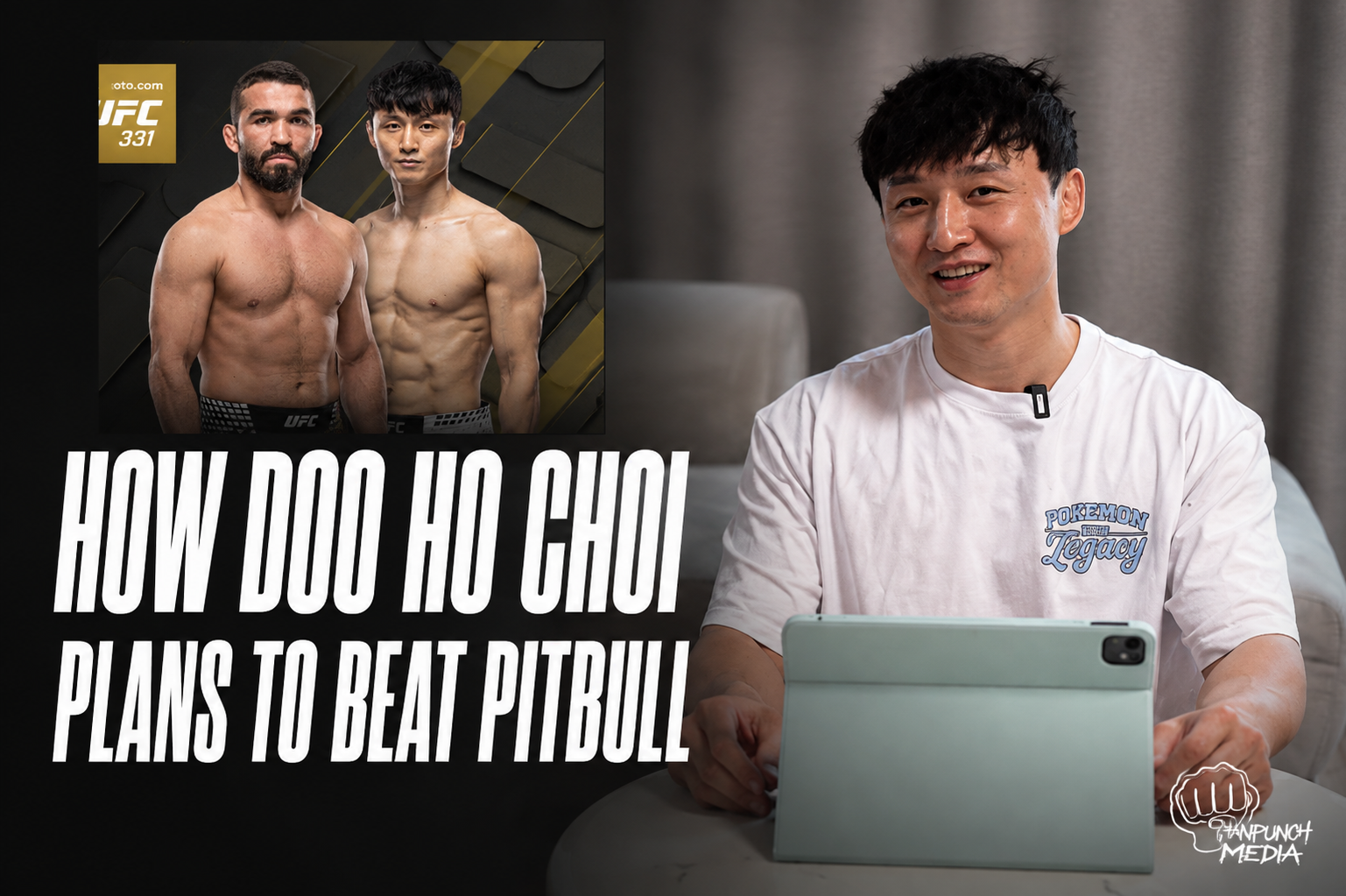
The Korean Superboy breaks down Pitbull’s counter-striking style, and the game plan he believes can beat it.
Doo Ho Choi has built much of his reputation on being one of the most dangerous strikers to come out of South Korea. But ahead of his UFC 331 matchup with Patricio “Pitbull” Freire, the Korean Superboy appears to be approaching the fight less like a brawl and more like a puzzle.
And Choi believes he has figured out an important part of how to solve it.
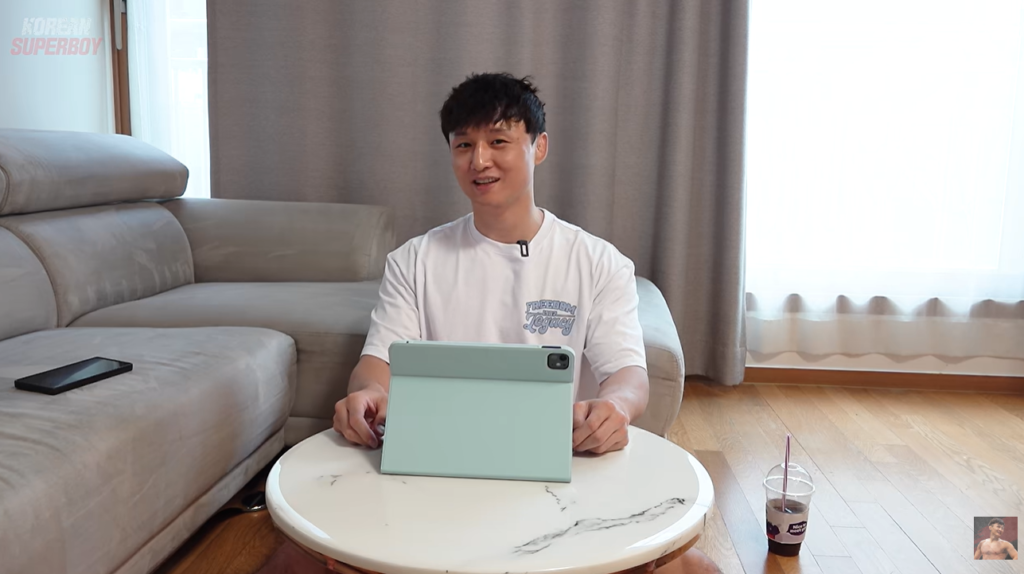
In a recent video on his Korean Superboy YouTube channel, Choi returned to an unusual part of his fight preparation: reading detailed scouting reports submitted by his own fans.
It started before his previous fight against Jean Silva Santos, when Choi asked viewers to analyze his opponent and offer advice. He admitted that some of the responses were surprisingly sophisticated and that he actually incorporated parts of the fan analysis into his training.
This time, more than 1,000 comments arrived with suggestions for Pitbull.
As Choi worked through them, a remarkably consistent picture of the former Bellator champion began to emerge.
Pitbull Isn’t the Fighter His Nickname Suggests
The first misconception Choi wants to erase is the idea that Pitbull will simply charge forward looking for a fight.
According to Choi, the reality is almost the opposite.
“Pitbull” may sound like the nickname of an aggressive pressure fighter, but Choi described Freire as an unusually patient and calculated opponent.
Rather than constantly breaking distance and forcing exchanges, Pitbull is comfortable remaining outside and waiting for his opponent to make the first move.
“He’s very calm and waits”
Choi explained while agreeing with one viewer’s assessment of his opponent.
That patience is connected to what Choi considers one of Pitbull’s biggest strengths: his counter striking.
Choi noted that much of Pitbull’s offense—both his striking and even some of his wrestling—is built around reacting to what the opponent gives him rather than constantly initiating exchanges himself.
That creates the central problem Choi has to solve at UFC 331.
If he repeatedly charges into range trying to create action, he could be giving Pitbull exactly the fight he wants.
Taking Away Pitbull’s Right Hand
One fan pointed to another pattern in Pitbull’s fights: when he counters, the right hand is often waiting.
Doo Ho Choi immediately agreed.
Pitbull frequently responds with either a right cross or right hook, making the rear hand one of the most important weapons Choi has to account for when entering range.
The suggestion was simple: use the jab to interfere with Pitbull’s ability to comfortably set and fire that right hand.
Choi liked the observation.
He also noted that Pitbull isn’t necessarily a fighter who relies on constant head movement to avoid strikes. He can instead use a high guard and his feet to manage attacks, which could create opportunities for Choi to vary his targets and attack the body.
But simply throwing more isn’t the answer.
Against a fighter waiting to identify patterns, predictability could become dangerous.
Choi Wants to Break Pitbull’s Timing
If Choi attacks on the same rhythm repeatedly, he believes he’s making Pitbull’s job easier.
He illustrated the problem with a simple rhythm: one-two-three, one-two-three.
Eventually, a good counter striker knows when the next attack is coming.
Instead, Choi wants to change the tempo.
That means mixing feints with real attacks, changing the timing between combinations and entering on different rhythms rather than giving Pitbull the same look repeatedly.
It’s basic striking theory, Choi acknowledged, but particularly important against an opponent whose game depends heavily on timing the person standing across from him.
And that leads to what may be the most important part of Choi’s strategy.
Make Pitbull Come to Him
One of the longest fan breakdowns offered a different way of thinking about the matchup.
Instead of asking how Choi should safely get inside against Pitbull, why not make Pitbull come to Choi?
The idea immediately resonated with the Korean fighter.
Choi doesn’t necessarily need to chase a finish from the opening bell. He can pressure intelligently, touch Pitbull with the jab, use feints, mix in kicks and continue accumulating offense without recklessly committing himself to the pocket.
If Choi is landing and winning minutes, the responsibility eventually shifts.
Pitbull has to do something.
“If time keeps passing like that, I’m winning”
Choi explained. “I’m the one touching him more. Then he has to come in.”
And that’s where the matchup could change.
Pitbull is dangerous when an opponent comes toward him and gives him opportunities to counter. But if Choi can establish the lead and force Pitbull to become the aggressor, the natural counter striker suddenly has to initiate.
Then Choi can become the fighter waiting to counter.
It may be the clearest glimpse Choi gave into his UFC 331 game plan.
The Fans Are Seeing What Choi’s Team Is Seeing
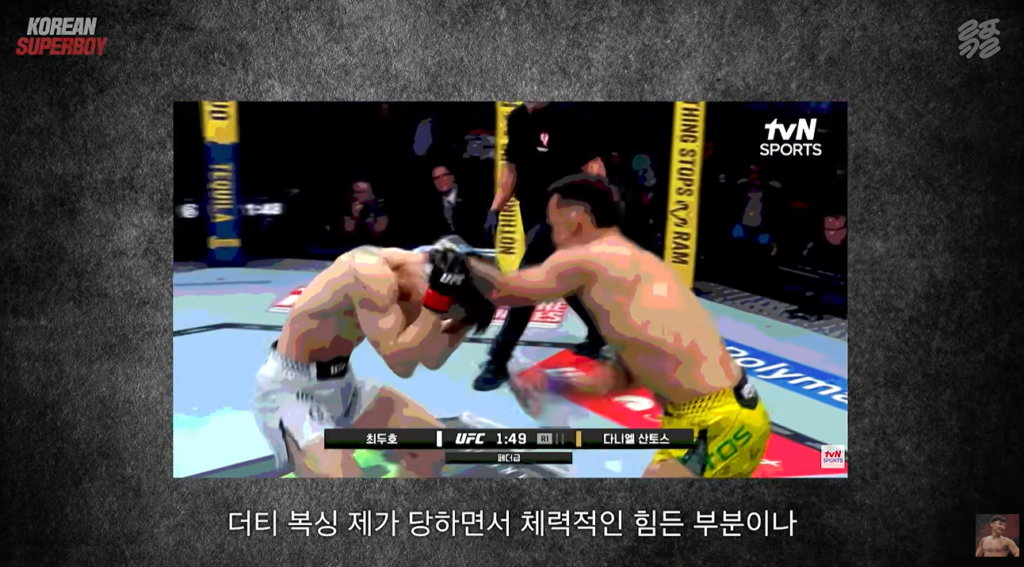
Perhaps the most surprising part of the video wasn’t any individual suggestion.
It was how often Choi agreed with them.
Fans identified Pitbull’s right-hand counters. They noticed his patience. They discussed changing rhythms, attacking his high guard, using calf kicks, creating angles and avoiding predictable entries.
Others suggested Choi use jab feints before attacking elsewhere or cut the cage in a direction that increases the distance Pitbull needs to cover with his rear hand.
Choi repeatedly pointed out that many of those ideas were already part of the strategic conversations taking place in his own preparation.
He was impressed enough to question the traditional idea that meaningful technical analysis can only come from former fighters and professional coaches.
Not every comment survived the test.
When one viewer described Choi as a “slow starter,” Choi pushed back, pointing to his history of strong first rounds in the UFC. He was similarly amused by the suggestion that calf kicks were missing from his game.
But he deliberately spent time looking at criticism of his own tendencies as well.
One viewer highlighted Choi’s vulnerability when opponents suddenly break his preferred distance with looping punches. Choi acknowledged the weakness, although he noted an important distinction: Pitbull typically isn’t the type of opponent who recklessly crashes through the pocket that way.
It showed what Choi is trying to accomplish with the exercise.
He isn’t asking fans to tell him why he’s going to win.
He’s looking for things he may have missed.
A Different Korean Superboy
There was another revealing moment late in the video that had little to do with a specific punch, kick or takedown.
A fan asked Choi to bring back the swagger he displayed earlier in his UFC career—the version of the Korean Superboy who seemed almost eager for the fight to become chaotic.
Choi said he hadn’t intentionally changed his demeanor.
But he acknowledged that something has changed.
Earlier in his career, Choi described approaching competition more like a fight. With experience, he now feels as though he is increasingly trying to solve it as a game.
That distinction might matter against Pitbull.
The Choi who became a fan favorite was capable of producing unforgettable exchanges. His 2016 war with Cub Swanson remains one of the defining fights of his UFC career.
But Patricio Pitbull may be exactly the opponent against whom chasing that kind of fight would be a mistake.
Choi doesn’t need to prove that he can stand in the pocket and trade.
He needs to make a patient counter striker uncomfortable.
Touch him. Feint. Change the rhythm. Control the distance. Take away the right hand. Force him to make the first move.
Pitbull may have built his game around waiting for opponents to come to him.
At UFC 331, Doo Ho Choi’s plan may be to see just how long he’s willing to wait.
Follow HanPunch for the latest Korean MMA news, exclusive fighter interviews, event coverage, and the stories shaping combat sports across Asia.
About The Author



This guy is going up to the top 10!!!