


Ahead of his August 28 semifinal against Dagiisuren Chagnaadorj, Young Jae Song is testing his wrestling, conditioning and finishing game against high-level opposition in Thailand.
Young Jae Song’s latest trip to Thailand is about more than adding rounds to another training camp.
On August 28 in Shanghai, Song will face Mongolia’s Dagiisuren Chagnaadorj in the featherweight semifinals of Road to UFC Season 5, with the South Korean now two victories away from completing his path through the tournament. UFC officially lists the semifinal as part of its August 28 Road to UFC event in Shanghai, with Song entering at 10-1 and Chagnaadorj at 11-2.
His preparation has taken him to Bangtao in Thailand, where Episode 5 of the team’s overseas training series offered a closer look at how Song is preparing for the biggest opportunity of his career.
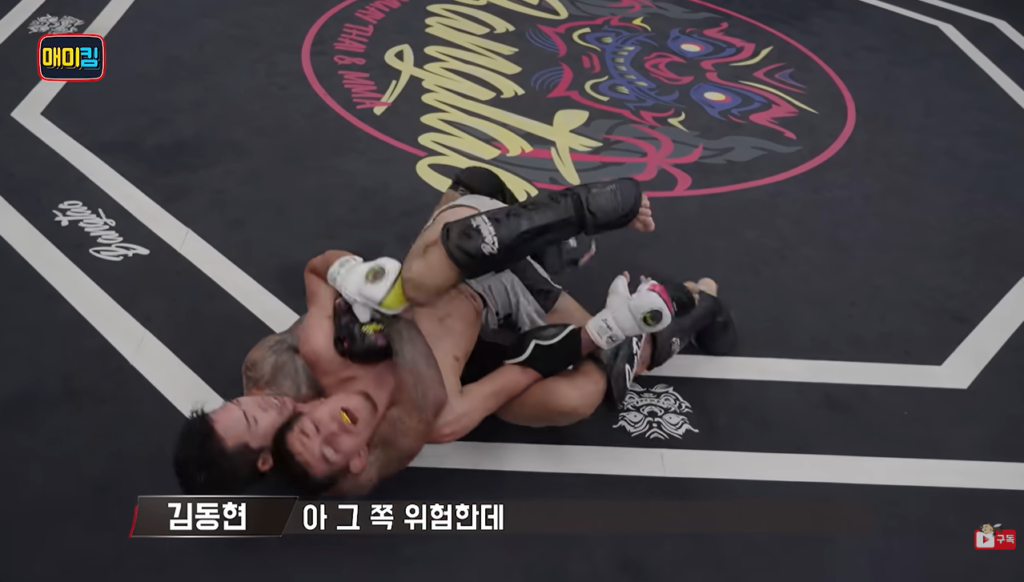
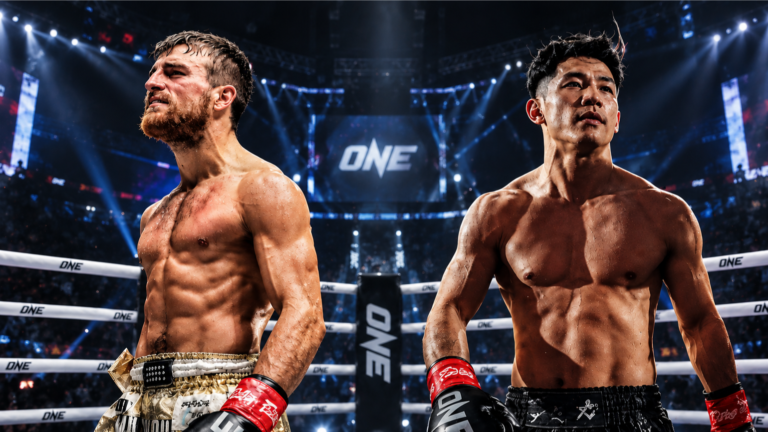
The most eye-catching moment came when Song found the back and threatened his trademark rear-naked choke while training with a ONE Championship titleholder.
But the submission attempt was only a small part of what made the session valuable.
Song was forced to wrestle through difficult positions, defend while tired and repeatedly rebuild his offense against a training partner capable of combining striking and grappling at a high level. For his coaches, those difficult moments provided a better indication of Song’s progress than simply winning exchanges in the gym.
And with Chagnaadorj waiting in Shanghai, that may be exactly the type of preparation Song needs.
The Rear-Naked Choke Remains a Dangerous Weapon
There is a notable connection between Song’s Thailand training and the victory that brought him to the semifinals.
Song faced Japan’s Jin Aoi in the Road to UFC opening round on May 28 in Macau. After receiving a point deduction for an illegal knee in the second round, Song needed to change the direction of the fight.
He did.
During a clinch exchange late in the second round, Song pulled Aoi away from the fence, secured back control and immediately attacked the rear-naked choke. Aoi submitted at 3:39, sending Song into the featherweight semifinals.
The finish maintained an unusual statistic for the South Korean featherweight: Song has yet to need the judges in any of his professional victories. His current 10 wins consist of eight knockouts and two submissions.
That finishing instinct was visible again in Thailand.
During Song’s rounds with the ONE Championship titleholder, his coaches immediately recognized the danger when he reached the back, identifying the rear-naked choke as one of his strongest attacks. Song found multiple opportunities to work toward the choke during the session.
The significance isn’t that Song managed to threaten a champion during training. Sparring is not competition, and isolated gym exchanges offer little value as predictions.
More important is that the same finishing sequence that carried Song through the opening round remains a central part of his game as the level of his training partners increases.
Preparing for the Fight When Things Go Wrong
Some of Song’s most encouraging moments in Thailand came when he wasn’t in control.
His opponent repeatedly forced him into defensive positions and made him work through prolonged grappling exchanges. As fatigue accumulated, Song’s coaches continued urging him to move rather than accept the position.
At one point, the message from the corner was straightforward: don’t show that you’re tired.
Even while recovering, Song was instructed to continue presenting threats and force his opponent to think defensively. His coaches also reminded him that the fighter across from him was becoming tired as well.
That mentality became increasingly important as the session progressed.
Song had to defend takedowns, work against the cage and find ways to recover from unfavorable positions. His coaches later highlighted those sequences as evidence of improvement, noting that he was continuing to search for escapes in situations where he might previously have stopped working.
Those rounds could prove particularly useful against Chagnaadorj.
The Mongolian advanced to the semifinals by defeating China’s Regezhen via split decision. Chagnaadorj used his grappling effectively in the opening round, dragging Regezhen to the canvas and controlling portions of the fight before eventually securing the decision after three competitive rounds.
Song therefore isn’t preparing for an opponent who necessarily needs an early finish to win.
There is a realistic possibility that his semifinal will require him to wrestle, defend and make adjustments deep into the fight.
There Is a Reason He’s a Champion
After Song finished his rounds, his coaches were encouraged by the improvement but equally interested in what his training partner had done well.
One observation stood out.
The champion was having success with his punches, but instead of becoming overly committed to striking, he continued mixing in his wrestling.
That forced Song to process multiple threats at once.
The takedowns were particularly effective because they weren’t necessarily coming after the striking had failed. They came while the striking was working, when Song already had reason to concentrate on defending attacks on the feet.
For Song’s coaches, it illustrated why the caliber of his training partners matters.
The purpose of traveling to Thailand isn’t simply to accumulate rounds against unfamiliar fighters. The team wants opponents capable of creating specific problems that Song may have to solve in competition.
That distinction becomes increasingly important this close to August 28.
Improving What Happens When the Finish Isn’t There
Song’s coaches also found a flaw hidden within one of his strongest positions.
Although Song was consistently dangerous when attacking the back, there were situations where he allowed his opponent’s leg to escape. Instead of maintaining back control, Song could end up converting his own dominant position into half guard.
Against an experienced grappler, that small technical mistake can change an entire sequence.
The team returned to the position after sparring and worked specifically on controlling the opponent’s leg, following rotations and maintaining enough pressure to prevent an escape from turning into a positional reversal.
It was an important detail considering how Song reached the Road to UFC semifinals.
His rear-naked choke worked against Aoi.
The Thailand camp is also preparing him for what happens when it doesn’t.
Against better opposition, getting to a finishing position is only part of the problem. Song also needs to maintain control when an opponent successfully defends the initial attack.
Finding the Right Rounds in Thailand
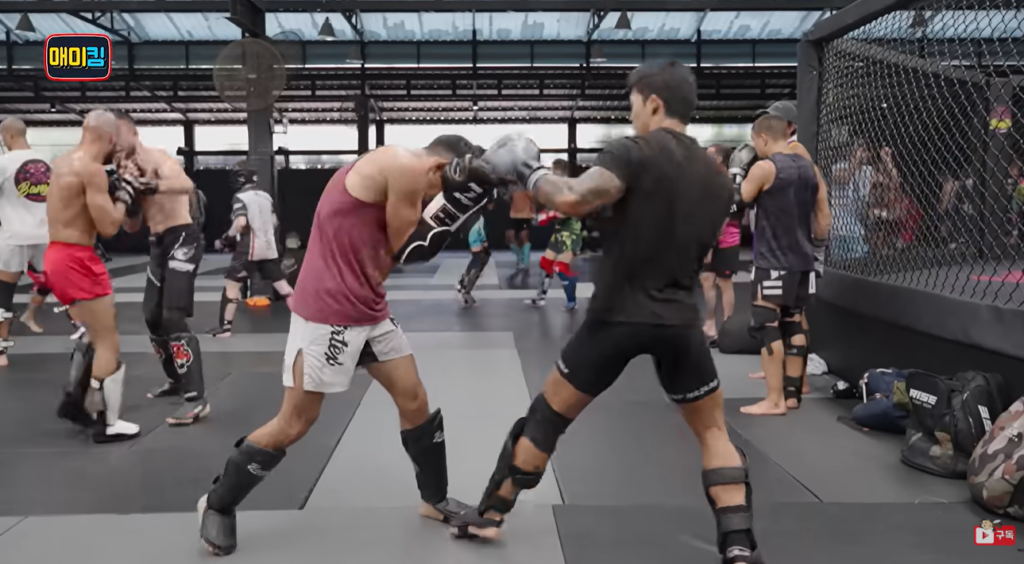
The broader strategy behind the camp is exposure.
Because the team isn’t spending months in Thailand, the coaches aren’t attempting to completely rebuild Song’s game. Instead, they want him working with as many different high-level fighters and coaches as possible during the limited time available.
That includes selecting training partners for more than their reputation.
Song’s coaches specifically discussed the importance of finding fighters whose physical attributes and styles can create problems relevant to his upcoming competition. The objective is not to give Song comfortable rounds. It is to put him into situations that expose weaknesses while there is still time to address them.
The camp has also given Song and the other Korean fighters access to different coaching methods. Later in the episode, they work with an Irish striking coach at Bangtao, with the team praising pad work designed around realistic reactions and combinations rather than simply exhausting the fighter.
The philosophy is relatively simple.
A short overseas camp can’t provide unlimited time.
What it can provide is variety.
Different opponents. Different styles. Different coaches. Different problems.
One Fight Closer

Song has been here before.
He competed on Road to UFC Season 3 but did not leave with a UFC contract. Season 5 has given him another opportunity, and this time he has already cleared the first obstacle.
His opening-round victory wasn’t perfect. UFC noted the fence-grab warning and point deduction that complicated his fight with Aoi. But when the situation became increasingly difficult, Song found the finish rather than allowing the fight to reach the scorecards.
Chagnaadorj presents the next problem.
The 26-year-old Mongolian enters the semifinal on a three-fight winning streak after showing against Regezhen that he can use his grappling, manage difficult rounds and remain effective late enough to earn a decision.
Thailand cannot provide a definitive answer for what will happen when the cage closes in Shanghai.
What it can do is make Song uncomfortable before Chagnaadorj gets the opportunity.
The rounds at Bangtao have forced Song to defend when tired, recover from bad positions, wrestle against high-level opposition and sharpen the same back-taking game that earned him his place in the semifinals.
There are still details to correct. His coaches made that clear.
But that may be the most encouraging part of Song’s preparation.
The goal of this camp isn’t to prove that he’s ready.
It’s to find every reason he might not be — and work on them before August 28.
Follow HanPunch for the latest Korean MMA news, exclusive fighter interviews, event coverage, and the stories shaping combat sports across Asia.
About The Author





Join the Conversation