

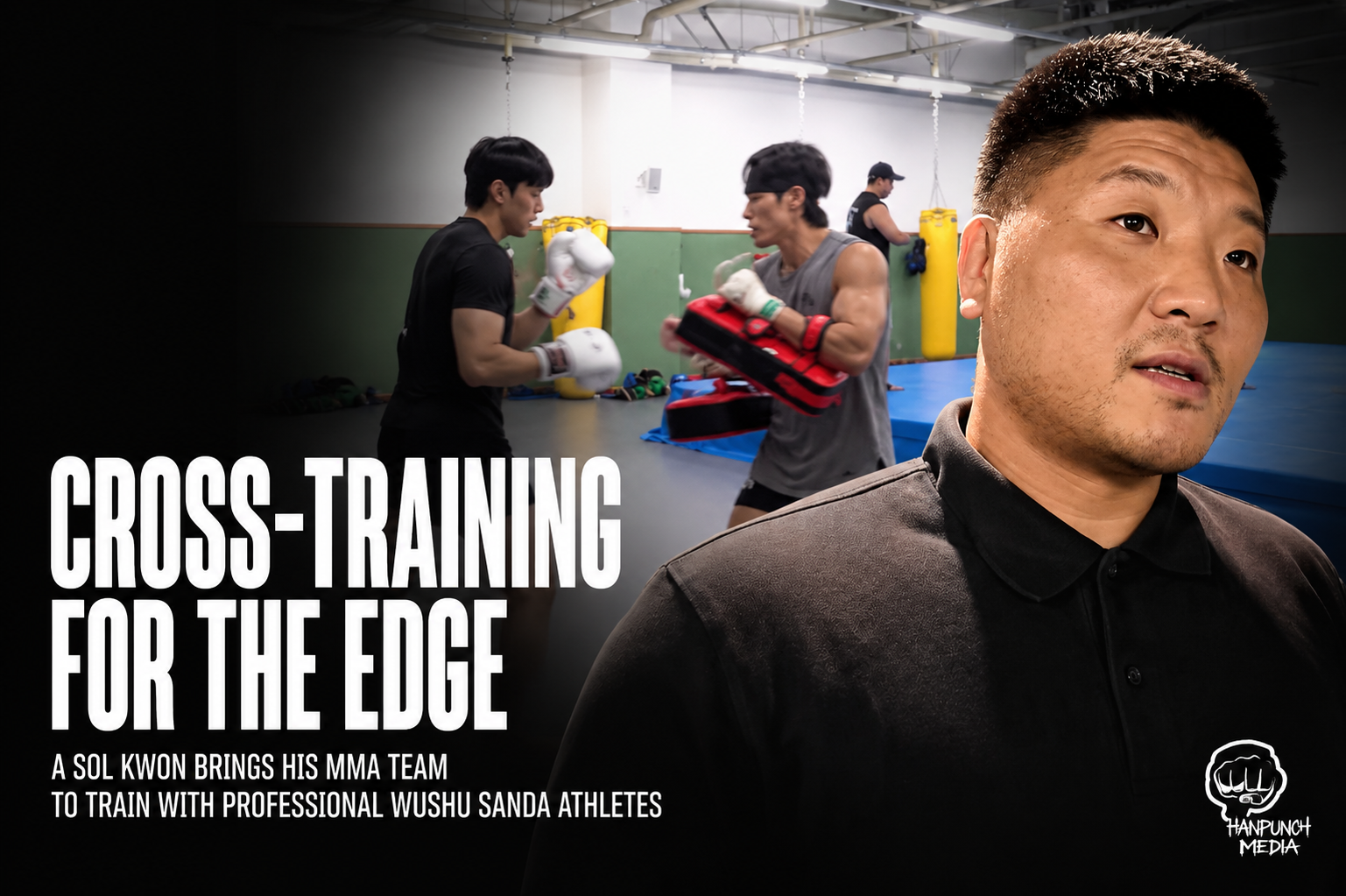
A Sol Kwon brought his fighters to Daegu for a joint session with professional Wushu Sanda athletes, using the unfamiliar pace, distance, and clinch entries of the sport to sharpen skills that translate directly to MMA.
A Sol Kwon is looking outside traditional MMA sparring to develop his fighters.
In a recent video posted to his YouTube channel, Kwon took members of his team to Daegu for a joint training session with professional Wushu Sanda athletes, giving his fighters an opportunity to work against opponents whose movement and timing differ significantly from what they normally encounter inside an MMA gym.
The session included athletes from the Daegu City Hall team and another professional Sanda program from Chungbuk.
Rather than framing the training as a competition between MMA and Wushu Sanda, A Sol Kwon viewed it as an opportunity to expose his fighters to a different set of problems.
And one characteristic immediately stood out: speed.
A Different Kind of Distance
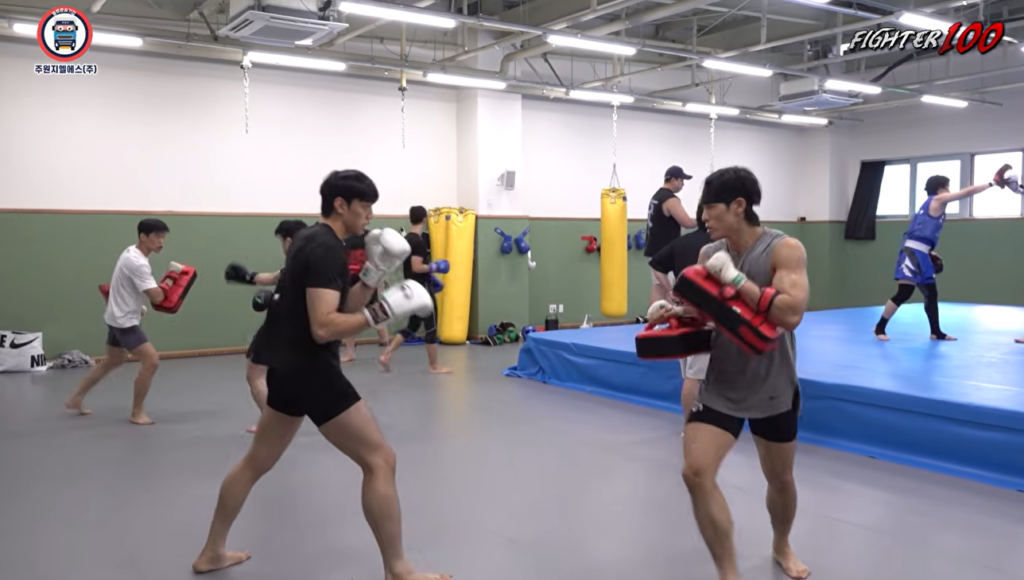
Wushu Sanda shares several elements with MMA. Fighters strike with punches and kicks while also using throws and takedowns from the clinch.
Without MMA’s extended ground fighting, however, exchanges tend to develop differently.
Kwon pointed specifically to the Sanda athletes’ ability to manage distance.
“The distance is strangely different from ours in MMA,” A Sol Kwon explained while watching the sparring.
From ranges that may appear relatively safe to an MMA fighter, the Sanda athletes were able to rapidly close the gap and turn striking exchanges into clinch situations.
Kwon wanted his athletes to become comfortable recognizing those transitions.
Rather than simply learning Sanda techniques, the goal was to understand how an opponent with unfamiliar timing could suddenly enter striking or clinch range.
Speed Changes the Problem

The MMA fighters also noticed a significant difference in tempo.
Because Sanda competition places a strong emphasis on scoring clean techniques, athletes often attack quickly, land, and reposition before their opponent can respond.
Kwon compared aspects of the movement to Taekwondo: fast entries, sharp scoring attacks, and immediate exits.
One of his fighters noted that even the heavier Sanda athletes moved surprisingly quickly.
The difference forced the MMA fighters to adjust their normal rhythm.
Instead of settling into longer exchanges or gradually reading an opponent, they were forced to react to short bursts of offense delivered at a much faster pace.
For Kwon, that discomfort is precisely what makes the training valuable.
Turning Striking Pressure Into Wrestling Opportunities
Kwon wasn’t interested in having his fighters simply imitate their Sanda counterparts.
Instead, he repeatedly instructed them to adapt their MMA tools to the problems being presented.
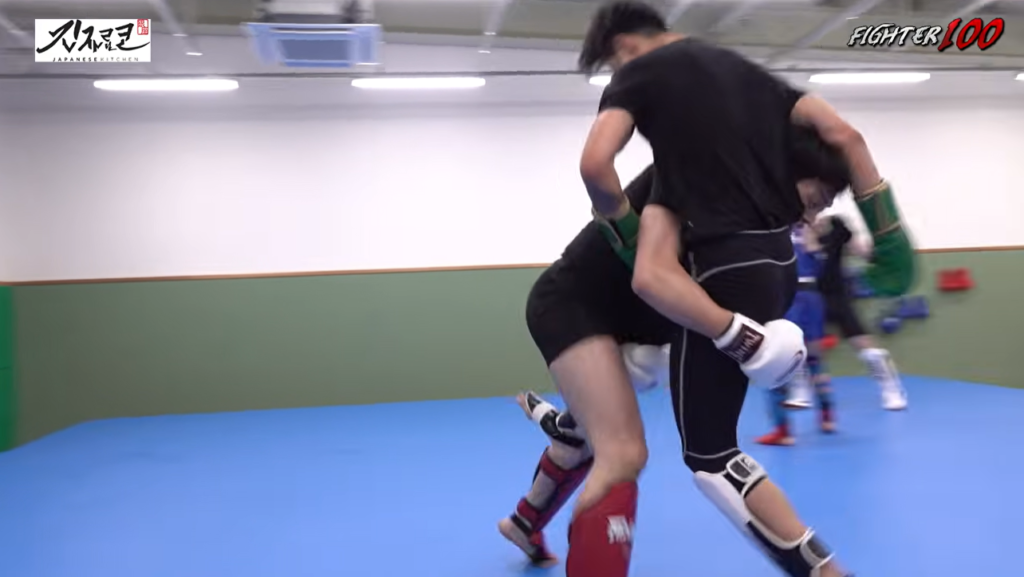
Against opponents constantly moving in and out of range, Kwon told his fighters to lower their stance and avoid unnecessarily chasing them across the mat.
When the Sanda athletes committed to their attacks, that became the moment to look for wrestling.
“Take the distance when they come in and shoot the takedown,”
Kwon instructed during the session.
The faster and more aggressively an opponent commits to a strike, the clearer the window for a level change can become.
During sparring, Kwon repeatedly coached his fighters to recognize those moments rather than trying to win every striking exchange.
At other points, he encouraged additional clinch work, particularly when fighters became too comfortable remaining at long range.
Learning to Make the Opponent React
Another recurring coaching point involved controlling initiative.
A Sol Kwon told one fighter that he should be creating reactions rather than constantly responding to his opponent.
“You have to make the opponent react,” he said. “You can’t be the one reacting.”
He instructed the fighter to keep his left hand and left kick active, forcing the opponent to respond before entering the clinch or changing position.
Moments later, the fighter successfully applied the instruction during sparring, drawing an immediate reaction from those watching.
The exchange illustrated what Kwon appeared to want from the entire session: not simply new techniques, but new situations that force his fighters to make faster tactical decisions.
Why Sanda Can Translate to MMA
Cross-training between combat sports is nothing new in MMA.
Boxers are brought in for hands. Wrestlers sharpen takedowns. Muay Thai specialists provide work in the clinch.
Sanda offers another useful combination.
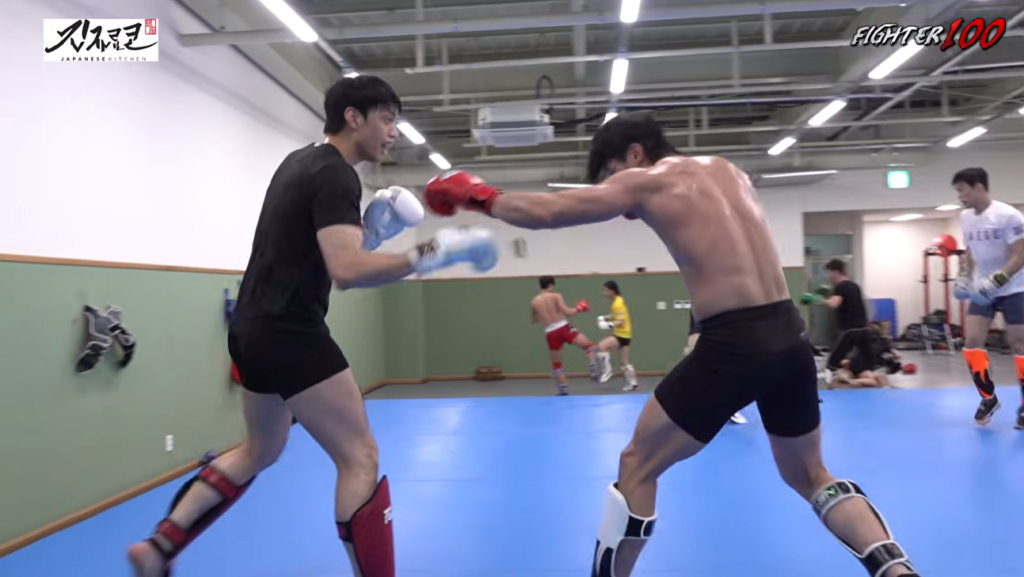
Its mix of rapid kicking attacks, explosive entries, catches, throws, and clinch transitions creates scenarios that overlap with MMA while still feeling different enough to challenge experienced fighters.
Kwon specifically highlighted the unusual distance from which Sanda athletes can initiate exchanges.
He said he wanted his fighters to learn from their ability to rapidly bridge that space and enter the clinch.
That makes the purpose of the session more nuanced than simply improving striking.
The unfamiliar style can sharpen distance recognition, reaction speed, takedown timing, clinch awareness, and the ability to adapt when an opponent doesn’t move like a conventional MMA fighter.
The Value of Korea’s Professional Sports System
The visit also led Kwon to discuss something beyond technique: the infrastructure available to professional athletes in Korea’s municipal sports programs.
While touring the Daegu facility, Kwon observed multiple professional teams operating from the complex, including athletes from sports such as judo, wrestling and ssireum.
He was particularly impressed by the environment available to full-time athletes.
Being able to focus on eating, training, recovery and competition without constantly worrying about outside employment is, as Kwon described it, essentially a “dream job” for an athlete.
He expressed hope that MMA fighters could eventually have access to similar resources.
For a sport in Korea that has traditionally grown through privately operated gyms and promotions rather than the established municipal sports system, the comparison is notable.
More Than MMA vs. Sanda
The video’s title presents the obvious question: What happens when MMA fighters spar professional Wushu Sanda athletes?
But the more interesting answer isn’t about which discipline wins.
It’s about what each can teach the other.
For A Sol Kwon, bringing his fighters into an unfamiliar environment is another way of preventing them from becoming comfortable with a single style of opponent.
Sanda athletes provide different timing. Different distance. Different entries. Different reactions.
Inside an MMA fight, where an opponent’s background can range from wrestling to Taekwondo to kickboxing, learning to solve unfamiliar problems may ultimately be more valuable than winning rounds in the gym.
And that appears to be exactly what Kwon wanted from the trip to Daegu.
Follow HanPunch for the latest Korean MMA news, exclusive fighter interviews, event coverage, and the stories shaping combat sports across Asia.
About The Author







Join the Conversation