
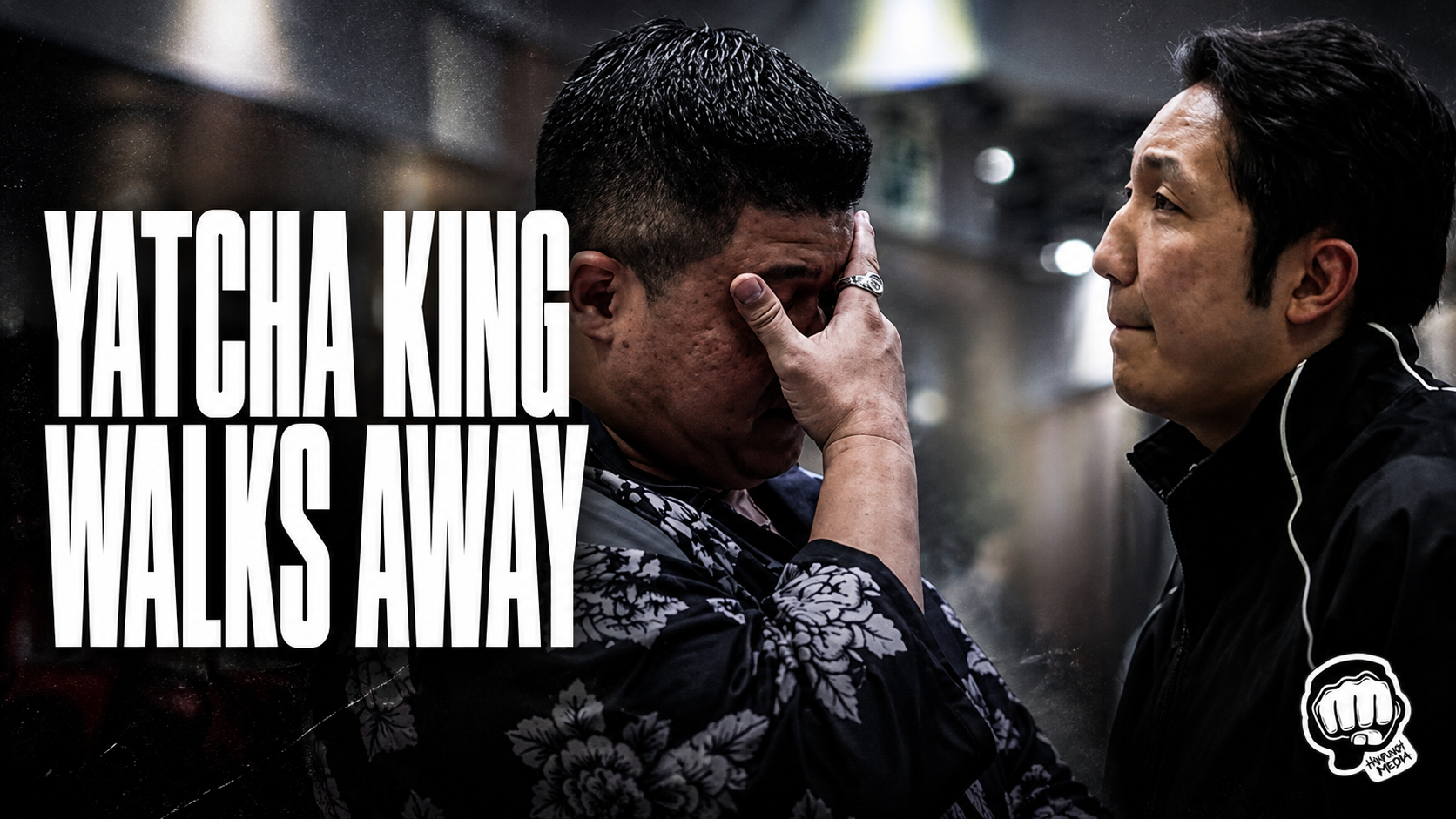
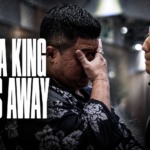
Yatcha Club CEO Yong Hwan Cho (“Yatcha King”) says he will walk away from the bare-knuckle promotion he built, bringing Yatcha Rules to an end after one final fight at Pandemonium 2.
In Korean combat sports, Yatcha Club was never supposed to fit in.
It was raw, controversial, uncomfortable and unapologetically different. Bare-knuckle fights. Vale Tudo. An image that deliberately existed somewhere between organized combat sports and something far more dangerous.
And somehow, it became a brand.
Now, in one of the most unexpected announcements in the Korean fight scene, the man behind Yatcha Club says he is bringing it all to an end.
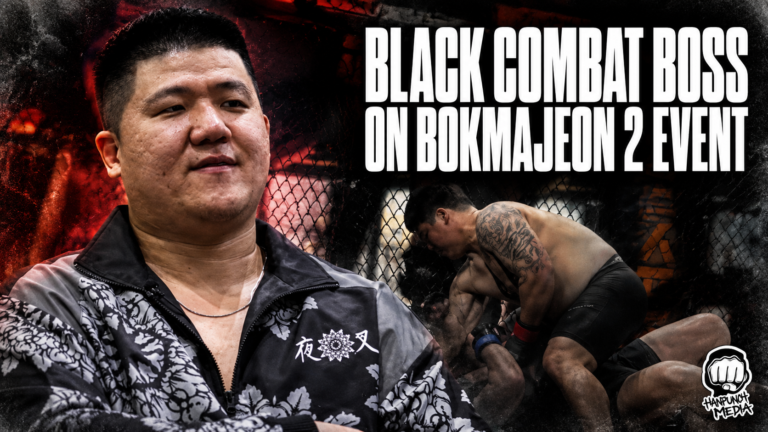
During a remarkably candid conversation with Black Combat CEO Pyeong Hwa Park, Yatcha Club CEO Yong Hwan Cho, better known as Yatcha King, revealed that he will step away from Yatcha Club and relinquish his authority over the bare-knuckle fighting promotion.
“I will no longer be running Yatcha Club,” Cho said. “I won’t be doing this anymore.”
There was no dramatic retirement trailer. No countdown. No carefully polished farewell statement.
Instead, the announcement came in the middle of a much deeper conversation about Korean combat sports—and what happens when something you created begins to represent something you never intended.
When “Yatcha” Became Something Else
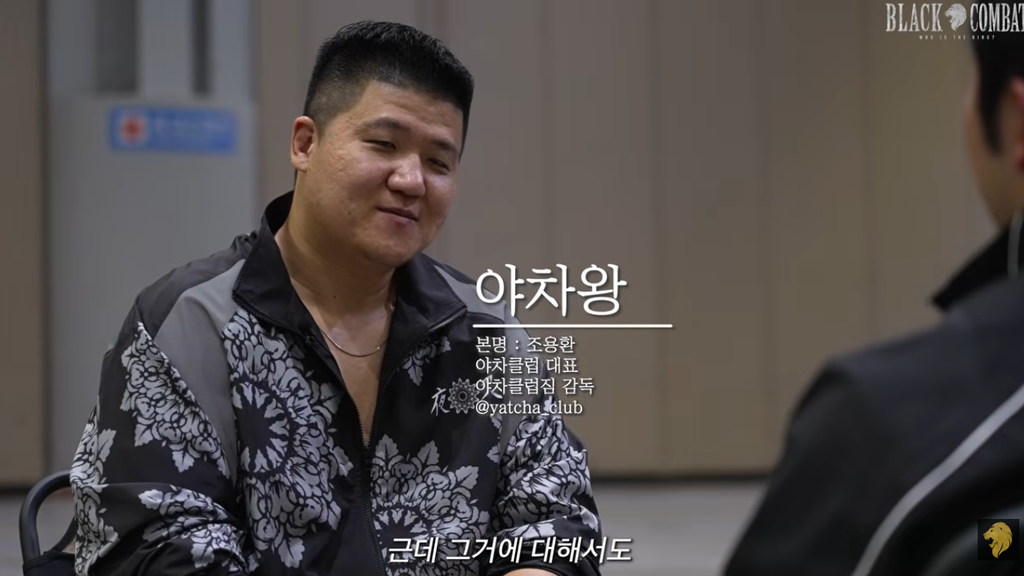
For years, Yatcha Club lived with criticism.
Traditional figures within Korean combat sports could look at bare-knuckle fighting and see exactly what they feared the sport becoming: dangerous, sensational and built around violence.
But Cho’s argument was always that Yatcha wasn’t simply a street fight.
Yatcha Club had defined rules. It had referees. It had emergency medical personnel and protocols. Most importantly, Cho believed there was a philosophy behind it.
The idea was to put trained martial artists across from one another and strip combat down to something raw.
Whatever people thought about the format, Yatcha Club developed an identity powerful enough that even Park acknowledged its extraordinary influence on Korean combat sports. The two discussed how Yatcha had established its own recognizable ruleset and brand rather than simply staging random fights.
But there was a problem.
Eventually, “Yatcha” stopped belonging only to Yatcha Club.
Cho described seeing the term associated with street fights, bullying and violence involving teenagers. In one example that clearly affected him, a staff member showed him footage of teenage girls apparently being pressured into fighting under what was being called “Yatcha Rules.”
For Cho, that crossed into territory completely removed from what he believed he had created.
He had wanted to showcase trained martial artists voluntarily testing themselves through bare-knuckle competition.
Instead, he was seeing the Yatcha name attached to what he described simply as assault.
And as a father raising an elementary school-aged son—and someone who said he had experienced bullying himself when he was young—that distinction became impossible for him to ignore.
Even if Yatcha Club continued insisting that those incidents had nothing to do with the organization, Cho realized something uncomfortable:
He could no longer completely control what the word “Yatcha” meant.
A Line Korean Combat Sports Shouldn’t Cross
The conversation also centered heavily on Myoung Jun Sung and a larger debate about how Korean fight promotions attract attention.
Park admitted that Black Combat itself had previously considered bringing Sung into the promotion.
Black Combat fighter Mammoth wanted the fight, but Park also admitted that his own competitive instincts played a role in the decision.
At the time, Park believed rival groups that normally wouldn’t work together had effectively joined forces against Black Combat. His response was to consider bringing Sung in and using the controversy to fight back.
Looking back, Park admitted that was a mistake.
The fight ultimately never happened because Sung withdrew due to injury, something Park now views almost as an intervention that prevented him from setting a precedent he would later regret.
That admission opened the door to a much broader criticism of combat sports marketing.
You can put someone notorious inside a cage and generate views.
People will click.
People will argue.
People will watch because they’re curious whether a street fighter can actually beat a professional.
But will they buy a ticket?
Park’s answer was essentially no.
Curiosity, he argued, isn’t the same thing as emotional investment.
A crowd might stop to watch two people fighting in the street. That doesn’t mean those same people would pay 100,000 won to see it.
The fighters who build lasting fan bases, in Park’s view, are the ones whose struggle means something—the professionals grinding away in gyms, working other jobs, losing fights, coming back and continuing to chase something incredibly difficult.
That was also where the conversation became uncomfortable for Yatcha Club.
Because if Korean combat sports increasingly used notoriety, criminal backgrounds or street-fighting reputations as shortcuts to attention, where did Yatcha fit into that ecosystem?
And how much responsibility did its creator have for what followed?
Cho’s Answer Was Extreme
Park was prepared for the possibility that their philosophies had become incompatible.
He told Cho that if Yatcha Club intended to continue down that road, Pandemonium 2 might have to be the final event they worked on together.
Cho’s response was something Park clearly wasn’t expecting.
He wasn’t going to defend Yatcha Club.
He was going to end it.
Cho explained that the decision had been developing for some time, although he acknowledged that Park had been one of the influences that finally pushed him toward making it official.
“There’s really only one reason,” Cho explained.
He could no longer accept young students using expressions like “Yatcha,” “Yatcha Rules” and “Yatcha fights” in connection with the type of violence he was seeing.
And he took responsibility for it.
Not necessarily legal responsibility.
Moral responsibility.
Cho stressed that nobody had forced him into the decision. There was no outside intervention and no third party ordering Yatcha Club to disappear.
“This is my choice,” he said.
For Cho, it was a decision based on his own convictions and the philosophy he believed Yatcha Club was supposed to represent.
A “Beautiful Tragedy”
Park’s reaction may have been the most fascinating part of the entire conversation.
For years, Yatcha Club had been treated like the monster outside the gates of traditional Korean combat sports.
Too violent.
Too unconventional.
Too dangerous.
Park admitted that he had viewed Cho as a different kind of monster—one worth joining hands with.
But after hearing Cho’s decision, his perspective changed.
In Park’s eyes, Cho had become someone willing to sacrifice the very thing he created because he believed its existence was beginning to cause harm beyond his original intentions.
Park called the moment a “beautiful tragedy.”
It’s a surprisingly fitting description.
Because Yatcha Club isn’t disappearing after being defeated by another promotion.
It wasn’t replaced by a competitor.
Its CEO didn’t announce that the business simply failed.
Instead, the man who spent years defending Yatcha Club ultimately decided that defending it was no longer enough.
The brand had become bigger than his intentions.
So he chose to end his own creation.
One Last Yatcha Rules Fight
There is still one chapter left.
Cho announced that the October 11 fight between Myoung Jun Sung and Myung Hwan Kim at Pandemonium 2 will be the final Yatcha Rules fight in Korea.
The event takes place at KINTEX Exhibition Center 1, Hall 3.
Afterward, Cho says he will no longer permit events to use the Yatcha Rules name.
“This is the end of Yatcha Rules,” Cho declared.
That gives Pandemonium 2 a significance nobody could have expected when the event was originally announced.
It isn’t simply another Yatcha Club show anymore.
It’s a farewell.
And perhaps fittingly, Black Combat will help give Yatcha Club its final send-off.
Park offered to support the event through Black Combat’s membership platform, including livestreaming Pandemonium 2 and providing Cho with a broadcast rights fee.
Park also reversed his previous decision not to attend the event and told Cho he would be there in person.
By the end of their conversation, what initially sounded like it might become a public breakup between two influential Korean combat sports promoters had turned into something completely different.
Respect.
A handshake.
And a farewell.
The End of an Experiment
People will debate Yatcha Club for a long time.
Some will remember it as an innovative promotion willing to explore territory mainstream MMA wouldn’t touch.
Others will remember the danger, controversy and uncomfortable relationship between combat sports and violence as entertainment.
Both can probably be true.
But it’s difficult to deny that Yatcha Club left a mark on Korean combat sports.
It challenged the boundaries of what a fight promotion could look like. It created a distinctive ruleset and built an identity recognizable enough that the word “Yatcha” eventually became bigger than the organization itself.
Ironically, that may also be what killed it.
Yong Hwan Cho wanted Yatcha to represent trained fighters willingly stepping into an extreme form of competition.
When he began seeing that same name attached to bullying, coercion and ordinary street violence, he decided that continuing to defend his original intentions wasn’t enough.
So on October 11, Korean combat sports will witness something genuinely unusual.
A promoter isn’t losing his company.
He isn’t being forced out.
He isn’t being defeated by a rival.
Yong Hwan Cho is voluntarily walking away from one of the most recognizable things he ever created because he no longer believes he can control what it represents.
For a promotion built around some of the rawest forms of fighting, Yatcha Club’s final act may ultimately be remembered for something completely different.
Knowing when to walk away.
Follow HanPunch for the latest Korean MMA news, exclusive fighter interviews, event coverage, and the stories shaping combat sports across Asia.
About The Author


Join the Conversation