

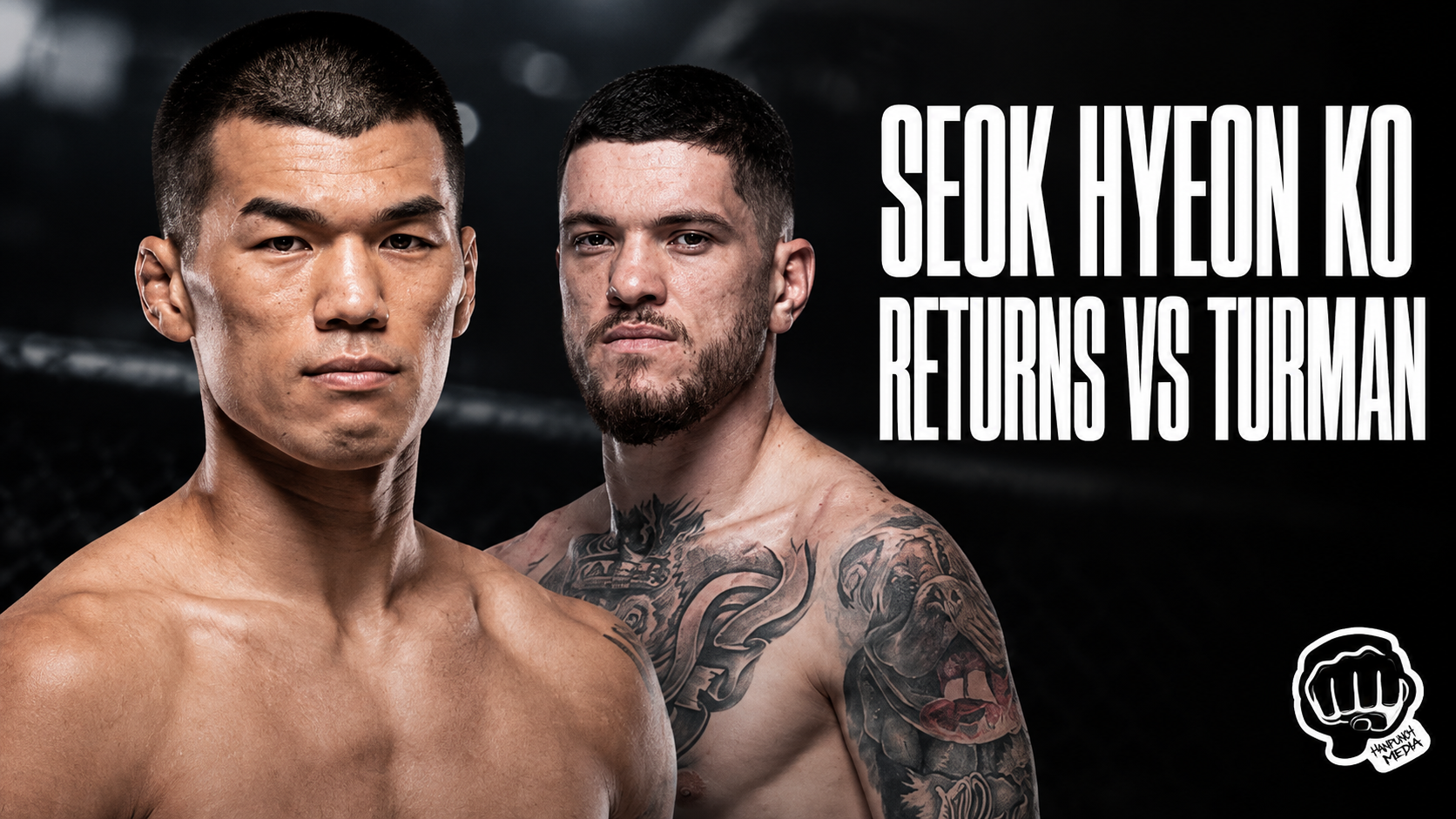
Seok Hyeon Ko looks to rebound from his first UFC loss when he meets Brazilian Jiu-Jitsu black belt Wellington Turman on November 7.
Seok Hyeon Ko did not get the result he wanted in July, but the South Korean welterweight will not have to wait long for his opportunity to respond.
Ko is scheduled to return on November 7, 2026, when he faces Brazilian veteran Wellington Turman at UFC Fight Night: Bonfim vs. Brady. The matchup comes after Ko suffered a unanimous decision loss to Jean-Paul Lebosnoyani on July 18, snapping the momentum he had built during his early UFC run.
For Ko, the assignment presents more than just an opportunity to get back into the win column. Turman’s Brazilian Jiu-Jitsu background could force him to confront some of the same questions that emerged in his most recent fight.
This time, however, Ko knows exactly what kind of danger is waiting for him.
Ko Looks to Rebound
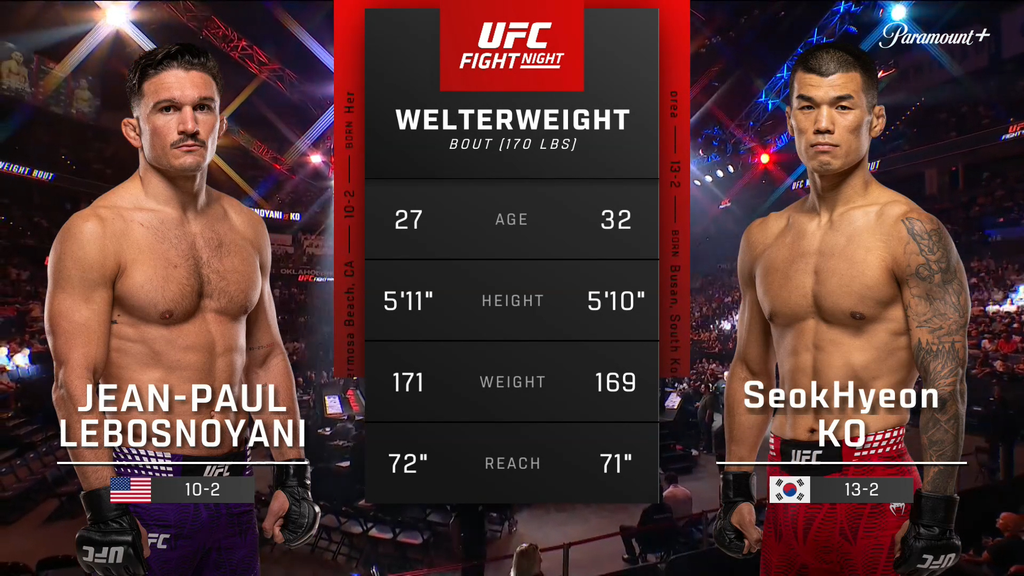
Ko entered the Lebosnoyani fight with a reputation built around pressure, physicality and a suffocating grappling game.
The South Korean’s Combat Sambo and Judo background has translated effectively to MMA. Rather than relying on traditional shots alone, Ko can close distance behind his punches, work into the clinch and use body locks, trips and throws to put opponents on the canvas.
Once there, he can be extremely difficult to remove.
That approach was particularly effective against Phil Rowe. Ko repeatedly controlled the UFC veteran on the ground and largely shut down his offense, demonstrating why his wrestling has become one of his most reliable weapons at the UFC level.
But Lebosnoyani presented a different challenge.
Ko was forced to navigate dangerous submission threats while trying to establish his usual top control, including a tight guillotine sequence that tested his defensive grappling. As the fight progressed, the physical demands of maintaining his pressure also became increasingly significant.
Lebosnoyani ultimately took the unanimous decision.
It was a setback, but also the type of fight that can reveal where adjustments need to be made.
On November 7, those adjustments could immediately be tested.
Wellington Turman Brings a Different Kind of Ground Threat
Wellington Turman is no stranger to the UFC.
The Brazilian has spent years competing against experienced opposition and is a legitimate Brazilian Jiu-Jitsu black belt with an opportunistic submission game.
His armbar victory over Misha Cirkunov remains one of the clearest examples of what makes him dangerous. Turman does not necessarily need dominant top position to create offense. He can attack from his guard, threaten sweeps and capitalize when an opponent becomes careless during a scramble.
That distinction matters against Ko.
Ko’s instinct is to put opponents on their backs and make them carry his weight. Against many welterweights, getting the takedown represents the beginning of Ko’s strongest phase of the fight.
Against Turman, it could also put him directly into danger.
The Brazilian has shown vulnerabilities of his own, particularly when it comes to creating those grappling exchanges. According to UFC statistics, Turman has converted just 20 percent of his takedown attempts, meaning his submission ability has not always been accompanied by the wrestling necessary to dictate where fights take place.
That could leave Ko in an unusual position: he may be the fighter with the better ability to determine whether the bout goes to the ground, but Turman may be perfectly comfortable if he takes it there.
Who Wins the Grappling Battle?
That could be the defining question of the matchup.
Ko’s grappling is built around control.
Turman’s is built around opportunity.
If Ko gets Turman down and maintains disciplined posture, controls the hips and refuses to leave openings while attacking with ground-and-pound, his physical style could neutralize much of Turman’s offense.
But becoming overly aggressive would carry significantly more risk.
Turman will look for arms, necks and opportunities to transition onto Ko’s back. A momentary positional mistake could turn a successful takedown into a submission scramble.
After the difficulties Ko encountered against Lebosnoyani, that makes this matchup particularly interesting.
The answer may not be for Ko to abandon his wrestling. Instead, November 7 could show whether he has become more selective with it.
Seok Hyeon Ko May Hold the Advantage on the Feet
There is another potential route for the Korean: keep the fight standing.
Turman has never been known as a particularly high-volume striker. UFC statistics list him as absorbing more significant strikes per minute than he lands, and his striking defense has been tested throughout his UFC career.
Ko brings considerably more forward pressure.
The power that helped build his early reputation as “Korean Tyson” remains part of his game, even as he has developed into a more wrestling-oriented fighter. He can pressure behind combinations, force opponents toward the fence and make them react to the possibility of the takedown.
Against Turman, that threat could make his boxing even more effective.
There are risks here as well.
Ko’s wide stance and tendency to carry his hands low can leave openings during entries. And if he spends too much energy forcing exchanges early, the same late-fight fatigue that has occasionally affected his performances could become a factor again.
Turman may not need to win every minute. He needs Ko to make one mistake.
Turman Fighting to Reverse His Own Momentum
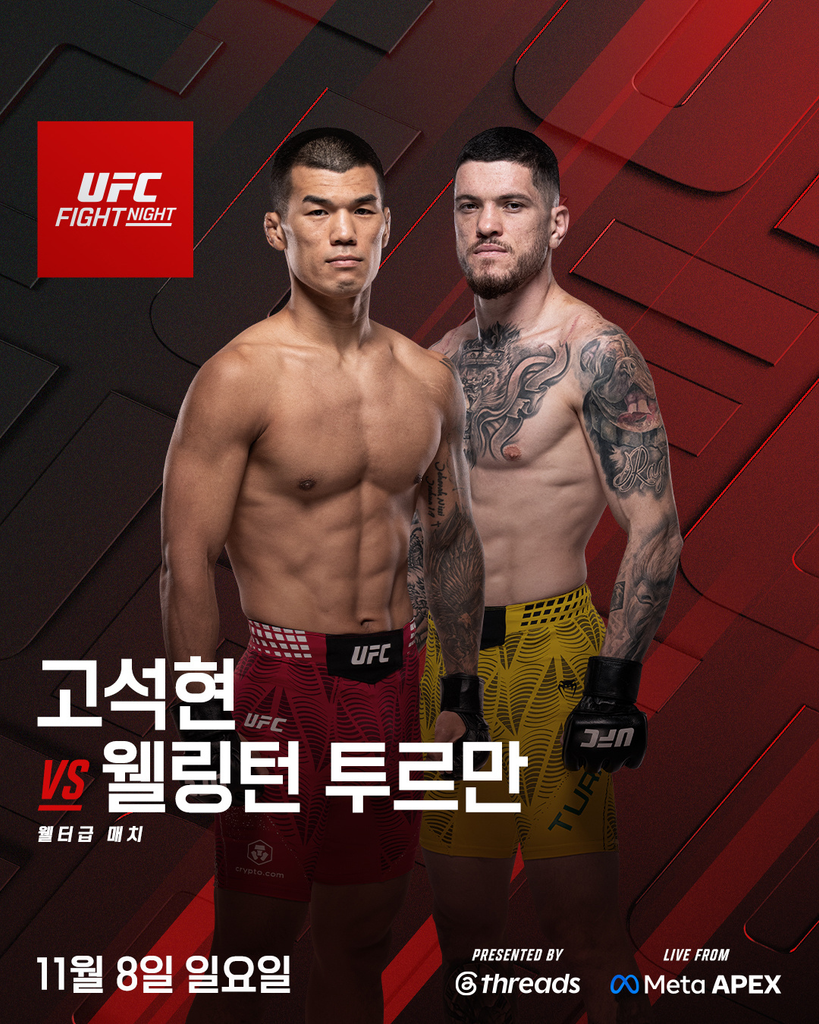
There is pressure on both sides of this matchup.
Turman enters the fight trying to halt a difficult stretch in his career. After losses to Andre Petroski, Randy Brown and Jared Gooden, the Brazilian also saw a planned July 2026 return against Islam Dulatov fall through.
November will therefore mark an important opportunity for Turman to reestablish himself after an extended period without a victory.
His experience should not be overlooked.
Turman has spent much of his career competing at middleweight and now trains under former UFC light heavyweight champion Glover Teixeira in Connecticut. At welterweight, his frame could create interesting physical challenges for Ko, particularly in prolonged clinch exchanges.
But experience alone will not stop Ko’s pressure.
Turman will have to prove he can consistently prevent Ko from establishing the pace and positions he wants.
A Fight That Could Tell Us More About Seok Hyeon Ko
There is a natural temptation to view the November matchup simply as Ko’s opportunity to rebound.
It may be more important than that.
The Lebosnoyani loss exposed areas of Seok Hyeon Ko’s game that future opponents were always going to study. His wrestling remains a major weapon, but high-level MMA increasingly becomes a question of what happens after your opponent understands your best weapon.
Turman provides an immediate test.
Does Ko continue forcing takedowns against a dangerous BJJ black belt? Does he trust his hands and make Turman find a way to initiate the grappling himself? Or can he blend both approaches without giving the Brazilian the submission opportunities he wants?
A win would put Seok Hyeon Ko back on track and demonstrate that the Lebosnoyani loss produced meaningful adjustments rather than simply interrupting his momentum.
A second consecutive defeat would raise more difficult questions about where the Korean welterweight fits in one of the UFC’s deepest divisions.
On November 7, Seok Hyeon Ko gets his chance to answer them.
Follow HanPunch for the latest Korean MMA news, exclusive fighter interviews, event coverage, and the stories shaping combat sports across Asia.
About The Author





Join the Conversation