

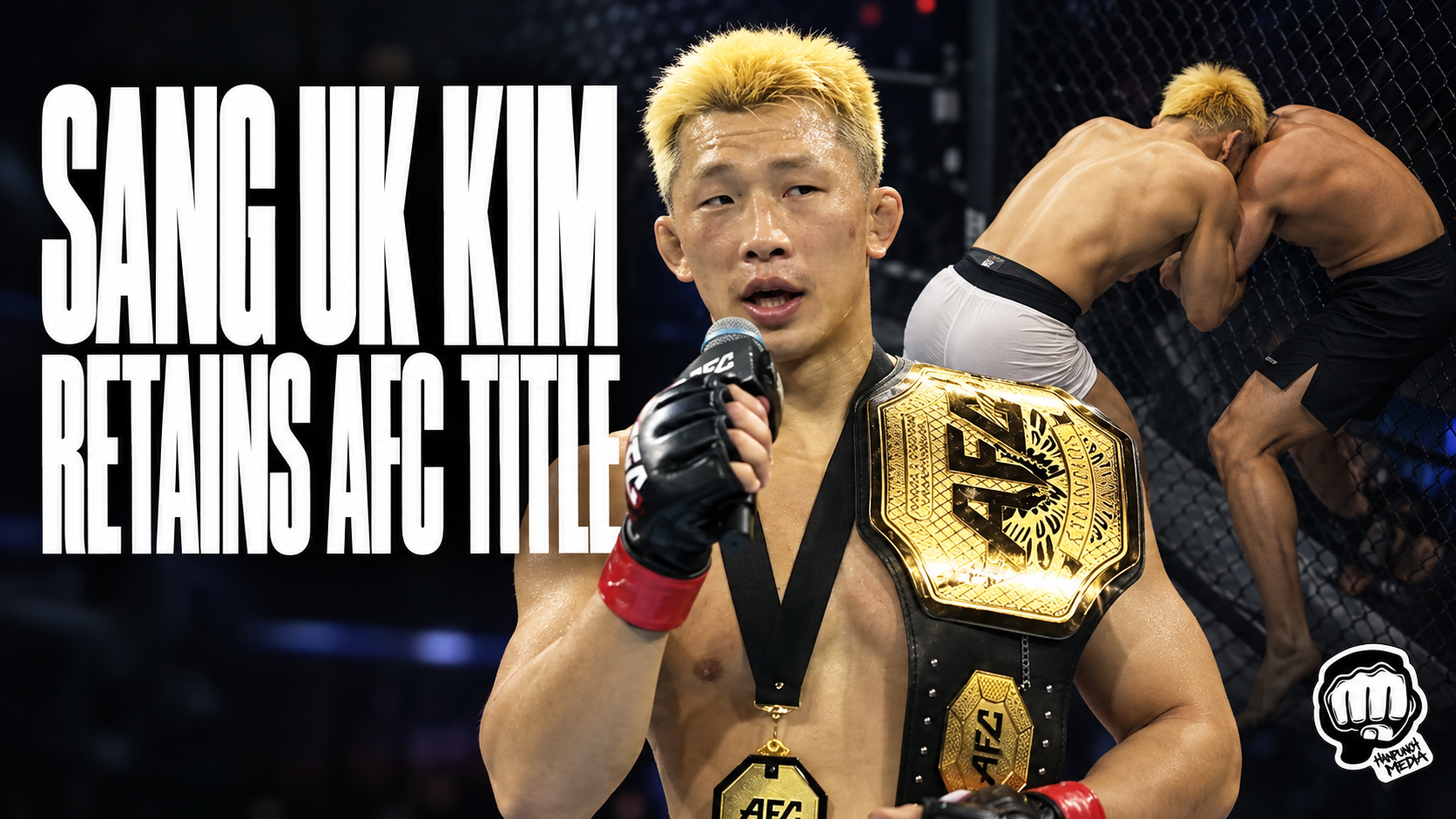
The Road to UFC finalist Sang Uk Kim relied on his wrestling and clinch control to neutralize Japan’s karate standout and successfully defend his championship in South Korea.
Sang Uk Kim successfully defended his Angel’s Fighting Championship (AFC) welterweight title at AFC 43, defeating Japanese challenger Kotetsu Nakakado by majority decision on October 9, 2026, at Inje Speedium in Gangwon-do, South Korea.
In a matchup that pitted an experienced mixed martial artist against one of Japan’s promising young strikers, Kim demonstrated the importance of experience, positional control, and a well-executed game plan.
The South Korean champion earned a 2-0 majority decision after three rounds, with the judges scoring the contest 29-29, 30-28, and 30-27.
A Clash of Styles
Heading into AFC 43, the championship bout was promoted as a classic grappler-versus-striker contest.
Nakakado, a 20-year-old Japan Karate National Champion, entered the matchup with an impressive striking pedigree. Known for his explosive movement, distance management, and karate-based attacks, the Japanese prospect represented a dangerous challenge for anyone willing to engage him at range.
Kim, however, brought a different set of credentials.
A Road to UFC finalist and established veteran of the South Korean MMA scene, Kim has built his reputation around a well-rounded skill set, combining wrestling, clinch control, and submission grappling.
During the buildup, Kim questioned Nakakado’s relative inexperience in mixed martial arts, suggesting that the Japanese challenger had yet to encounter the demands of competing against a complete MMA fighter.
Kim promised to expose those weaknesses and demonstrate the difference between elite striking credentials and the broader skill set required to succeed inside the cage.
At AFC 43, he followed through on that strategy.
Kim Takes Away Nakakado’s Greatest Weapon
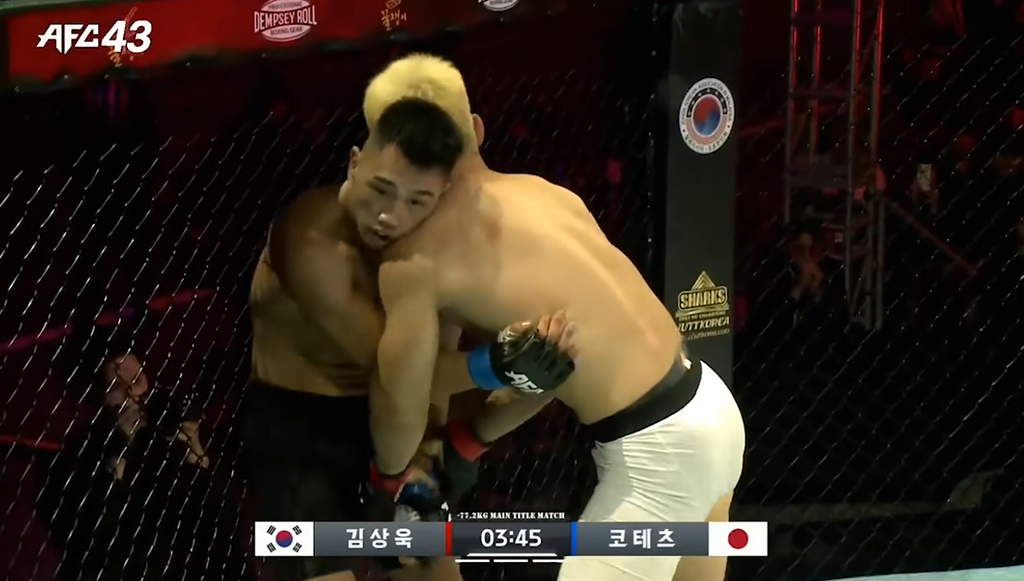
Rather than engaging Nakakado in prolonged striking exchanges, Kim approached the contest with a calculated game plan designed to eliminate the challenger’s advantages.
The champion applied forward pressure, using feints and cage positioning to close the distance and prevent Nakakado from establishing his preferred striking range.
Once inside, Kim repeatedly initiated clinch exchanges and wrestling engagements, forcing the Japanese prospect to defend against takedowns and positional control instead of launching his explosive karate combinations.
The approach proved effective.
By keeping Nakakado occupied with defensive grappling responsibilities, Kim limited the opportunities for the challenger to build offensive momentum.
The champion’s ability to dictate where the exchanges took place became a defining factor throughout the contest.
Experience Makes the Difference
Despite facing sustained grappling pressure, Nakakado demonstrated resilience.
The Japanese challenger defended submission attempts and continued competing through difficult positions, showing that his developing MMA skill set extends beyond his karate background.
However, his defensive efforts rarely translated into sustained offense.
Kim’s ability to maintain pressure, control the clinch, and manage the pace of the fight prevented Nakakado from consistently utilizing the striking techniques that had made him an intriguing prospect.
After 15 minutes, the contest went to the judges.
Two judges awarded the fight to Kim, while the third scored it a draw, giving the South Korean champion a majority decision victory (29-29, 30-28, 30-27) and another successful defense of his AFC welterweight championship.
What’s Next for Sang Uk Kim?
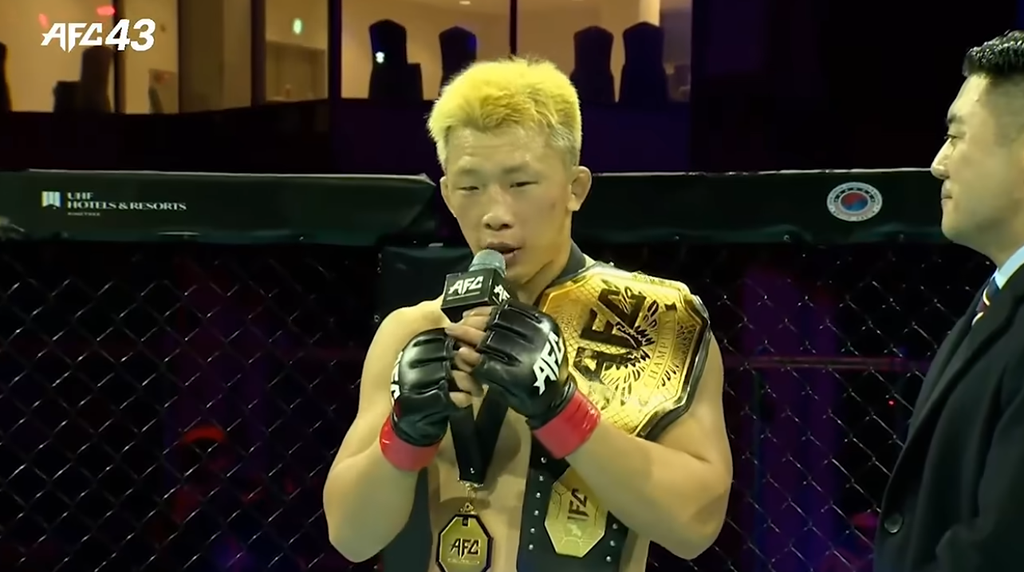
For Kim, the victory represents more than another regional championship defense.
Having previously competed in Road to UFC, the South Korean veteran continues to pursue opportunities on the international stage.
His performance against Nakakado reinforced the value of his experience and well-rounded approach, particularly against opponents who possess elite credentials in a single discipline.
While the victory does not guarantee another opportunity with the UFC or another major international promotion, it strengthens Kim’s case as an experienced welterweight capable of handling dangerous emerging talent.
For Nakakado, the defeat provides an important learning experience early in his MMA career. At just 20 years old, the Japanese striker has time to develop the wrestling and grappling skills necessary to complement his accomplished karate background.
Ultimately, AFC 43 showcased the difference between striking excellence and complete mixed martial arts.
Kim entered the cage promising to show Nakakado what real MMA looked like.
After three rounds, he left with his championship belt still around his waist.
Follow HanPunch for the latest Korean MMA news, exclusive fighter interviews, event coverage, and the stories shaping combat sports across Asia.
About The Author





Join the Conversation