
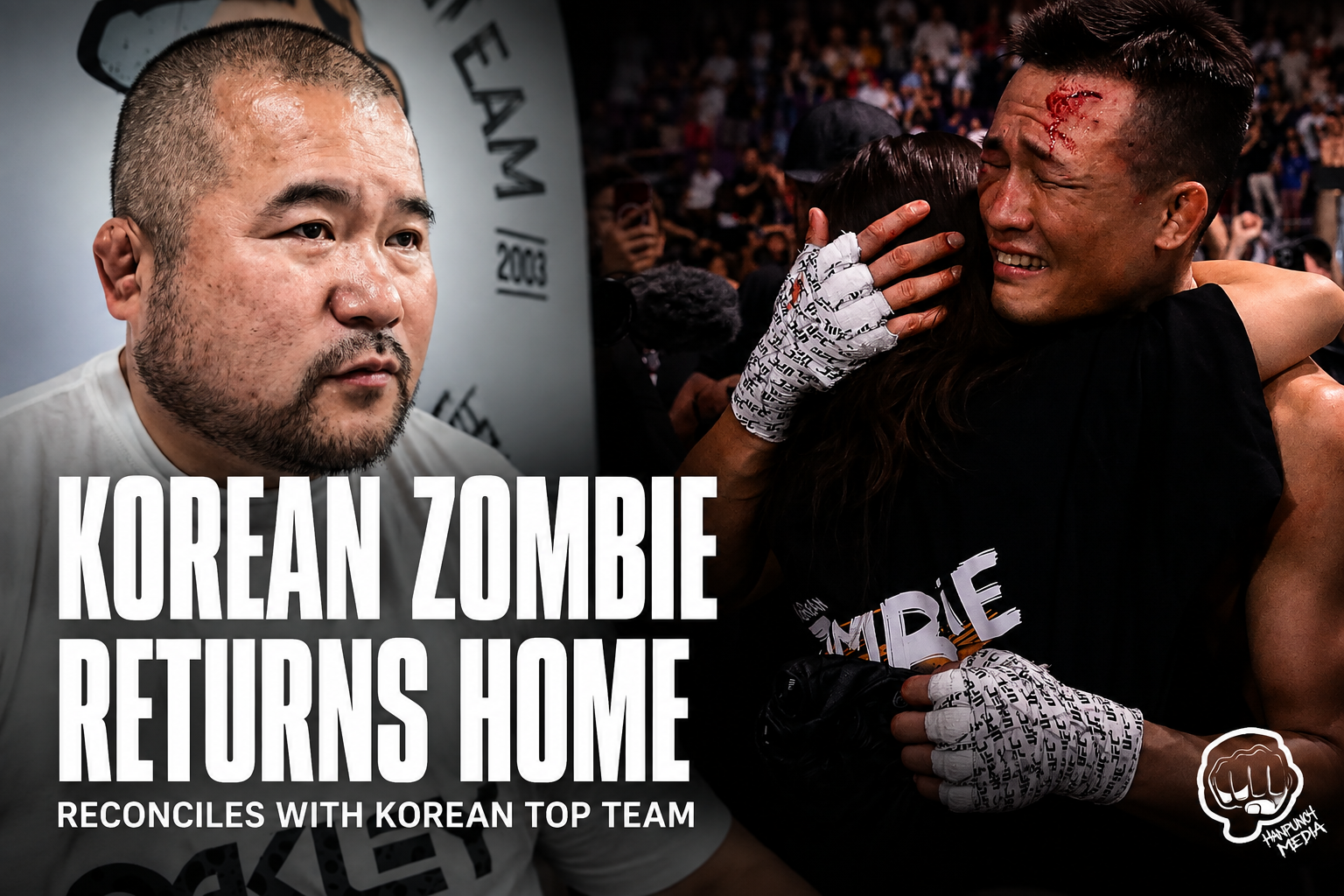
One of Korean MMA’s most meaningful reunions took place this week as Chan Sung Jung, better known as “The Korean Zombie,” returned to Korean Top Team (KTT) to personally reconcile with his former coach, Dong Jin Ha, who helped launch his legendary career.
The emotional meeting, featured on the Fight Life YouTube channel, marked the first public reunion between Jung and his former coach in years. Rather than promoting an event or discussing business, Jung visited the gym with one purpose, to apologize for past misunderstandings and express the respect he has gained after experiencing life as a coach and promoter himself.
A Relationship That Changed in 2014
For longtime MMA fans, the reunion carried significant historical weight.
Jung developed into one of South Korea’s most accomplished mixed martial artists under the guidance of his coach Dong Jin Ha and Korean Top Team before departing the gym in 2014 to pursue an independent training environment and gain greater control over his career decisions.
Although the move marked an important step in his professional journey, it also led to years of distance and public misunderstandings between Jung and his former coach.
The Fight Life interview intentionally avoids revisiting those specific disputes. Instead, both men focus on acknowledging the past, accepting responsibility where appropriate, and moving forward together.
“I Wanted to Apologize”
Speaking to the current Korean Top Team athletes, Jung explained that many of the things he said earlier in his career came from youth and inexperience.
Now leading Zombie MMA while also serving as CEO of Z-Fight Night (ZFN), Jung said becoming responsible for developing fighters has completely changed the way he views leadership.
“When I was younger, there were things I said without thinking,” Jung explained. “After becoming a coach myself, I experienced many of the same situations my coach once faced. I realized some of my words must have hurt him, and I wanted to apologize in person.”
He added that he hopes everyone involved in Korean MMA can create more positive experiences together instead of allowing old conflicts to linger.
Choosing the Future Over the Past
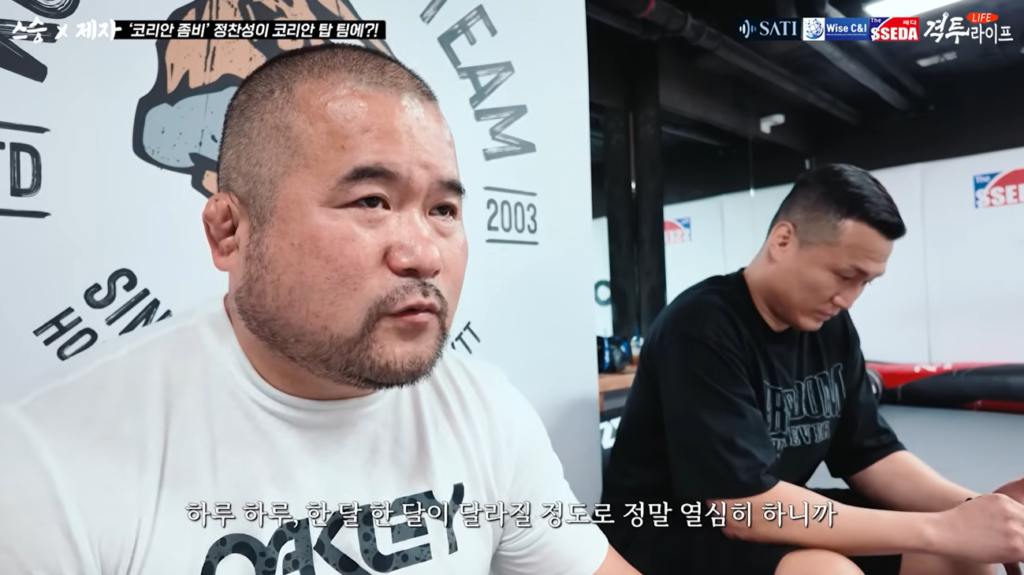
Jung’s former coach, Dong Jin Ha, admitted there had been disappointment and hurt feelings over the years but said the two had already spoken honestly about those experiences privately.
Rather than reopening old wounds, he emphasized that what matters now is the future.
“The last twenty years can’t be changed,” he said. “But we still have the next twenty or thirty years ahead of us.”
He also praised Jung’s continued contributions to Korean MMA, not only as one of the country’s greatest fighters, but now as a father, gym owner, mentor, and promoter helping develop the next generation.
The exchange concluded with applause from the athletes gathered inside the gym.
Remembering the Korean Zombie Before the UFC
The conversation eventually shifted toward memories of Jung’s earliest days at Korean Top Team.
His former coach described a young athlete who practically lived inside the gym, training from morning until night while sparring with anyone willing to step onto the mats.
More than his talent, however, it was Jung’s mentality that stood out.
Rather than searching for favorable matchups, he consistently asked to face stronger opponents, believing that challenging himself against elite competition was the fastest path toward improvement.
Looking back, his coach said Jung’s relentless work ethic remains one of the greatest examples he hopes today’s young fighters will follow.
Coaching Changed His Perspective
Jung admitted that retirement has fundamentally changed the way he views communication and leadership.
During his fighting career, he believed honesty simply meant speaking his mind.
Now responsible for coaching young athletes himself, he understands that words delivered without careful thought can unintentionally hurt the people around him.
He also acknowledged that coaching is far more difficult than he once imagined.
Balancing different personalities, motivating athletes, and helping each fighter develop in their own way has given him a newfound appreciation for everything his former coach experienced while leading Korean Top Team.
For Jung, that realization became one of the biggest reasons for making the visit.
Looking Back on a Historic Career
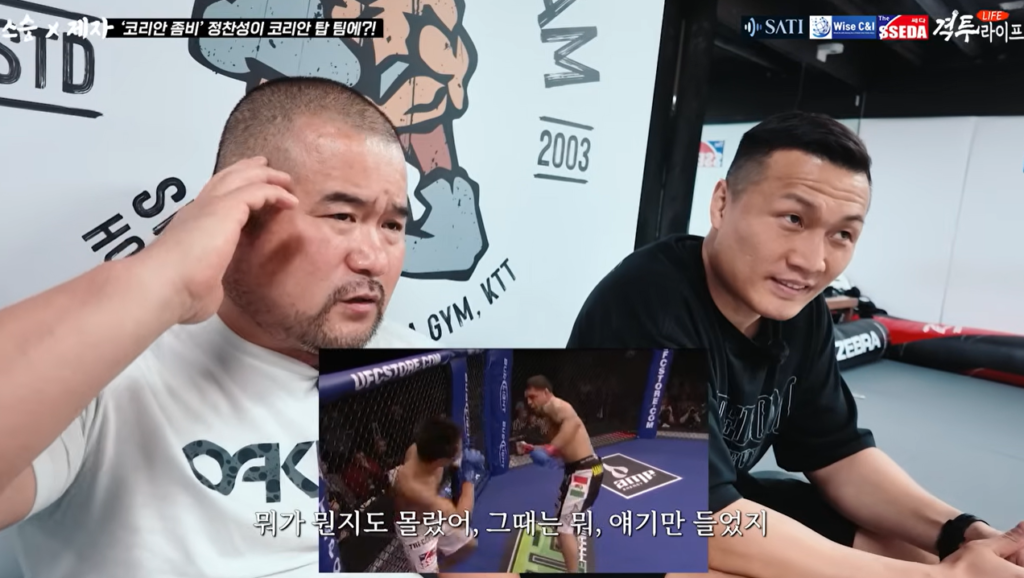
The pair also reflected on Jung’s journey from an unknown Korean prospect to one of the sport’s most recognizable featherweights.
Ha recalled the sacrifices made during those early years, when Jung spent virtually every day inside the gym and often slept there between training sessions.
They reminisced about Jung’s breakthrough performances in the WEC and UFC, the pressure of competing on the sport’s biggest stage, and how both victories and defeats shaped him throughout his career.
Those shared memories served as a reminder of just how much history the two had experienced together before eventually taking separate paths.
Friendly Competition Remains
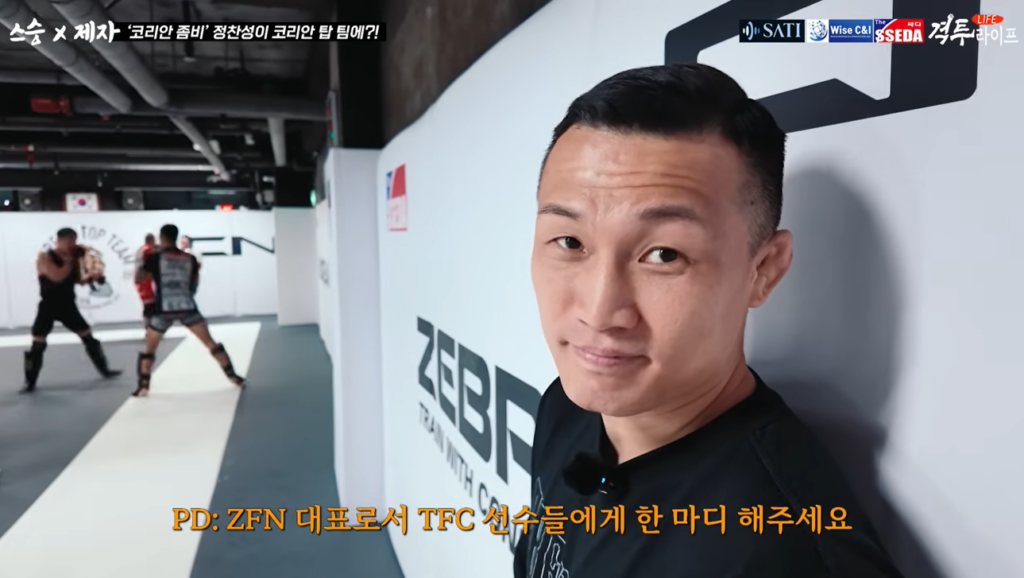
The visit concluded with lighthearted discussion about the upcoming TFC vs. ZFN 5-on-5 team competition.
Jung confidently predicted that Team ZFN would emerge victorious, while his former coach backed his own athletes with equal confidence.
Despite the playful rivalry, both men emphasized that events like these ultimately benefit Korean MMA by giving athletes opportunities to compete while helping the sport continue to grow.
Both also encouraged their fighters to prepare well and represent their teams proudly.
Chan Sung Jung’s career is deeply connected to Korean Top Team, where he developed into one of Asia’s most respected fighters before pursuing an independent path in 2014. While the circumstances surrounding that separation were never discussed in detail during the interview, both Jung and his former coach made it clear that they no longer wished to dwell on the past.
Instead, the meeting became a reflection on growth, accountability, and mutual respect.
As Jung continues building Zombie MMA and Z-Fight Night while mentoring a new generation of athletes, his decision to return and personally apologize demonstrates the perspective he has gained since retiring from competition. Likewise, Korean Top Team’s willingness to welcome him back highlights the importance of reconciliation within a sport built on respect.
For Korean MMA, the reunion serves as a reminder that some of the strongest partnerships can be rebuilt—not by forgetting the past, but by choosing to move forward together.
Follow HanPunch for the latest Korean MMA news, exclusive fighter interviews, event coverage, and the stories shaping combat sports across Asia.
About The Author


Join the Conversation