

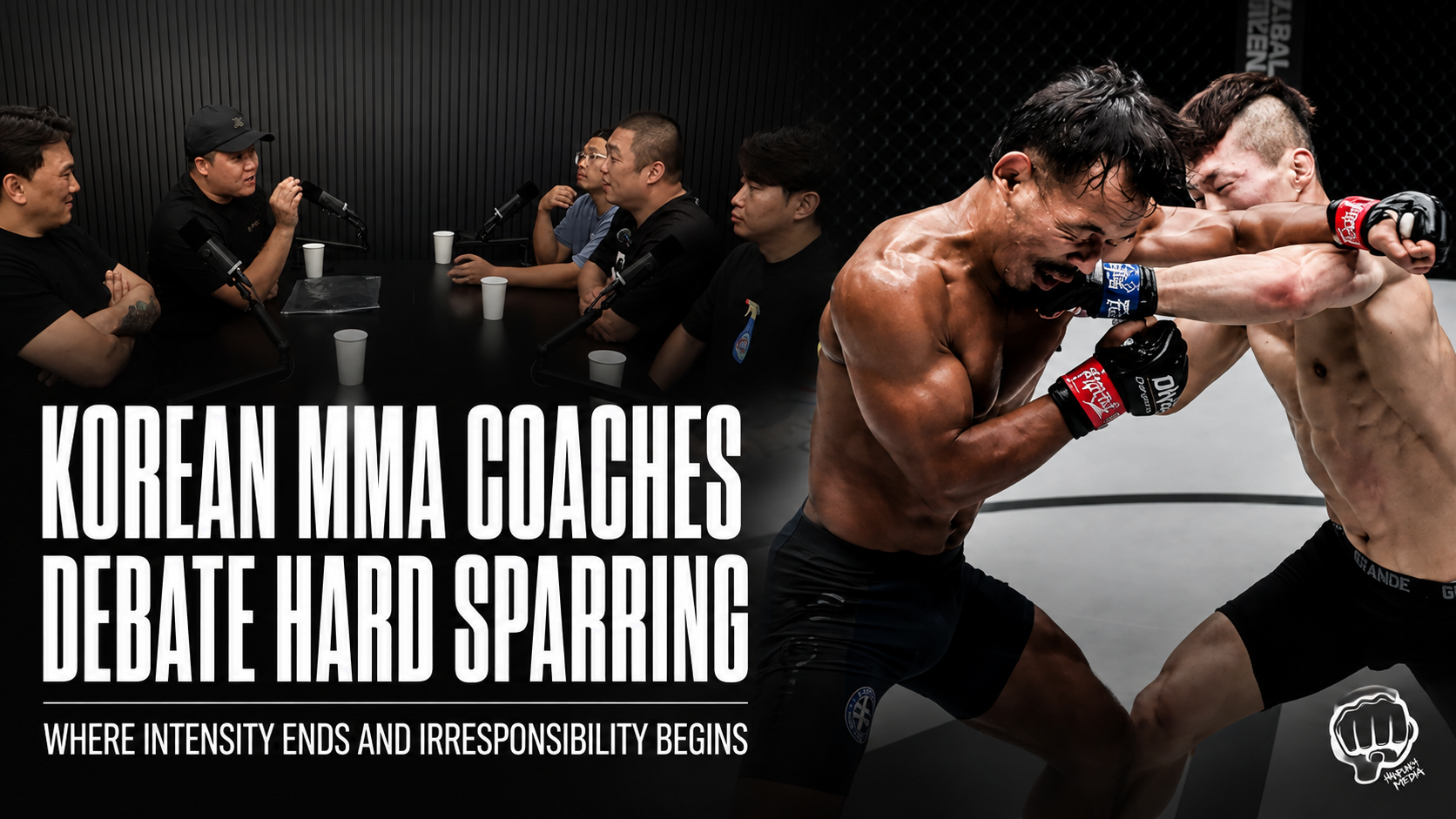
A panel of Korean MMA veteran coaches says the real problem isn’t hard sparring itself—it’s fighters who ignore agreed-upon intensity, target weaker training partners, and create unnecessary risks inside the gym.
Every MMA gym has its own philosophy on sparring.
Some believe frequent hard rounds are essential for developing fighters. Others limit contact to preserve athletes for competition. But regardless of training style, one principle received unanimous support during a recent discussion among Korean MMA coaches: everyone in the room should know what kind of sparring they’re agreeing to before the round begins.
During a wide-ranging conversation featuring Do Kyung Lee, Ok Jin Jeon, Yong Hwan Jo, Young Jun Kim, and Jung Jae Yoon, the coaches explored one of the most persistent issues in combat sports gyms—the training partner who consistently ignores agreed-upon intensity.
For the group, the issue isn’t whether hard sparring has value.
It’s whether both athletes agreed to it.
Hard Sparring Isn’t the Enemy

One of the biggest misconceptions the coaches addressed is the idea that they oppose hard sparring altogether.
In reality, several argued the opposite.
For professional fighters preparing for competition, high-intensity rounds remain an important part of training. With proper protective equipment, clear communication, and matched opponents, hard sparring can simulate the demands of competition in ways that technical drilling cannot.
The problem begins when one athlete decides to change the intensity without the other person’s consent.
A round that starts as technical sparring can quickly become dangerous when one fighter treats it like a real fight while the other continues following the original agreement.
The Difference Between Inexperience and Intent
The panel made an important distinction between two very different types of “hard sparrers.”
Beginners often hit too hard simply because they have not yet learned how to control their power.
Those situations can usually be corrected through coaching and experience.
The coaches were far more concerned about experienced athletes who already understand gym etiquette but choose to ignore it.
Several described fighters who spar aggressively against newer or less experienced teammates while noticeably reducing the intensity when paired with stronger opponents.
According to the panel, those athletes aren’t lacking control—they’re making a choice.
A Coach’s Responsibility
The discussion also shifted toward the responsibilities of coaches inside the gym.
Several panelists argued that instructors should clearly establish the expected intensity before every sparring session.
If a coach announces that a class will consist of light technical sparring, everyone in the room should follow that instruction.
One coach went even further, suggesting that when someone intentionally ignores those expectations and injures a partner, the issue stops being about sparring etiquette and starts becoming a matter of personal responsibility.
The coaches agreed that supervision is equally important.
Leaving athletes to spar without active coaching or oversight allows unnecessary situations to develop before anyone has a chance to intervene.
Joint Training Shouldn’t Become a Competition
Another topic that generated discussion was coaching behavior during inter-gym training sessions.
Several coaches expressed concern that joint practices sometimes become overly competitive—not because of the athletes themselves, but because coaches unintentionally raise the intensity.
Constant cornering, cheering, or treating sparring rounds like team competitions can quickly shift the atmosphere from collaborative learning to gym-versus-gym rivalry.
Some of the coaches said they actually prefer offering occasional feedback to athletes from other gyms rather than focusing exclusively on their own fighters during exchange sessions.
The goal, they argued, should be helping everyone improve rather than trying to “win” a sparring session.
Respecting Another Coach’s Work
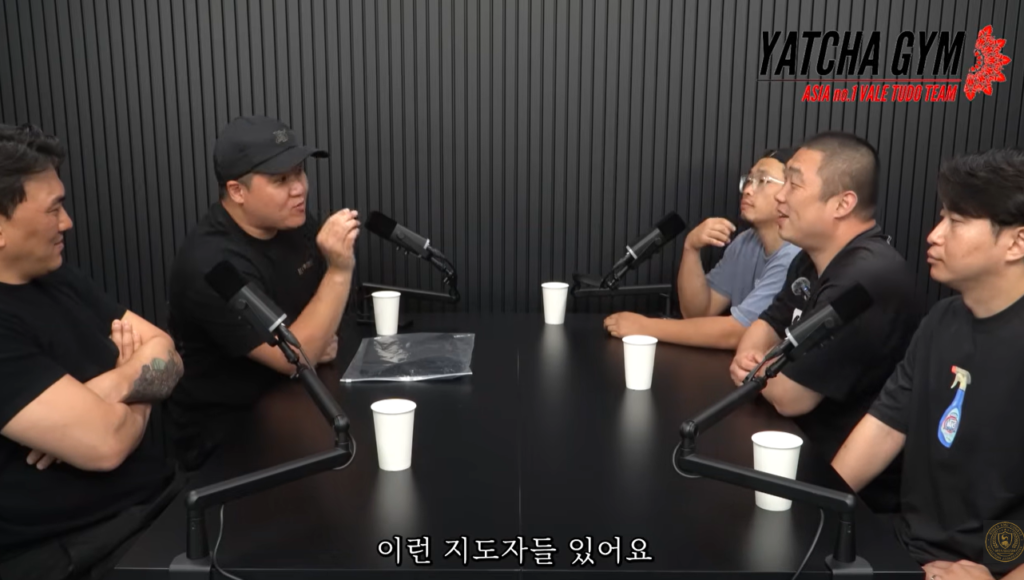
The panel drew a clear line, however, when discussing coaching athletes from other teams.
Offering general observations or situational advice during training was viewed as appropriate.
Attempting to undermine another coach’s instruction was not.
Several participants criticized coaches who approach fighters after sparring and question how they were taught or suggest abandoning techniques their home coach has spent years developing.
In their view, constructive feedback should complement an athlete’s existing coaching—not replace it.
The “Human Hunter”
Perhaps the most memorable part of the discussion came when the coaches jokingly described what they called the “human hunter.”
According to the panel, this type of gym member shares several common traits.
They’re usually experienced rather than beginners.
They’re often physically stronger or more athletic than the average member.
They consistently seek out weaker training partners while finding reasons to avoid stronger ones.
And when coaches begin paying closer attention, they suddenly become difficult to find.
The coaches laughed while describing the pattern, but the message was serious.
In every gym, they argued, there are athletes who understand exactly who they can intimidate—and exactly whom they should avoid.
Safety Begins Before the First Punch
Another recurring theme throughout the conversation was communication.
The coaches emphasized that athletes should establish expectations before sparring begins.
Is this technical work?
Competition preparation?
Full-contact sparring?
Answering those questions beforehand removes uncertainty and helps ensure both athletes are training with the same objective.
Protective equipment also played a role in the discussion. Several coaches supported using headgear, heavier gloves, and additional protection when increasing sparring intensity, particularly for athletes preparing for upcoming fights.
What It Means
Hard sparring has long been part of mixed martial arts.
Some of the sport’s greatest fighters built their reputations in gyms where difficult rounds were considered a daily expectation.
But as MMA continues to evolve, many coaches are placing greater emphasis on sustainability alongside toughness.
The discussion among Do Kyung Lee, Ok Jin Jeon, Yong Hwan Jo, Young Jun Kim, and Jung Jae Yoon reflects a broader shift within the sport. The debate is no longer whether fighters should spar hard—it is about creating an environment where athletes understand the purpose of each session, respect their training partners, and leave the gym healthier than they arrived.
Because in the end, the best sparring partner isn’t the one who wins the round.
It’s the one who helps both athletes improve enough to compete another day.
Follow HanPunch for the latest Korean MMA news, exclusive fighter interviews, event coverage, and the stories shaping combat sports across Asia.
About The Author








Join the Conversation