

Table of Contents
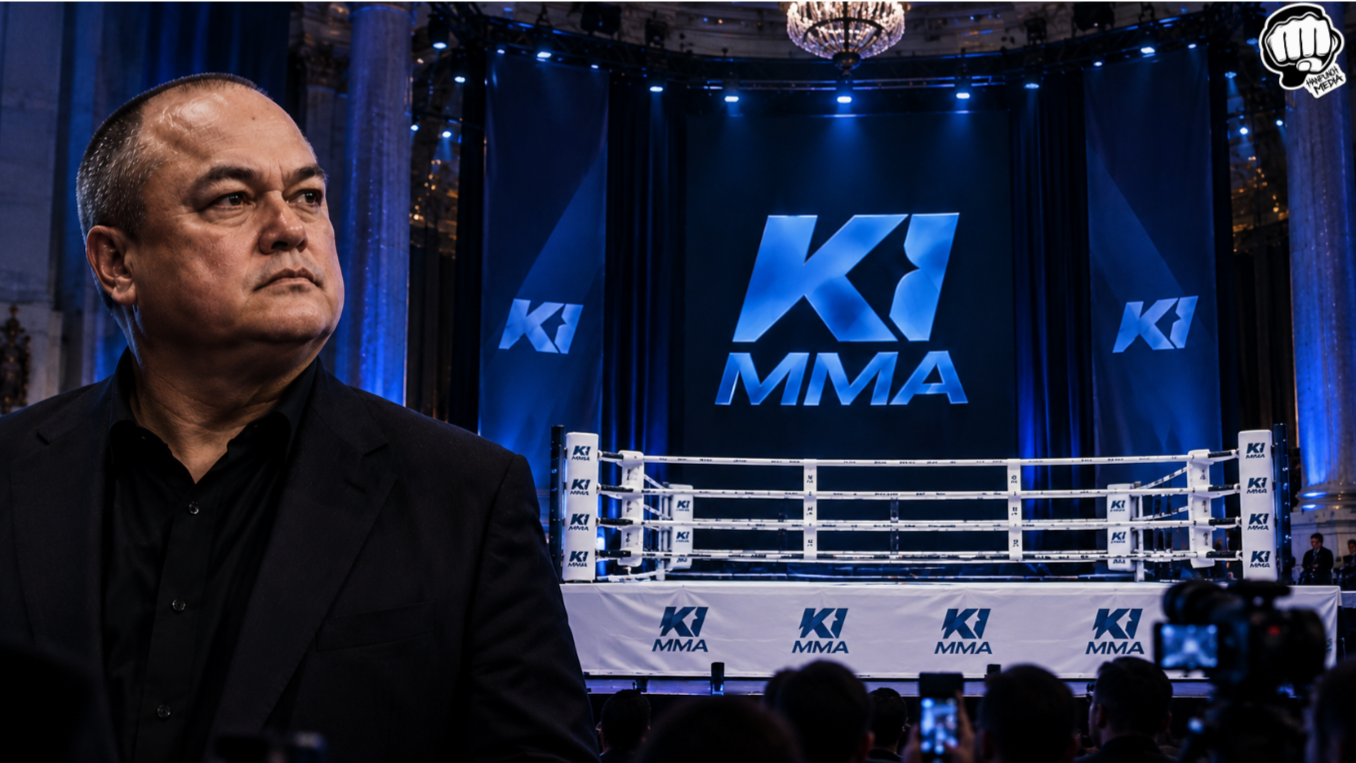
Scott Coker is officially returning to the MMA business.
The longtime promoter behind Strikeforce and Bellator has unveiled Ki MMA, a new global mixed martial arts promotion that is expected to launch in the first quarter of 2027. Coker will run the organization alongside businessman Peter Y. Levin and veteran matchmaker Rich Chou.
The promotion was officially unveiled at a launch event in Lower Manhattan on September 14, with several legendary names from MMA attending. The project also comes with significant financial backing, with $60 million in financing announced earlier in 2026.
But Ki MMA is not simply another new promotion entering an increasingly crowded MMA landscape. Coker has outlined a structure designed around international tournaments, young talent, established free agents and a fight environment that will immediately separate the organization from the UFC and most other major promotions.
Here is everything you need to know about Ki MMA.
When will Ki MMA launch?
Ki MMA is targeting its official launch in the first quarter of 2027. The organization has not yet announced its complete event calendar, host cities or broadcast partners. Those details are expected to be revealed before the promotion stages its first events.
Coker will serve as co founder and CEO, while Levin is co founder and chairman. Chou, who previously worked with Coker at Strikeforce and Bellator, will serve as executive vice president of athlete relations.
The structure gives Ki MMA an experienced leadership team with significant knowledge of the combat sports industry. Coker has been involved in combat sports promotion since the 1980s and founded Strikeforce in 2006. He later became president of Bellator before the PFL acquired the organization in 2023.
What does Ki MMA mean?
The name Ki MMA comes from the traditional martial arts concept of “Ki,” which refers to energy.
The choice of name reflects the organization’s stated desire to maintain a connection with traditional martial arts while creating a modern global MMA product. Coker has repeatedly emphasized his interest in developing fighters and turning prospects into recognizable stars.
“Some of the most rewarding moments of my career have been watching fighters go from prospects to stars on the world stage,” Coker said while explaining the vision for Ki MMA.
The 32 fighter World Grand Prix
One of the biggest features of Ki MMA will be its inaugural World Grand Prix. The first tournament will take place at 145 pounds, making featherweight the opening division for the promotion. The tournament will feature 32 fighters divided across four continental competitions in North America, South America, Europe and Asia.
Each continent will have an eight fighter tournament. The four continental champions will then advance to a one night global final. The eventual World Grand Prix champion will have to win five fights in total, including two fights on the final night.
That format is designed to give the tournament a clear sporting structure rather than relying entirely on individual matchmaking. There is also an old school element to the concept. Fighters could potentially compete multiple times on the same night as they progress through the tournament.
Ki MMA wants to build young stars
The promotion is also taking a particular approach to recruitment. Ki MMA representatives have indicated that they are primarily interested in fighters between 18 and 25 years old, particularly athletes with fewer than 10 professional MMA fights. However, exceptions will be possible.
The idea is to identify talented young fighters early in their careers and give them a platform to develop into international stars. At the same time, Ki MMA intends to sign established free agents to create a combination of emerging prospects and experienced fighters. That approach could make the Grand Prix an important development platform for fighters who have not yet reached the biggest promotions.
Why will Ki MMA use a ring instead of a cage?
Perhaps the most noticeable difference will be the fighting surface. Ki MMA fights will take place in a ring rather than a cage.
That is unusual in modern North American MMA, where the cage has become the standard. However, the ring has a long history in Japanese MMA, including promotions such as Pride FC and Rizin.
“In 2006, when we did [Frank] Shamrock vs. [Cesar] Gracie, actually in San Jose. It was the very first fight in the state of California, and the athletic commission gave me the first fight. I told them we’re going to do it in a ring, I gave them all the dimensions and they said, ‘Oh no, the ring is not allowed. You have to wait eight months and if you do wait, we’re going to let somebody else go in front of you.’ So I said, ‘We’re just gonna have to suck it up and make Strikeforce in a cage,’” Coker said during the Ki MMA launch event.
“That just goes back to all the fights in Japan and the viewing when you’re at a fight in Japan with Pride back in the day. It’s just great viewing through the ring and that really was, I think the beginning of MMA fights was in a ring.”
Rich Chou also defended the decision, pointing toward MMA’s roots and the long history of ring based competition in Japan. There are practical differences as well. A ring creates different logistical challenges, but it can also give production teams more freedom to experiment with camera angles and arena layouts.
Ki MMA will not only have tournaments
Although the 32 fighter featherweight Grand Prix is the centerpiece of the launch, Ki MMA will not be limited to tournament bouts. The organization has confirmed plans for Super Fights and additional bouts across multiple weight classes.
This means established fighters can have a place on Ki MMA cards even if they are not part of the opening featherweight tournament. That could allow Coker to bring recognizable veterans into the promotion while simultaneously developing younger talent through the Grand Prix system.
MMA legends were present for the launch
The launch event also showed the level of experience and recognition surrounding the new organization.
Among those in attendance were Randy Couture, Royce Gracie, Fedor Emelianenko, Cris Cyborg, Nate Diaz, Tyron Woodley, Gil Melendez, Frank Shamrock, Josh Thomson and Mark Coleman.
Several of those names have direct connections to Coker’s previous work in combat sports. Their presence also gave Ki MMA’s launch a strong connection to different eras of MMA, particularly the Japanese and American scenes that influenced Coker throughout his career.
What makes Ki MMA different?
Ki MMA is entering a market already populated by major organizations, but Coker is attempting to give his promotion a recognizable identity from the beginning.
The international Grand Prix provides the competitive structure. The focus on young fighters provides a talent development strategy. Super Fights create room for established names. And the ring gives the promotion a visual identity that will immediately distinguish its events. Coker and Levin have also stressed that Ki MMA is being built as a long term sports property rather than a short term project.
The first fights are expected in 2027, but important details remain unknown, including the full roster, locations and broadcast arrangements. For now, Ki MMA represents Scott Coker’s return to MMA with a $60 million backed promotion, a 32 fighter international featherweight Grand Prix and a deliberate return to the ring. The next stage will be seeing whether that formula can turn Ki MMA’s young prospects into the stars Coker says he wants to create.
Follow HanPunch for the latest MMA news, exclusive fighter interviews, event coverage, and the stories shaping combat sports around the world.
About The Author





Join the Conversation