

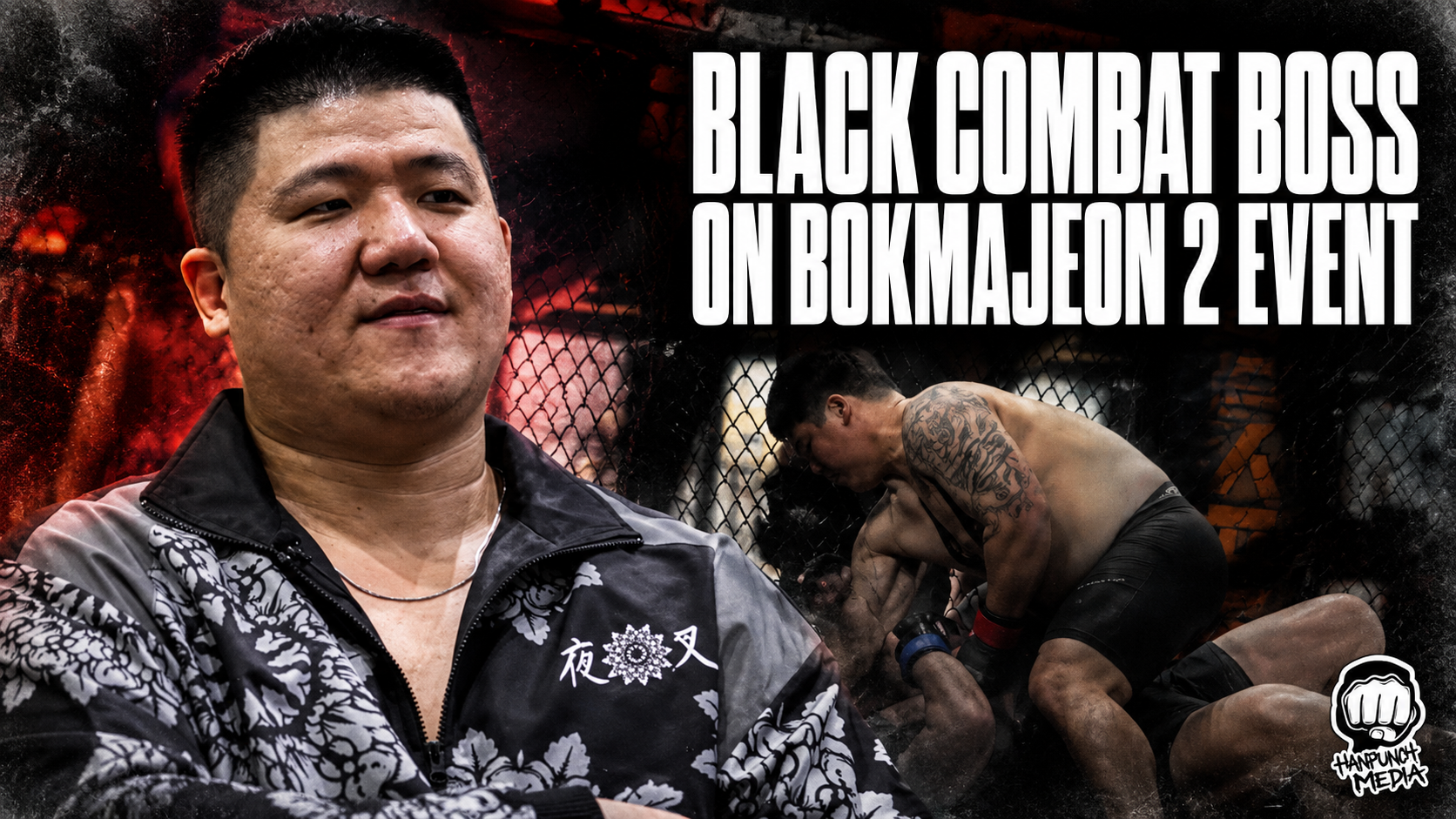
Black Combat’s head explains why Myeong Jun Seong’s reported ₩100 million purse kept him from promoting Bokmajeon 2 and why his concerns go beyond Seong’s controversial past.
Black Combat has been willing to support Bokmajeon 2 in a major way.
Promoting its main event, however, was a line its boss wasn’t willing to cross.
During a recent conversation about the difficult buildup to Bokmajeon 2, the head of Black Combat revealed why he had repeatedly declined requests to help promote the event despite allowing Black Combat fighters to participate.
His reason centered on one fighter:
Myeong Jun Seong.
More specifically, he questioned the decision to place Seong in the main event against Black Combat heavyweight Mammoth while reportedly paying Seong a ₩100 million purse.
For Black Combat’s CEO Pyeong Hwa Park, the issue isn’t simply Seong’s controversial past. His concern is what rewarding Seong’s path at such a high level could communicate to the fighters who have spent years trying to work their way through Korean MMA.
Why Black Combat Wouldn’t Promote the Event
The conversation began with the problems currently surrounding Bokmajeon 2.
According to the Yacha Club representative, ticket sales were struggling even before the organization’s YouTube channel was removed. The goal was approximately 4,000 tickets, but sales had yet to reach roughly 1,500 at the time of the conversation.
While some VIP and standing tickets had sold, regular numbered seats—particularly those priced around ₩100,000—were proving much more difficult to move.
That made Black Combat’s absence from the promotional campaign particularly noticeable.
Yacha Club revealed that it had been asking Black Combat for promotional assistance for months.
And it wasn’t as though the two organizations weren’t working together.
According to the conversation, the fighters representing the Red Corner at Bokmajeon 2 are Black Combat athletes under long-term contracts. Black Combat had even allowed its fighters to participate at the top of the card.
So why provide the fighters but refuse to help sell the event?
Black Combat’s boss finally explained.
It was because of Myeong Jun Seong’s position in the main event.
He stressed that he doesn’t have a personal problem with Seong. In fact, he acknowledged that Seong has attended Black Combat events as a paying fan and is a genuine supporter of the promotion.
His concern was instead about what Seong’s position on the card could mean for the broader Korean combat sports scene.
The ₩100 Million Question
The biggest issue was money.
According to the discussion, Seong is receiving ₩100 million for the fight.
Black Combat’s boss asked what that number looks like from the perspective of an ordinary Korean MMA fighter.
There are fighters earning relatively small purses while training every day, accumulating amateur fights and slowly trying to establish themselves professionally.
They dedicate years of their lives to one of the most physically demanding sports imaginable.
Then they see someone without the same traditional competitive background receive ₩100 million.
Black Combat’s boss wondered what message that sends.
He acknowledged that fighters with strong mentalities will continue working regardless. But he worried about younger athletes looking at Seong’s path and questioning whether years of development inside the sport are really the best way to create value.
In his view, that could have a negative effect on Korean MMA culture.
Does Myeong Jun Seong Deserve a Second Chance?
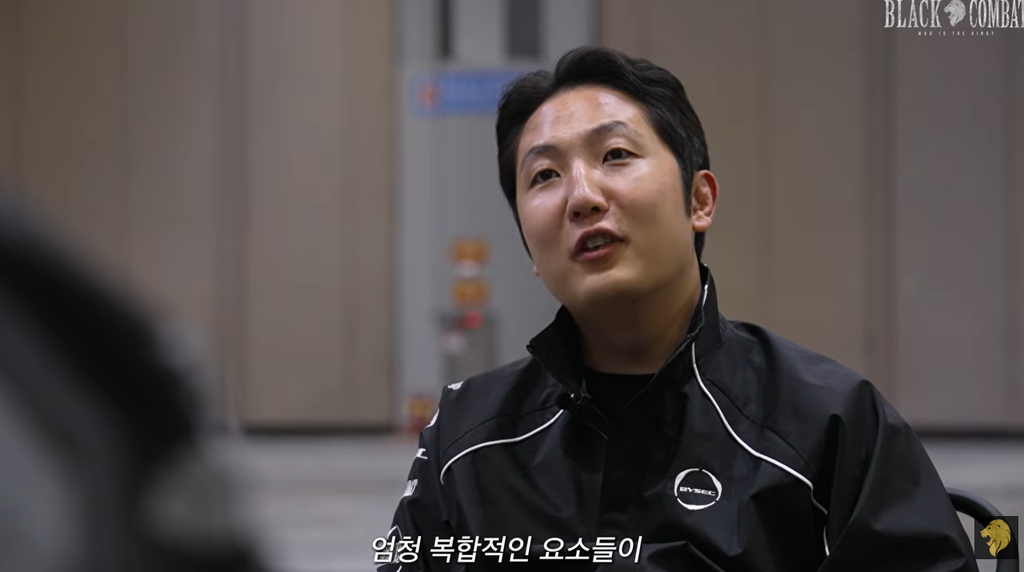
Yacha Club pushed back.
The conversation shifted toward Seong’s past and a much larger question about rehabilitation.
Combat sports have featured plenty of athletes with criminal histories and serious controversies outside competition. If someone has faced the legal consequences of their actions, changed and reintegrated into society, should that person continue to be judged by their past forever?
From Yacha Club’s perspective, Seong could instead represent someone who has changed his life and deserves an opportunity to move forward.
Black Combat’s boss didn’t disagree with that principle.
He acknowledged that people make mistakes and can commit crimes. Once someone has been judged under the law and served the appropriate punishment, he believes that person should have the opportunity to rehabilitate and return to society.
But that wasn’t his real objection.
The Problem Isn’t Simply Seong’s Past
For Black Combat’s boss, the difference is how that past is being used within combat sports.
He compared the situation with established UFC fighters who have also experienced serious controversies outside the cage.
His argument was that those fighters didn’t originally become valuable because of their criminal records or troubled histories.
They still had to fight.
They still had to develop.
And they still had to prove themselves against increasingly difficult competition.
In his view, Seong has taken a different route.
Black Combat’s boss argued that Seong has been able to turn a public persona partly connected to his past into significant market value within combat sports, allowing him to enter at an economic level far beyond what most developing fighters could expect.
If Seong genuinely wants fighting to become part of a rehabilitation story, he argued, then Seong should demonstrate the process.
Start lower.
Compete.
Develop.
Win.
Then gradually earn bigger opportunities and bigger purses.
His concern is that skipping that process could send the wrong message to fighters who have spent years following it.
Yacha Club Sees Fighter Value Differently
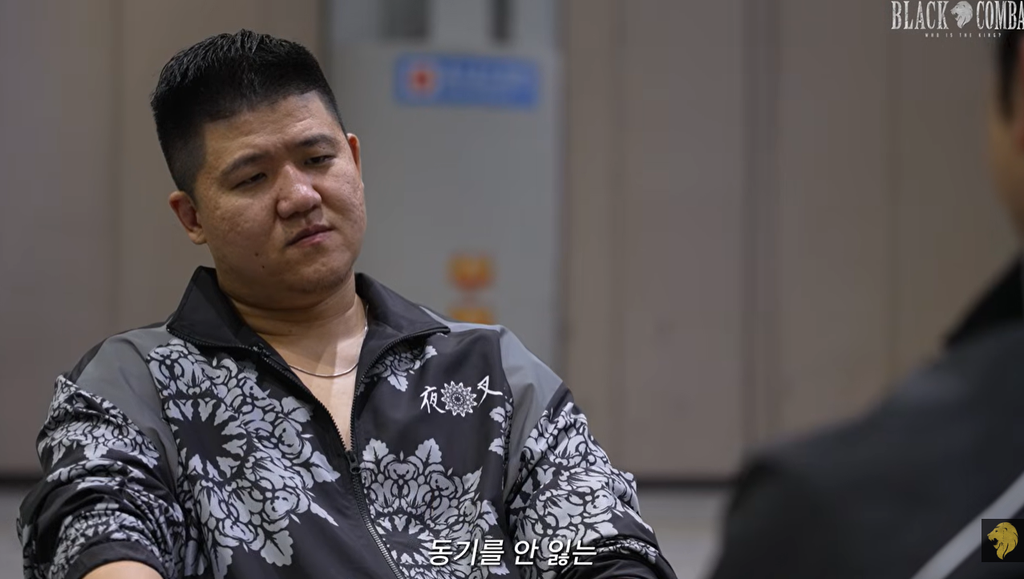
The Yacha Club side presented the promoter’s perspective.
A fighter doesn’t necessarily have the same value to every organization.
One athlete might be worth a significant purse to a promotion capable of turning that fighter’s popularity into ticket sales and attention, while another organization might see little reason to offer the same amount.
In other words, competitive accomplishments aren’t the only thing determining a fighter’s market value.
Attention matters.
So do ticket sales, views and the ability to make people care about an event.
Yacha Club acknowledged that the decision wasn’t made without serious consideration. From the promotion’s perspective, creating something capable of attracting widespread public interest is also part of the fight business.
That’s where the philosophical difference between the two promoters became clear.
Yacha Club was looking at Seong partly through the economics of promoting fights.
Black Combat’s boss was looking at what those economics could communicate to the fighters underneath him.
“It Was My Mistake”
Then Black Combat’s boss acknowledged something that made his criticism considerably more interesting.
He wasn’t entirely removed from the situation.
After explaining why he believed Seong’s rise could negatively affect Korean fighters, he admitted that he had also played a role in increasing Seong’s value and purse.
Rather than ignoring that contradiction, he accepted some responsibility for it.
“I’ll admit it as a man: it was my mistake.”
That admission changes the tone of the conversation.
This wasn’t simply one promoter criticizing another organization’s matchmaking.
Black Combat’s boss was also questioning his own previous decisions and the role he may have played in creating the situation he now opposes.
A Bigger Debate for Korean MMA
Ultimately, the disagreement surrounding Myeong Jun Seong isn’t simply about whether someone with a controversial past deserves another opportunity.
On that point, the two sides aren’t as far apart as they initially appear.
The bigger question is:
What should make someone valuable in professional fighting?
Years of training?
Competitive accomplishments?
The quality of opponents they’ve defeated?
The number of tickets they can sell?
The size of the audience they bring?
Professional combat sports have always existed somewhere between athletic competition and entertainment. The best fighter isn’t always the biggest draw, and the biggest draw isn’t necessarily the most accomplished fighter.
Myeong Jun Seong’s Bokmajeon 2 main event has brought that tension directly into the Korean combat sports conversation.
For Yacha Club, Seong offers the kind of attention promoters need to make major events financially viable.
For Black Combat’s boss, the concern is what happens when notoriety becomes a more valuable path than years spent working through the sport.
That disagreement was enough for him to draw a line.
Black Combat was willing to let its fighters compete at Bokmajeon 2.
But its boss wasn’t willing to help promote the main event.
Follow HanPunch for the latest Korean MMA news, exclusive fighter interviews, event coverage, and the stories shaping combat sports across Asia.
About The Author



Join the Conversation