

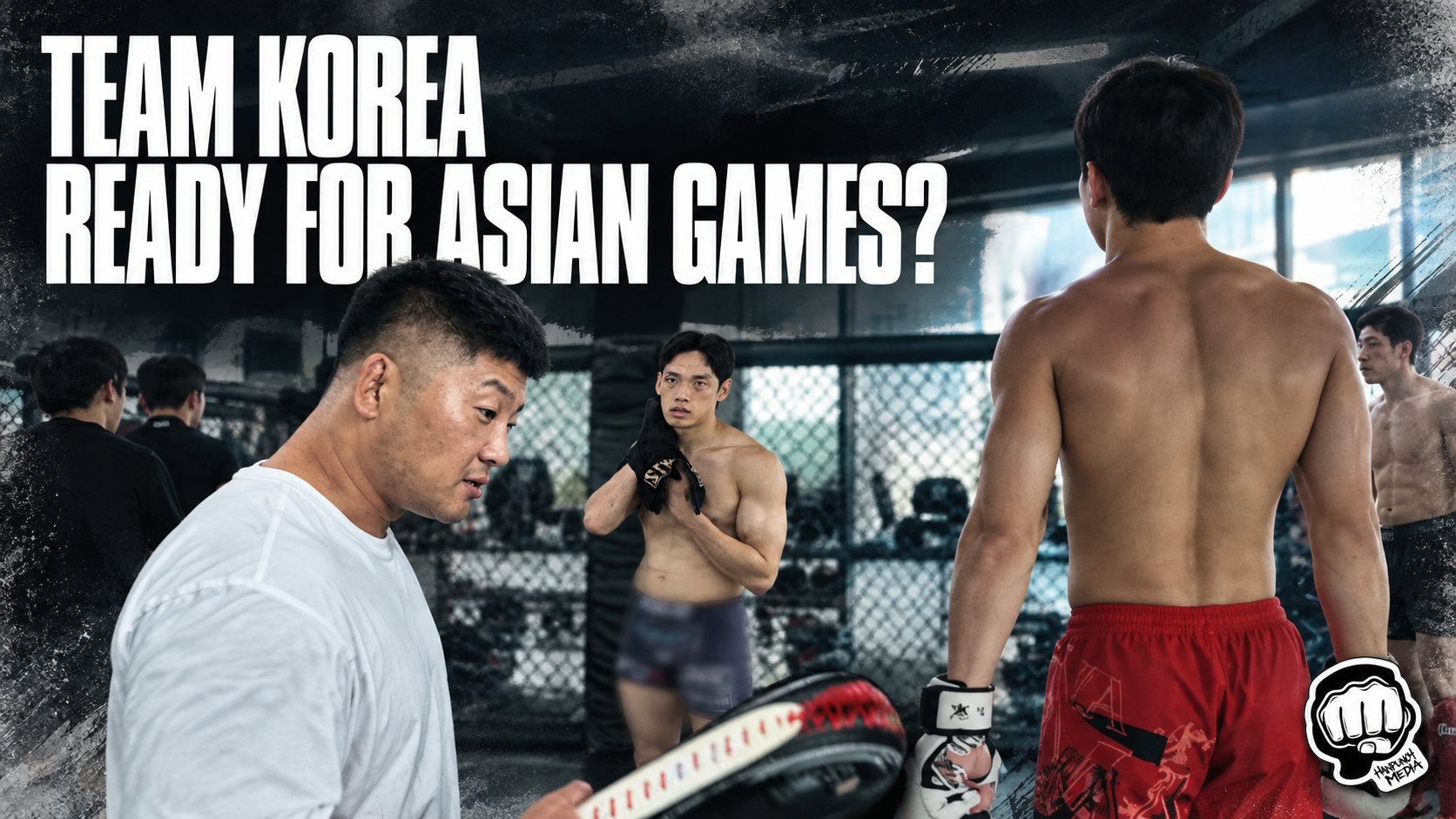
With Aichi-Nagoya 2026 less than a month away, A Sol Kwon focuses on takedowns, control and reaction-based offense while identifying a balance issue that needs attention before competition.
With less than a month remaining before the Aichi-Nagoya 2026 Asian Games, the margin for error is getting smaller.
As preparations enter their final stretch, veteran Korean MMA fighter and coach A Sol Kwon is putting his athlete through increasingly detailed training sessions, focusing on wrestling, takedowns, positional control and the small technical adjustments that could make the difference when competition begins.
The latest session started positively. The athlete reported feeling physically refreshed after a lighter weekend and arrived eager to test the takedown work he had been drilling throughout the week.
But once the live work began, Kwon noticed something that immediately caught his attention.
His athlete’s balance wasn’t where it needed to be.
A Better Start After Previous Knee Trouble
There was already some reason to be cautious entering the session.
The athlete explained that a previous knee issue had prevented him from fully participating in an earlier training session. This time, however, he said he felt considerably better and hoped to get through the work without another setback.
A lighter stretch of training also appeared to help. After spending the weekend primarily doing lighter sparring rather than pushing through another heavy workload, he described his condition as very good.
That provided an opportunity to test something the team had been emphasizing throughout the week: takedowns.
After drilling them Monday through Wednesday, the athlete wanted to see whether those techniques would hold up when applied against a resisting opponent.
A Sol Kwon Wants Control Before Movement
Kwon quickly identified one of the technical habits that needed correcting.
His athlete was attempting to progress through positions before completely establishing control.
Kwon repeatedly instructed him to slow the sequence down: secure the opponent, establish the position, control the head and only then move to the next stage.
The lesson wasn’t about moving slowly in competition.
It was about eliminating wasted movement.
Against higher-level opposition, recognizing the next position isn’t enough. Kwon wants his athlete to make sure the current position is secure before attempting to advance.
Once that control is established, then the speed can come.
Don’t Wait for the Opening — Create It
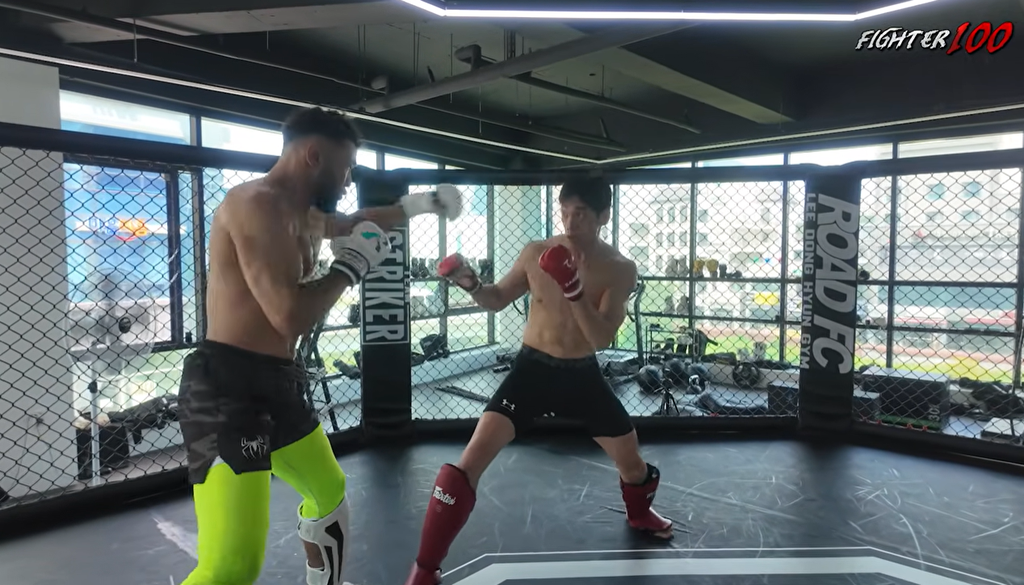
Kwon also emphasized a more advanced element of the athlete’s offensive game.
Rather than simply reacting to whatever his opponent gives him, he wants his athlete to create those reactions himself.
Show one attack. Make the opponent respond. Then attack what that response exposes.
Kwon stressed the importance of leading exchanges rather than waiting for an opponent to dictate them, particularly when transitioning between striking and grappling.
It’s a subtle adjustment, but one that becomes increasingly important at a major international competition.
At this stage of preparation, the goal isn’t simply learning more techniques.
It’s learning how to make those techniques appear when they’re needed.
Then Kwon Notices a Problem
During the live portion of the session, however, Kwon saw something that concerned him.
He stopped the action and questioned whether his athlete’s physical condition was actually okay.
The reason?
His balance looked unusually poor.
That was notable because the athlete had entered training saying he felt good.
There was no indication in the material that the balance issue represented a new injury, and Kwon did not diagnose it as one. But with the Asian Games approaching, it was enough for the coach to immediately recognize that something wasn’t quite right.
And with less than a month remaining, even a seemingly small problem becomes something that needs attention.
There Were Positive Signs, Too
The session wasn’t defined entirely by the concern.
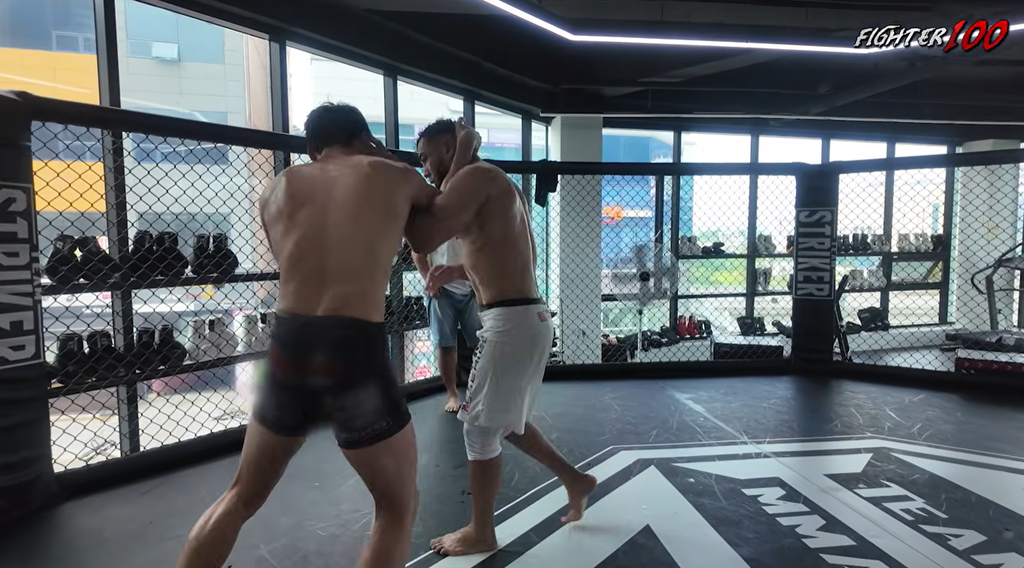
Shortly afterward, Kwon specifically praised his athlete’s distance during an exchange.
That became another teaching point.
Once the athlete recognizes that ideal range, Kwon wants him to commit immediately — enter on the takedown, connect, establish control and finish the sequence rather than hesitating halfway through it.
The session then progressed through takedown entries, positional control and ground-and-pound sequences.
Kwon’s coaching remained demanding, but there were clear moments where the techniques they had been drilling began to come together.
Building a Game That Still Works When the Takedown Doesn’t
One of A Sol Kwon’s more important lessons came toward the end of the session.
Not every takedown is going to work.
Instead of building an entire strategy around successfully completing them, Kwon wants his athlete equipped to handle what happens when the initial attack fails.
That’s where the clinch becomes important.
Even if his athlete cannot impose his own takedown game, improved clinch technique can help prevent an opponent from turning the situation around and taking him down instead.
It’s another example of what this final stage of preparation appears to be about.
Not adding flashy new weapons.
Closing holes.
Less Than a Month to Aichi-Nagoya 2026
With the Aichi-Nagoya 2026 Asian Games now less than a month away, there isn’t much time left for major changes.
But that may be exactly why sessions like this matter.
Kwon is looking beyond whether his athlete can simply complete a takedown in training. He’s examining the details underneath it — balance, distance, control, reactions, transitions and what happens when Plan A doesn’t work.
The balance issue was enough to get his attention.
It wasn’t enough to derail the session.
And with the Asian Games rapidly approaching, finding that problem in the gym now gives A Sol Kwon and his athlete something they still have time to fix before it matters much more.
Follow HanPunch for the latest Korean MMA news, exclusive fighter interviews, event coverage, and the stories shaping combat sports across Asia.
About The Author







Join the Conversation