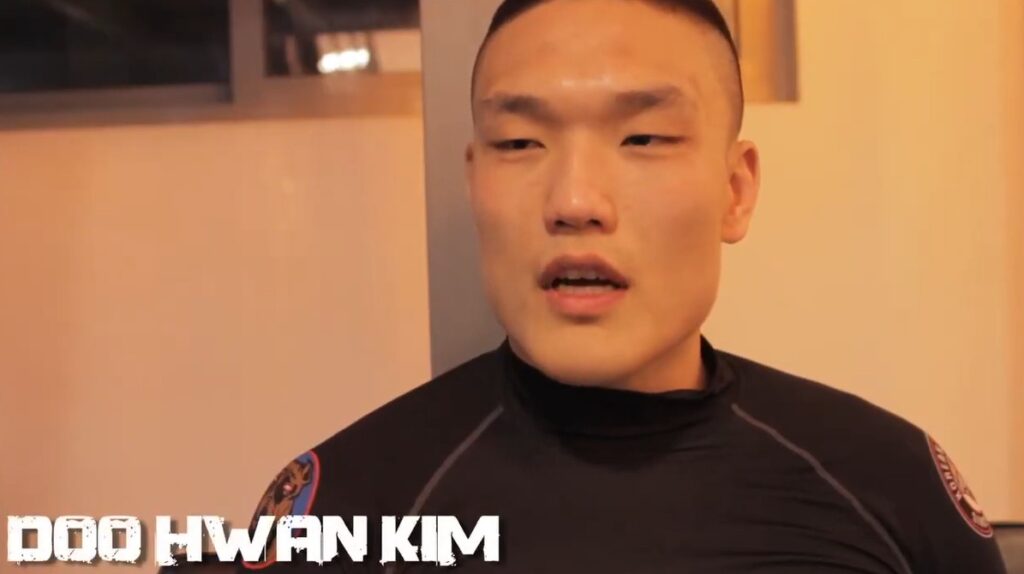
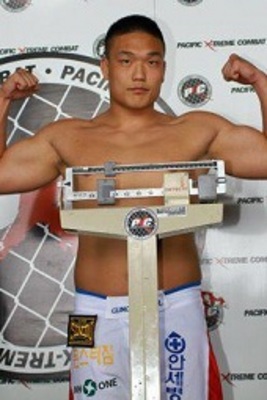
Overview
Doo Hwan Kim (김두환) was born on October 9, 1988, in South Korea.
Standing 6’3″ (190 cm), he competed primarily in the light heavyweight division, where his combination of size, athleticism, and technical versatility made him a dangerous opponent. Representing Korean Top Team, Doo Hwan Kim compiled a professional record of 12 wins, 5 losses, and 1 draw before stepping away from active competition. His final bout took place at Battlefield FC 2 in July 2019, fighting Wagner Prado to a unanimous draw.
Throughout his career, Kim competed across numerous international promotions, demonstrating a willingness to travel for opportunities long before Korean fighters had regular access to organizations such as the UFC or PFL. His résumé includes appearances in Top FC, Rebel FC, M-1 Global, PXC, Cage Warriors, ACB, HEX Fight Series, Genesis Fight Night, and Battlefield FC.
Early Life & Background
Little public information is available regarding Doo Hwan Kim’s childhood or his introduction to martial arts. Like many members of Korea’s second generation of professional MMA fighters, much of his early career developed before comprehensive media coverage became common within the domestic MMA scene.
Doo Hwan Kim eventually joined Korean Top Team, where he trained alongside many of South Korea’s elite professionals. The gym’s emphasis on developing complete mixed martial artists helped shape Kim into a versatile competitor capable of finishing fights on the feet or on the ground. His willingness to compete internationally became one of the defining characteristics of his career, as he regularly accepted bouts outside Korea against experienced opponents.
Fighting Style
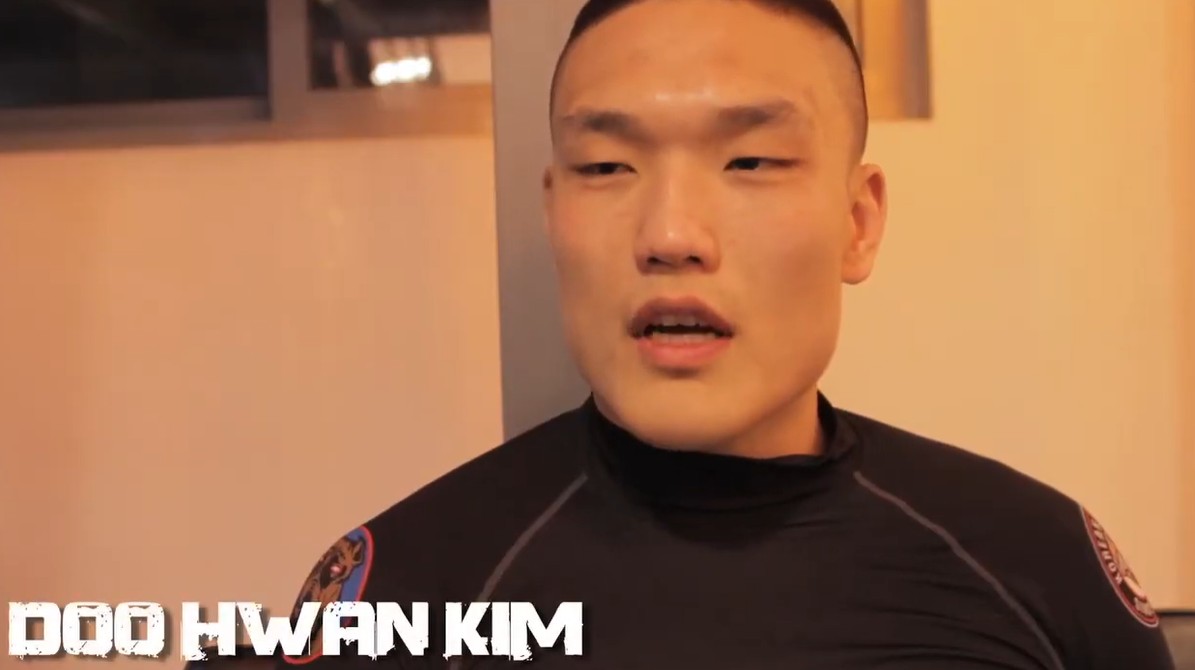
Despite competing in one of MMA’s most physically demanding divisions, Doo Hwan Kim relied on technical balance rather than raw power alone.
His twelve professional victories include:
- 3 wins by KO/TKO
- 4 wins by submission
- 5 wins by decision
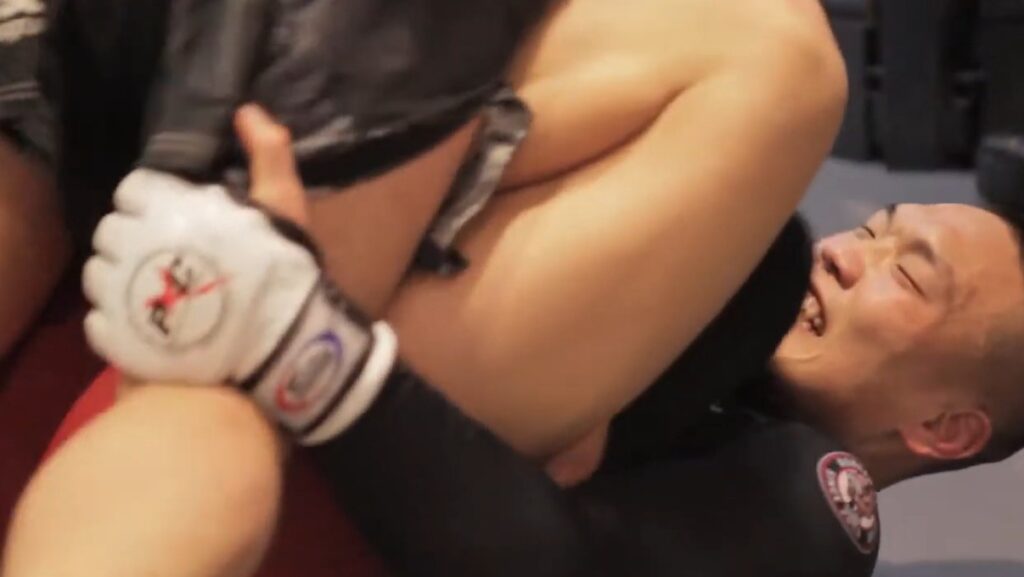
The distribution of his victories highlights a fighter comfortable in every phase of mixed martial arts. Doo Hwan Kim possessed solid boxing fundamentals and effective clinch work, but he was equally dangerous on the ground, recording submission victories via rear naked choke, guillotine choke, and arm triangle choke.
Standing 6-foot-3, Kim frequently used his reach to control distance before mixing in takedowns and top pressure. His measured approach often led to decision victories against experienced opponents, while his submission skills allowed him to capitalize when opportunities presented themselves.
Professional Career
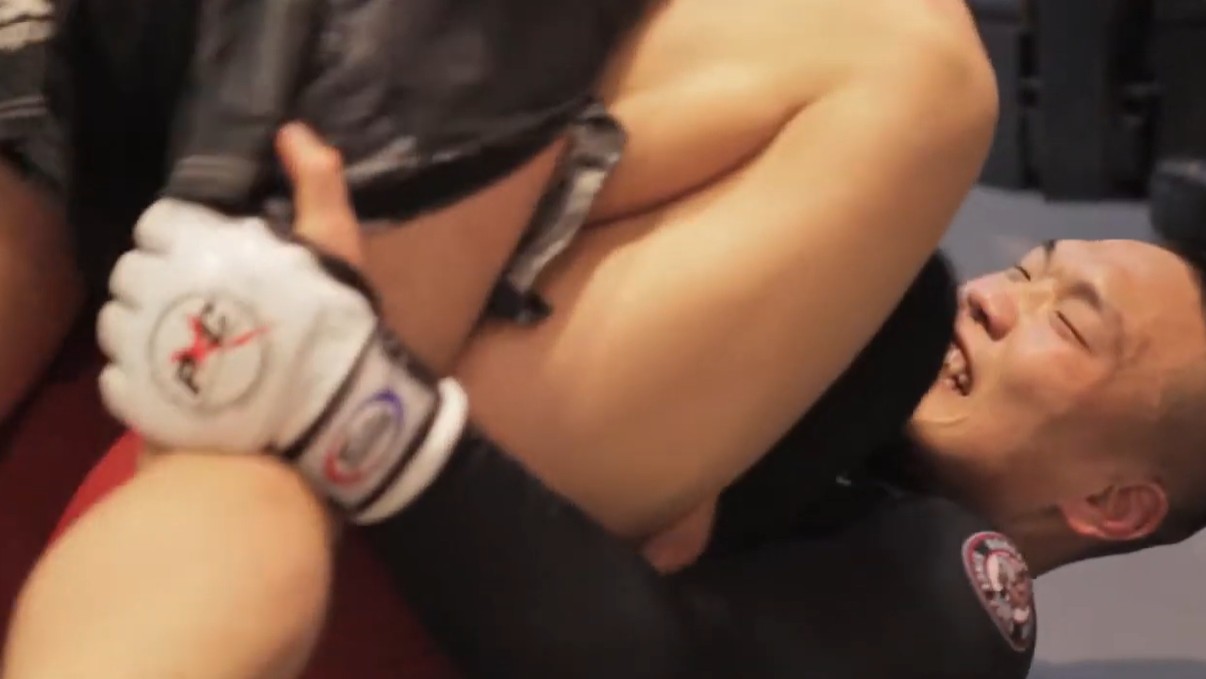
Doo Hwan Kim made his professional debut in 2011, beginning his career in M-1 Selection with a first-round rear naked choke victory over Makoto Niyama. He quickly expanded his résumé by competing for organizations throughout Asia and the Pacific, including PXC in Guam and M-1 Global in South Korea.
His breakthrough within Korea came after joining Top Fighting Championship (Top FC), where he earned victories over Hae Jun Yang, Ramazan Mukailov, Hikaru Sato, and Musa Conteh. These performances established him as one of the promotion’s leading light heavyweights and earned opportunities to compete internationally.
Doo Hwan Kim consistently challenged himself against high-level competition. In 2012, he traveled to England to compete in Cage Warriors, facing Mohamed Aly. He later fought future UFC standout Jimmy Crute for the HEX Fight Series Light Heavyweight Championship in Australia, losing a competitive five-round unanimous decision. While the bout ended in defeat, sharing the cage with a future UFC contender demonstrated the level of opposition Kim sought throughout his career.
His international schedule also included appearances for Absolute Championship Berkut (ACB) in Russia, where he faced Rasul Saithozhaev, before returning to Korea to submit Japanese veteran Hikaru Sato with an arm triangle choke at Top FC 18. He later defeated Andrey Lenzhen by third-round TKO before concluding his career with a draw against former UFC fighter Wagner Prado at Battlefield FC 2 in Macau.
Career Highlights
- Professional record of 12-5-1.
- Nicknamed “Rhino Jongno.”
- Represented Korean Top Team.
- Competed professionally from 2011 to 2019.
- Recorded victories by knockout, submission, and decision.
- Defeated respected veterans including Hikaru Sato, Ramazan Mukailov, and Andrey Lenzhen.
- Challenged future UFC contender Jimmy Crute for the HEX Fight Series Light Heavyweight Championship.
- Competed in Top FC, Rebel FC, M-1 Global, Cage Warriors, PXC, ACB, HEX Fight Series, Genesis Fight Night, and Battlefield FC.
Summary & Trajectory
Doo Hwan Kim represents a generation of Korean fighters who built their reputations through international experience rather than major promotional exposure. His willingness to compete across multiple continents against increasingly difficult opposition helped establish him as one of Korea’s most respected regional light heavyweights.
Although he never reached the UFC, Doo Hwan Kim’s balanced skill set, international résumé, and longevity reflect the qualities of a seasoned veteran. His career serves as an example of the depth of talent produced by Korean Top Team during the 2010s, with consistent performances against quality opposition across several respected promotions.
Doo Hwan Kim may not have competed under the UFC banner, but he quietly assembled one of the strongest international résumés among Korean light heavyweights of his generation. Nicknamed "Rhino Jongno," Kim combined physical size with a balanced skill set that allowed him to compete successfully across Korea, Australia, Russia, Guam, China, and Macau. Over the course of his career, he established himself as a respected veteran capable of winning by knockout, submission, or decision while consistently accepting difficult international matchups.
Unlike many heavy-handed light heavyweights who rely solely on striking, Kim developed into a well-rounded mixed martial artist. His twelve professional victories are spread almost evenly across knockouts, submissions, and decisions, illustrating his adaptability against different styles. Throughout his career, he represented Korean Top Team, earning victories in promotions such as Top FC, Rebel FC, M-1, PXC, and Battlefield FC while challenging himself against future UFC fighters and international champions.
Although injuries and promotional opportunities limited his ability to reach a major global organization, Kim's career reflects the path taken by many Korean veterans who helped raise the level of Korean MMA through international competition during the 2010s.

 Sang Kwon Han
 Dae Hwan Kim
 Da Eun Jung