
Overview
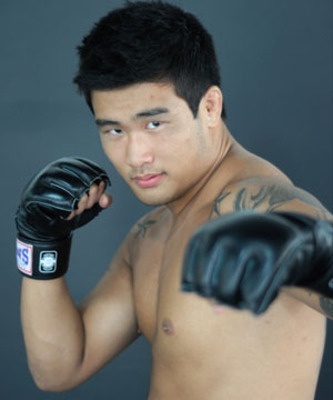
Seung Ho Yang is a South Korean welterweight best known for compiling an impressive 7-1 professional record during the early 2010s.
Fighting under the nickname “Tommy,” Seung Ho Yang represented Busan Team MAD during one of the organization’s most successful developmental periods and established himself as one of Korea’s more promising welterweight prospects. Despite competing professionally for only a handful of years, he displayed a complete mixed martial arts skill set, earning victories by knockout, submission, and decision while remaining undefeated in South Korea.
Seung Ho Yang entered professional MMA during a period when Korean fighters were beginning to receive greater international exposure through organizations such as ONE Championship and regional promotions across Asia. His early success quickly attracted attention, leading to opportunities outside Korea against experienced international competition. Rather than remaining exclusively on the domestic circuit, Yang embraced these challenges and continued developing against increasingly accomplished opponents.
Throughout his career, Seung Ho Yang demonstrated a calm, technical approach inside the cage. His performances reflected the well-rounded philosophy taught at Busan Team MAD, where fighters were expected to be equally comfortable striking, wrestling, and grappling. That balanced style allowed him to adapt to a variety of opponents while consistently finding ways to win.
Although his professional career concluded earlier than many expected, Seung Ho Yang left behind one of the stronger winning percentages among Korean regional fighters of his era. His accomplishments remain part of Busan Team MAD’s history as one of the gym’s early success stories during its rise as one of South Korea’s premier MMA academies.
Early Life & Background
Born on May 13, 1990, Seung Ho Yang developed his mixed martial arts skills during the rapid expansion of Korean MMA in the late 2000s. He trained under the Busan Team MAD system, one of the country’s most respected gyms, where he was surrounded by experienced coaches and talented teammates who would later compete on the international stage.
The gym’s emphasis on complete martial artists helped shape Yang into a versatile competitor capable of succeeding in every phase of MMA. His early development emphasized technical efficiency rather than relying solely on athleticism, a trait that became evident throughout his undefeated start as a professional.
Fighting Style
Seung Ho Yang competed with a balanced and methodical style built around technical striking and strong submission grappling. His professional victories were distributed evenly across multiple methods of victory, earning one knockout, three submission victories, and three decision wins. That diversity reflected a fighter who was comfortable adjusting his strategy depending on the opponent rather than forcing a single approach.
On the feet, Seung Ho Yang relied on clean combinations, patience, and sound defensive positioning. On the ground, he demonstrated excellent positional awareness and submission instincts, particularly with armbars and other upper-body attacks. His ability to remain composed throughout fights allowed him to capitalize on mistakes without abandoning his overall game plan.
Perhaps his greatest strength was his fight IQ. Rather than chasing unnecessary exchanges, Yang consistently fought within himself, making intelligent decisions that minimized risk while maximizing opportunities to control the pace of a contest.
Professional Career
Seung Ho Yang made his professional debut in 2010 and immediately established himself as one of Korea’s rising welterweight prospects. He opened his career with six consecutive victories, defeating both domestic and international opponents while showcasing a steadily improving all-around game. His undefeated run included victories by knockout, submission, and decision, highlighting the versatility that became a defining characteristic of his career.
His growing reputation earned him an opportunity to compete for ONE Championship in 2013 against American veteran Caros Fodor. Although Yang suffered the lone loss of his professional career via unanimous decision, the bout represented an important milestone, placing him on one of Asia’s biggest MMA stages against an experienced international opponent.
Rather than allowing that defeat to define him, Yang rebounded strongly. His final professional appearance came at WBK 5 in July 2015, where he defeated Makeshate Sailike via second-round armbar, improving his professional record to 7-1. The victory showcased both his grappling ability and his continued development before ultimately stepping away from active competition.
Although his career ended after only eight professional bouts, Yang retired with one of the better records among Korean regional welterweights of his generation. His success also helped strengthen the growing reputation of Busan Team MAD as a gym capable of producing high-level professional talent.
Career Highlights
- Professional MMA record of 7 wins and 1 loss.
- Won six consecutive fights to begin his professional career.
- Competed for ONE Championship against Caros Fodor in 2013.
- Earned victories by knockout, submission, and decision, demonstrating a complete skill set.
- Defeated Makeshate Sailike by second-round armbar in his final professional bout at WBK 5.
- Represented Busan Team MAD, one of South Korea’s premier MMA organizations.
Summary & Trajectory
Although Seung Ho Yang’s professional career was relatively short, it was marked by consistent success and technical excellence. His 7-1 record, balanced finishing ability, and appearance in ONE Championship demonstrated the potential he possessed during the early stages of his career. As one of Busan Team MAD’s successful early professionals, Yang contributed to the gym’s growing reputation during a pivotal period for Korean MMA. While his competitive journey concluded sooner than many anticipated, his accomplishments remain a respected part of South Korea’s regional MMA history.
Seung Ho Yang's career is an example of quality over quantity. Despite competing in only eight professional bouts, he demonstrated the complete skill set, composure, and adaptability expected of a high-level mixed martial artist. His lone defeat came against a seasoned international veteran in ONE Championship, while every other performance showcased his technical maturity and ability to win in multiple ways. Although fans were never able to see how far his career could have progressed with continued activity, Yang's 7-1 record and well-rounded performances remain an impressive chapter in the early success of Busan Team MAD and the growth of Korean mixed martial arts.

 Sang Kwon Han
 Dae Hwan Kim
 Da Eun Jung