

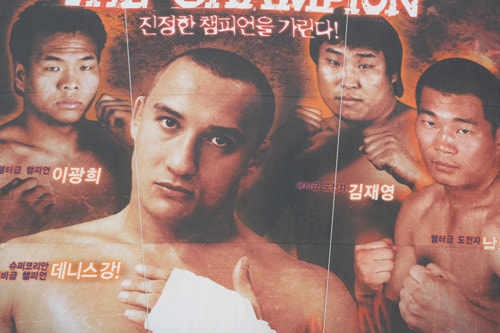
From humble beginnings to producing world-class champions, Korean MMA has evolved into one of the sport’s most respected talent pipelines, shaping the future of mixed martial arts on the global stage.
Korean MMA didn’t explode overnight. It wasn’t a miracle, a fad, or a lucky generation. It was a slow burn, a stubborn, relentless climb built by fighters who refused to quit, promotions that refused to fold, and fans who kept showing up even when the world wasn’t watching.
Today, Korea stands as one of the most influential talent pipelines in global mixed martial arts. But to understand how we got here, you have to rewind to the beginning. Back to the basements, the borrowed rings, the grainy broadcasts from Japan that lit the first spark.
The Underground Years: When MMA Wasn’t Even Called MMA Yet
Before the bright lights and broadcast deals, Korea’s fight scene lived in the shadows. In the late 1990s, young martial artists crowded around TVs to watch PRIDE FC and K‑1 warriors clash in Saitama. Those broadcasts didn’t just entertain, they infected a generation with possibility.
Then came Spirit MC in 2002, Korea’s first real professional MMA promotion. It wasn’t glamorous, but it was real. It was the place where future legends like Dong hyun Kim and Chan Sung Jung sharpened their teeth. Spirit MC was gritty, chaotic, and ahead of its time — a proving ground that built the foundation for everything that followed.
When Spirit MC folded in 2009, it felt like the end of an era. But in hindsight, it was the beginning of something bigger.
The UFC Era: Korea Steps Onto the World Stage
The 2010s were the decade Korea stopped being a regional curiosity and became a global force.
Gyms like Korean Top Team and Korean Zombie MMA turned into factories of disciplined, well‑rounded fighters. And the world took notice.
- Dong‑hyun “Stun Gun” Kim became the winningest male Asian fighter in UFC history.
- The Korean Zombie became a global icon, a fighter whose style was so fearless, so cinematic, that fans didn’t just watch him; they felt him.
The UFC finally came to Korea in 2015, filling Seoul’s Olympic Gymnastics Arena with a roar that felt like a decade of pent‑up pride. They returned again in 2019 for Busan, a night that cemented Korea as a legitimate MMA market, not just a talent exporter.
Korean fighters weren’t just participating anymore. They were headlining. They were contenders. They were stars.
Road FC and Black Combat: The Domestic Engine That Never Stopped
While Korean fighters were conquering the world, the domestic scene refused to die.
In 2010, Moon Hong Jung launched Road FC, a promotion that grew into one of Asia’s largest. Road FC didn’t just host fights, it built careers. It filled stadiums in Seoul, Tokyo, and even mainland China. It kept the Korean MMA ecosystem alive when it could have easily collapsed.
Then came the new wave.
Black Combat, born in the 2020s, didn’t just modernize Korean MMA, it electrified it. With cinematic production, viral storytelling, and a roster full of hungry prospects, Black Combat became a cultural phenomenon. It tapped into Korea’s internet‑native generation and turned regional fighters into household names.
If Road FC was the backbone, Black Combat became the heartbeat.
2026: The Year MMA Became an Official Korean Sport
The biggest milestone didn’t happen in a cage. It happened in a boardroom.
In 2026, the Korea MMA General Association was officially recognized as an associate member of the Korean Sport & Olympic Committee. For the first time, MMA wasn’t just entertainment. It was a sanctioned, institutionalized sport.
This recognition opened the door for Korean fighters to compete in events like the 2026 Asian Games, marking a historic shift: MMA was no longer an outsider. It was part of Korea’s athletic identity.
This wasn’t just validation. It was a declaration.
A New Generation Rising
Today, Korea’s MMA scene is deeper, louder, and more diverse than ever.
- Veterans who once fought in Spirit MC now coach the next wave.
- Road FC continues to develop elite talent.
- Black Combat is shaping the culture and capturing the youth.
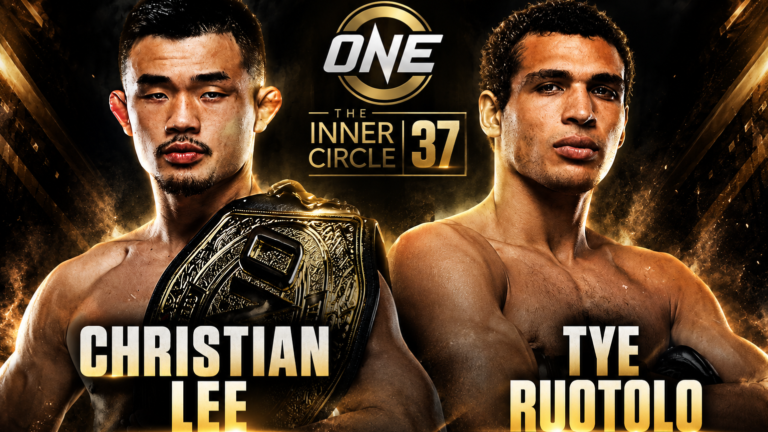
- Korean fighters in the UFC and ONE Championship are carrying the flag on the world stage.
- Institutional recognition is building a pipeline that will last decades.
Korean MMA isn’t rising, it’s accelerating.
And if history has taught us anything, it’s this: Korea doesn’t produce fighters who fade quietly. It produces fighters who change the temperature of the room the moment they walk in.
About The Author






Join the Conversation