

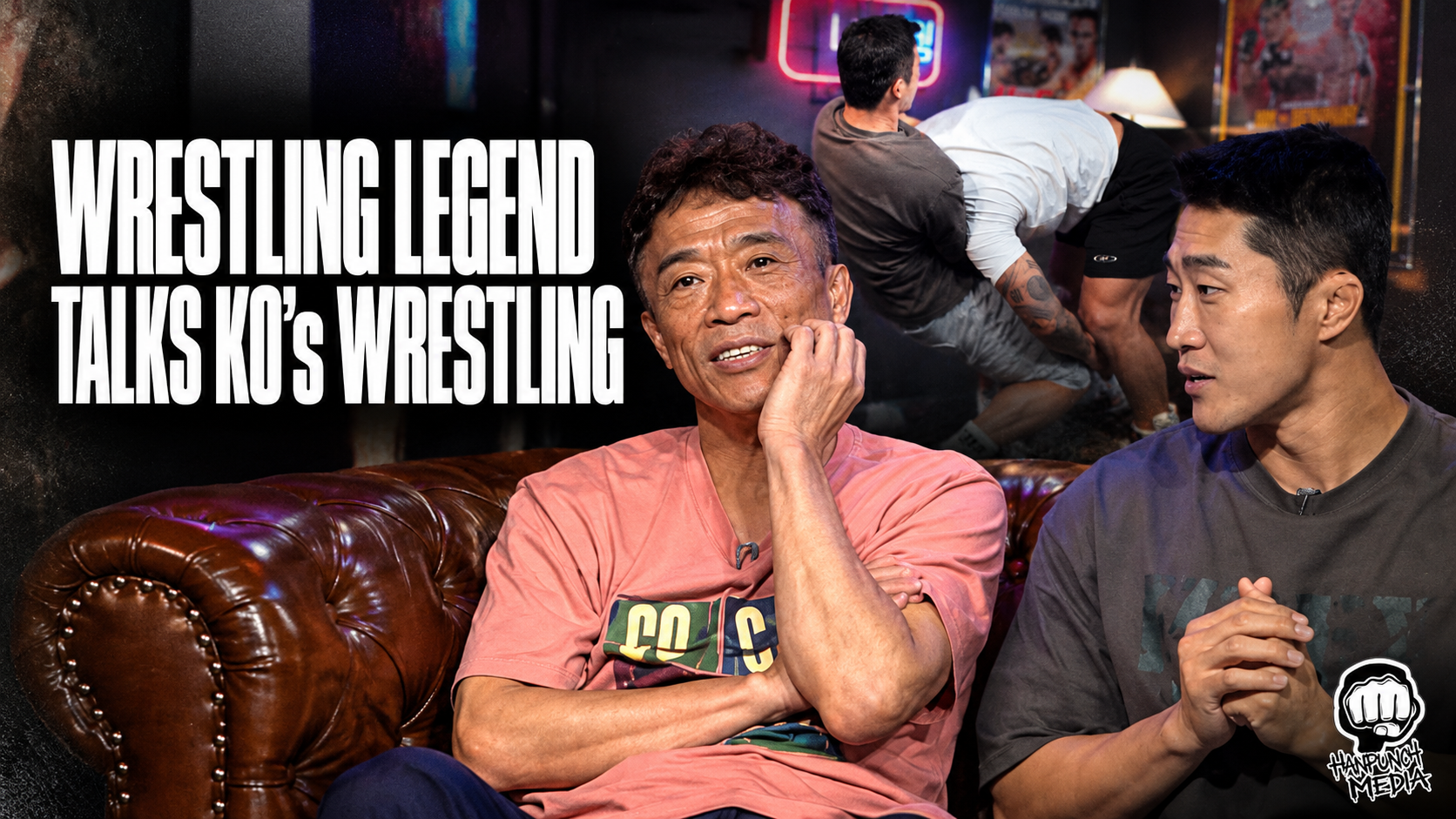
Olympic champion Kwon Ho Sim takes a closer look at Seok Hyeon Ko’s UFC debut, revealing the small technical details that separate good wrestling from elite-level wrestling.
Seok Hyeon Ko has already shown that wrestling can be one of his biggest weapons inside the UFC.
But when one of Korea’s greatest wrestlers watches him compete, there are always more details to find.
On a recent episode of Stungun TV, UFC veteran Dong Hyun Kim sat down with Korean wrestling legend Kwon Ho Sim to review footage from Ko’s UFC debut and get his perspective on how Ko’s wrestling translates to MMA.
What followed quickly became less of a fight reaction and more of an impromptu wrestling clinic.
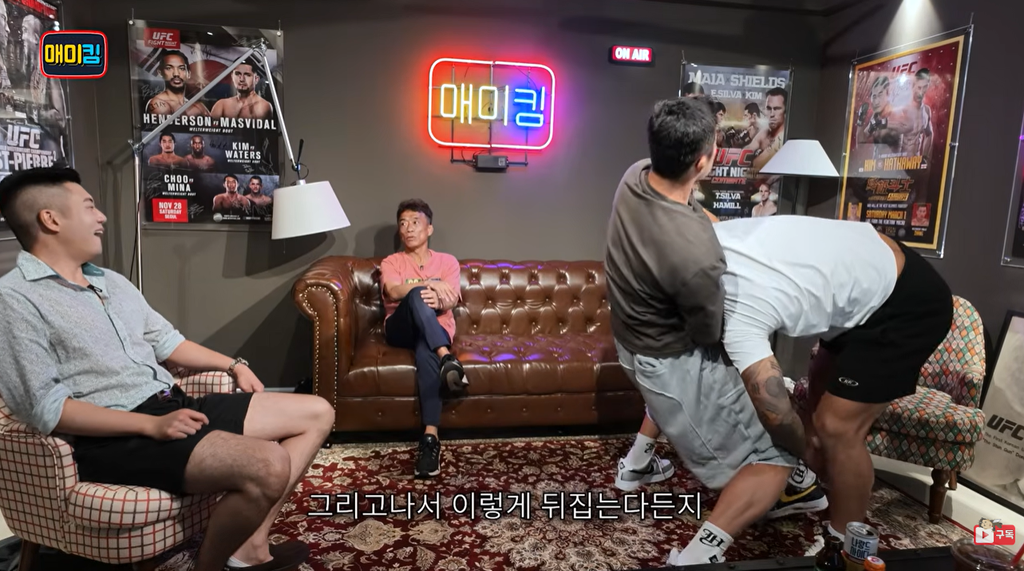
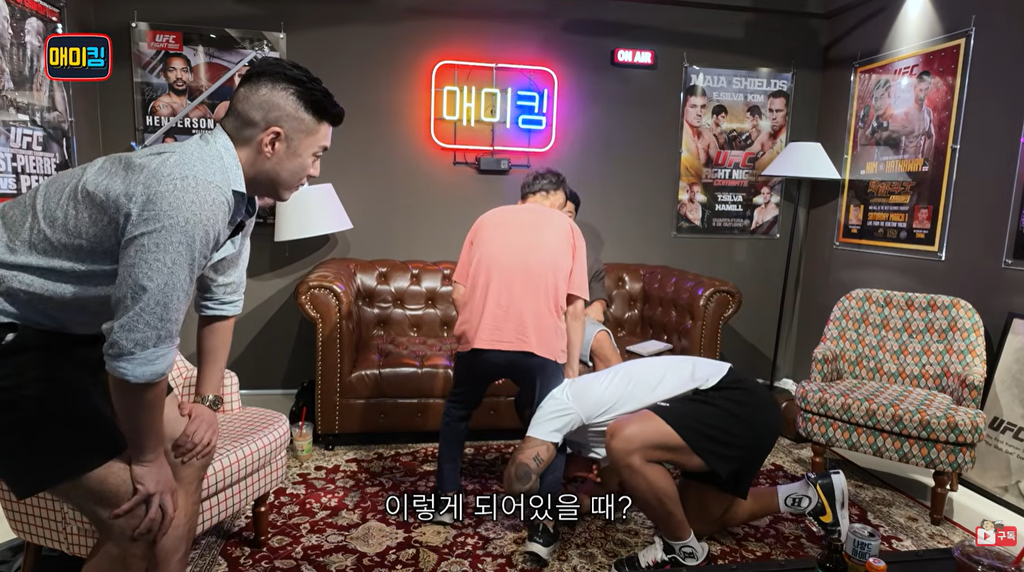
Sim repeatedly got out of his seat to demonstrate adjustments involving underhooks, grips, positioning, head control and balance—often showing Kim details that even he hadn’t immediately noticed.
When Getting Grabbed Becomes an Advantage
One of the first positions they examined involved Ko fighting from double underhooks.
Ko has developed a reputation for being difficult to take down from the position, but Sim immediately noticed a detail involving where the arms and elbows were being controlled.
Rather than simply fighting against the opponent’s grip, Sim demonstrated how changing the point of control could completely alter the leverage available.
For a wrestler with the proper technique, Sim explained, having an opponent secure both arms inside isn’t necessarily a disadvantage.
It can actually provide an opportunity to throw him.
His explanation changed the way Kim viewed the position.
In Sim’s eyes, the fighter shouldn’t necessarily think of himself as trapped.
“You grabbed him. You weren’t the one who got grabbed.”
Sim demonstrated how controlling the opponent’s arm and attacking at approximately a 45-degree angle could turn what appears to be a defensive position into an offensive opportunity.
The Details You Don’t See on Television
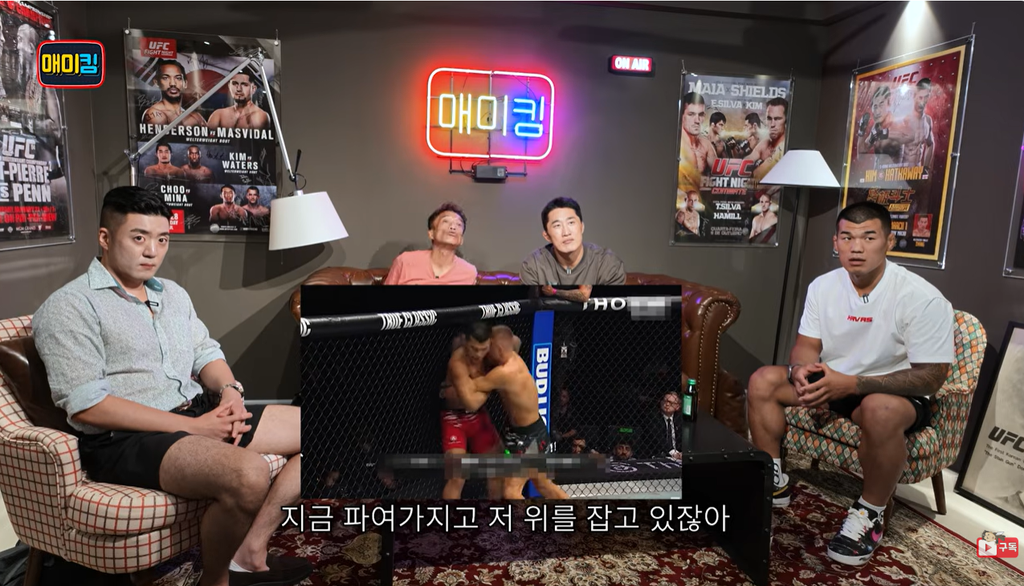
As they continued watching Ko’s fight, Sim began pointing out increasingly subtle adjustments.
At one point, the discussion centered around getting underneath an opponent’s existing grip.
The obvious instruction would be simple: grab lower.
But Kim pointed out the problem.
An opponent isn’t simply going to allow you to move your hands into a better position.
That’s where Sim’s experience became apparent.
Instead of forcing the movement, Sim demonstrated how a wrestler can briefly lift or redirect the opponent first, creating a reaction before suddenly changing levels and securing the desired grip.
Kim immediately recognized the difference.
It’s easy to tell a fighter where his hands need to be.
Sim was explaining how to make the opponent give you the opportunity to put them there.
That became a recurring theme throughout the breakdown.
Small changes in elbow position.
Using the stomach and hips to control the opponent’s head.
Keeping an opponent’s head isolated to one side.
Knowing when to pressure and when to allow an opponent to move.
Even Kim, whose UFC career was built heavily around wrestling and grappling, repeatedly reacted with surprise as Sim demonstrated the details.
Wrestling Has to Be Felt
Eventually, the demonstrations became physical enough that the group joked that they needed to put mats down.
Sim’s explanation for why some of these concepts are difficult to communicate was straightforward.
Wrestling can’t always be learned through words.
Sometimes, you have to learn it through your body.
Kim understood exactly what he meant.
A fighter can understand the instruction intellectually, but the timing, pressure, balance and reactions involved in high-level wrestling often have to be physically experienced before they truly make sense.
And few people understand that better than Sim.
The two-time Olympic medalist won gold in Greco-Roman wrestling at the 1996 Atlanta Games before earning bronze at Sydney 2000.
But during the conversation, Sim also revealed another interesting piece of his wrestling background.
Before becoming synonymous with Greco-Roman wrestling, he had significant freestyle experience and discussed earning a World Junior silver medal before eventually changing disciplines during college.
That background gives Sim an unusually broad perspective when analyzing the wrestling required for MMA.
Sim’s Assessment of Seok Hyeon Ko
Despite spending much of the episode identifying areas Ko could improve, Kwon Ho Sim ultimately liked what he saw.
As they finished reviewing Ko’s UFC debut, his assessment was simple:
“He did well.”
More importantly, Sim offered advice that went beyond any individual wrestling technique.
During his own competitive career, Sim said he approached matches with the mentality that he wanted to enter, show everything he had prepared, and then walk away knowing he had actually competed his way.
He didn’t want fear of what an opponent might do to prevent him from using the skills he had spent countless hours developing.
According to Sim, too many athletes reach competition and leave without ever showing what they learned.
His philosophy was different.
If you’ve learned something, competition is where you’re supposed to use it.
It’s simple advice from someone who reached the highest level wrestling has to offer.
And for Ko, who is still building his UFC career, having one of Korea’s greatest wrestlers dissect his game might be an opportunity few fighters ever receive.
There were corrections.
There were plenty of details.
But there was also approval.
And if Ko can continue combining his existing MMA grappling with the kind of technical knowledge Sim demonstrated, the wrestling fans have already seen inside the Octagon may only be the beginning.
Follow HanPunch for the latest Korean MMA news, exclusive fighter interviews, event coverage, and the stories shaping combat sports across Asia.
About The Author



Join the Conversation