

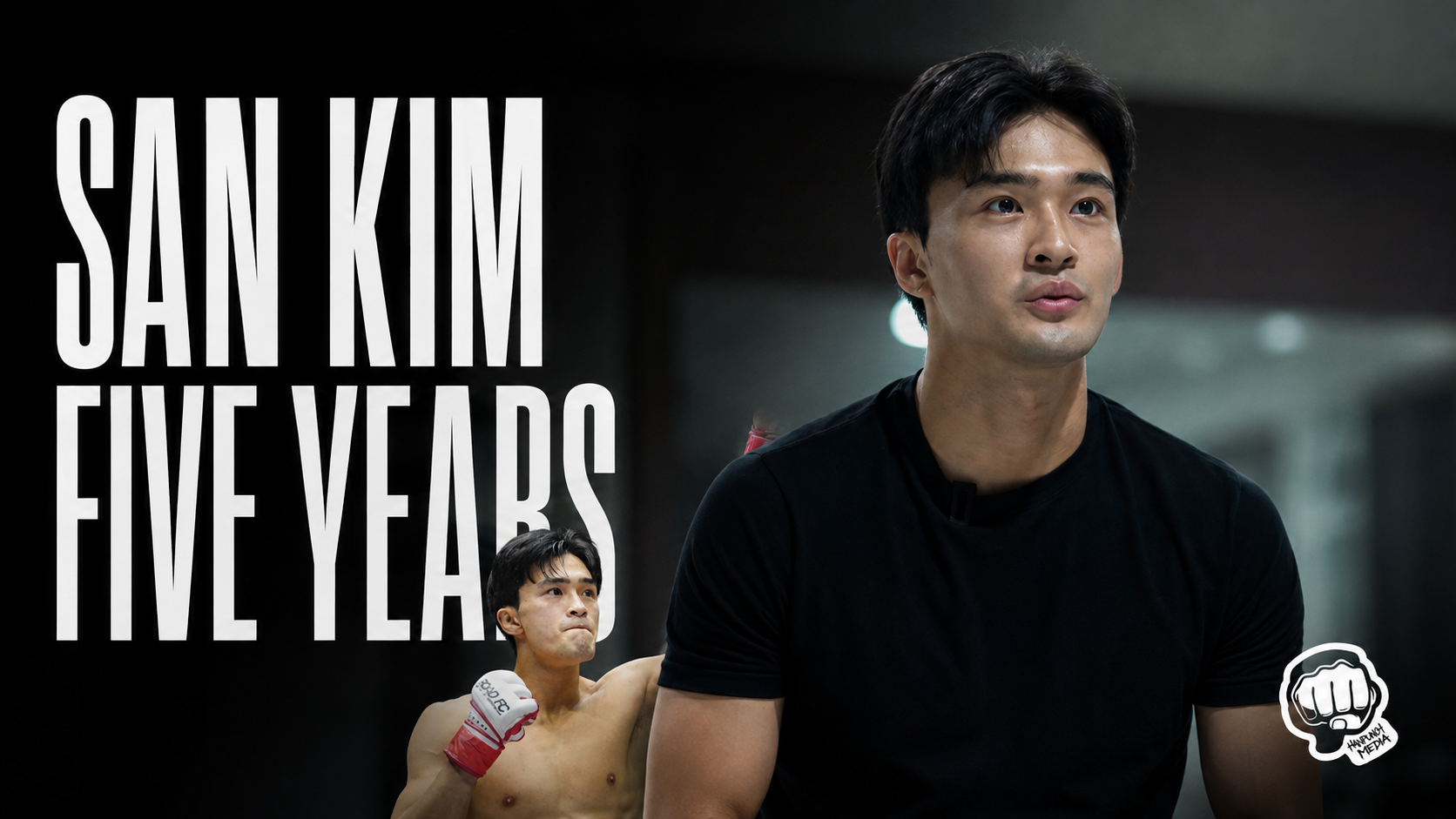
At 25, the ROAD FC lightweight, San Kim, is preparing to dedicate the rest of his twenties to discovering how far he can climb in Korean MMA.
San Kim has placed a deadline on his ambition.
In five years, he will turn 30. For most people, that is simply another milestone. For a professional fighter, Kim sees it as the closing point of a critical period, five years in which his body, experience and competitive opportunities may align better than at any other time in his career.
That realization has given the 25-year-old ROAD FC lightweight a clear mission.
“These five years are extremely important for me as a fighter,”
Kim said during a recent BEHINDER feature.
“I’m going to give everything I have and burn it all.”
Kim wants to become one of Korea’s best, win a domestic title and eventually test himself on the international stage. But his story is not built around a naturally gifted athlete who always appeared destined for professional competition.
It began with a child who believed becoming stronger might help him protect the only parent he had left.
Learning to Become Strong
Kim was in fourth grade when his father unexpectedly died.
As an only child raised by his mother, he began thinking about what it meant to become strong. When he encountered combat sports on television, he was immediately drawn to the fighters he saw. They appeared powerful, capable and able to protect the people around them.
Kim believed that if he could become stronger, perhaps he could protect his mother as well.
That childhood instinct led him toward martial arts, but Kim did not arrive with an imposing physical foundation. He remembers weighing approximately 45 kilograms when he began, with little muscle and none of the natural strength normally associated with a future professional fighter.
What he did possess was the willingness to stay.
Kim began competing as an amateur while still in middle school. Training alongside adults introduced him to more than fighting techniques. Older teammates bought him meals, supported his development and attended his amateur competitions without expecting anything in return.
The gym became one of the places where he learned about relationships, responsibility and humility.
His coaches understood that early success could easily distort a young fighter’s confidence. Kim already had recognition among his classmates simply because he trained and competed. They worked to ensure that attention did not turn into arrogance or complacency.
According to his coaches, Kim listened, remained respectful and continued training consistently through the years when many young athletes disappear from the sport.
More Than Punching Hard
Kim’s understanding of fighting has changed considerably since those early years.
He once believed success depended primarily on being faster, punching harder and possessing the ability to knock someone unconscious. Power still matters, but he now sees the exchanges preceding a clean strike as equally important.
At lightweight, Kim believes fights are often decided by distance, positioning and initiative. The better fighter is not always the one who throws with the most force, but the one who takes the correct space first and prevents the opponent from establishing a comfortable range.
Rather than attempting to solve every problem with punches, Kim wants to read what is happening in front of him, establish distance and make his opponent feel unable to find the same target.
That shift reflects a fighter beginning to understand the smaller battles inside an MMA contest: controlling the edge of range, finding angles inside the cage and recognizing when to enter or withdraw.
It is a more patient view of fighting than the one Kim carried as a younger athlete, but it has not diminished his intensity.
Those around him still describe him as fire.
Teammates speak about his competitiveness and persistence, along with the speed and sharpness of his technical attacks. He is also known as the person willing to suggest beginning the hardest part of training first.
That attitude can pull the people around him forward.
“Let’s do the difficult thing together,” is the type of message teammates have come to expect from Kim. His willingness to begin uncomfortable work reminds others that improvement rarely starts with what feels convenient.
Making Jiu-Jitsu His Sharpest Weapon
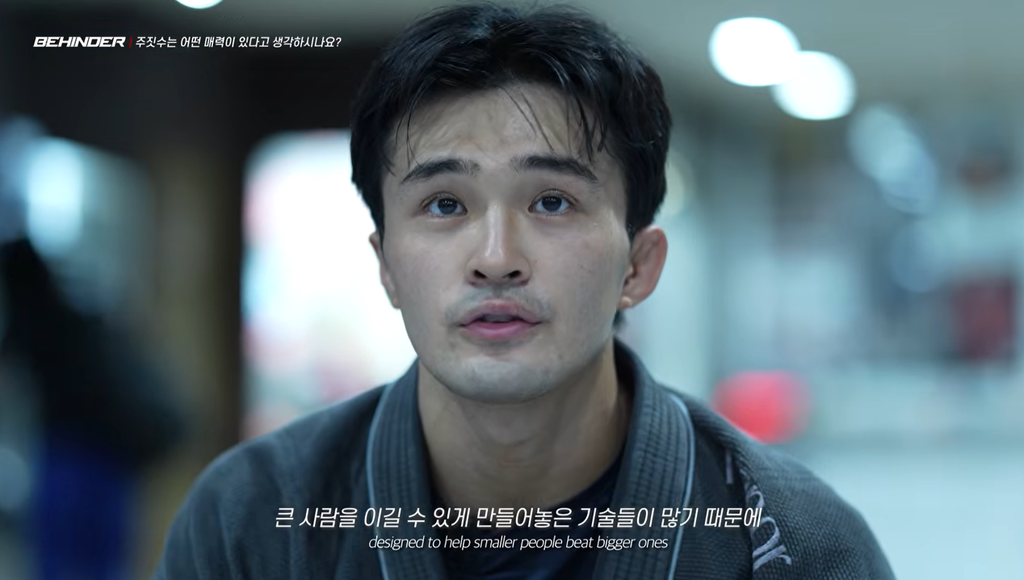
Brazilian Jiu-Jitsu remains central to San Kim’s identity as a fighter.
Its appeal was immediate. Unlike athletic qualities that can be limited by genetics, Kim saw that technical ability could continue growing through accumulated time and practice. Jiu-Jitsu also gave a smaller athlete a system for defeating opponents who were larger, stronger or more physically gifted.
That principle spoke directly to someone who did not consider himself naturally powerful.
In MMA, Kim views his submission ability as a weapon opponents can never completely ignore. Even when he loses other portions of an exchange, his ability to recover position, scramble and attack submissions can immediately reverse the direction of a fight.
One opening can end everything.
But Kim does not want his grappling identity to become an excuse for weaknesses elsewhere. A fighter who is badly outmatched in striking or wrestling cannot depend on Jiu-Jitsu alone, particularly at a higher level.
His objective is to build a complete MMA game while keeping his submission ability sharper than the rest.
Kim wants to prove that his Jiu-Jitsu is special not because he competes like a pure grappler, but because he can apply it at the correct moments within the combination of striking, wrestling and ground fighting.
Training for the Takedown After the Takedown
Conditioning has become another major focus.
San Kim compares a grappler’s takedowns to ammunition. A fighter with only one or two explosive attempts may begin to lose confidence when those attacks are stopped. A fighter capable of repeatedly wrestling can remain composed, adjust and continue applying pressure.
Kim does not want fatigue to determine what techniques remain available to him.
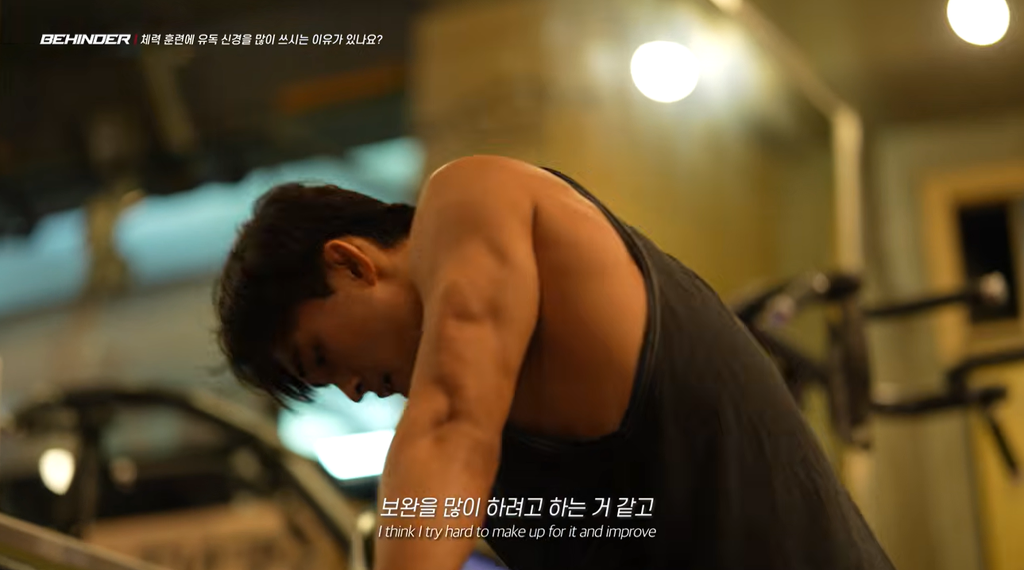
His preparation includes running, jump-rope work and extended conditioning sessions intended to keep his movement intact deep into a fight. Jumping rope is particularly valuable because it strengthens the calves and prepares him to continue using footwork after repeated bursts of movement.
Kim approaches these sessions through completion rather than negotiation. If the day’s goal is 10 kilometers, he finishes 10. If the target is five, he completes five.
He also reads the Bible as part of managing his mentality. Kim connects with the idea that people can be refined through pressure in the same way valuable metals are tested. Training does not eliminate fear, but it develops the ability to continue operating within it.
Kim admits that he rarely feels completely prepared. There is always another weakness to address or another possibility to consider. Yet he has learned to use that anxiety as fuel.
Losing after incomplete preparation produces regret. Losing after exhausting every controllable option is different.
What Fighting Changed Outside the Cage
For Kim, martial arts also provided the confidence to confront his past.
He describes his younger self as insecure and unnecessarily loud the behavioral equivalent of a small dog barking to disguise its fear. Without fighting, he believes he might have continued avoiding that version of himself because he was embarrassed by it.
Training gave him enough confidence to look back honestly and begin correcting his behavior.
That process is one of the qualities Kim values most about combat sports. A fighter cannot completely hide inside the cage. Competition forces athletes to reveal their preparation, their decisions and their responses to pressure.
Martial arts taught Kim to represent himself with greater honesty while remaining humble through both victory and defeat.
Humility has also helped stabilize him emotionally. Fighters who allow success to inflate their identity can collapse when that image is broken. Kim believes remaining grounded has allowed him to recover more quickly when results have gone against him.
Building a Career That Can Survive Reality
Kim understands that ambition alone does not pay for a fighting career.
He now has a family, and professional MMA requires sacrifices that extend beyond the athlete. Training occupies his days, while conditioning can push his schedule late into the evening. His wife understands his goal and supports him during fight camps, often adjusting her own life around the demands of his preparation.
Kim does not take that support lightly.
He also believes fighters must think intelligently about financial stability. Until an athlete becomes a major champion or reaches a well-paying international promotion, competition alone may not provide a dependable living.
A cancelled fight, an injury or an unexpected loss can immediately disrupt months of planning.
Kim attended university partly because he wanted to build a life that could support his athletic career rather than eventually force him to abandon it. Studying physical training allows him to expand his knowledge, teach others and create a professional foundation outside competition.
That stability is not a retreat from fighting. Kim sees it as something that may help him continue longer, recover from setbacks and attempt another climb when plans fall apart.
Growing With ROAD FC
Kim also speaks with appreciation for ROAD FC and its place in Korean MMA.
Following the disappearance of Spirit MC, there was a period when Korea’s professional MMA infrastructure appeared uncertain. ROAD FC helped create a stable domestic platform, attracted major sponsors and provided a stage for fighters who later reached organizations such as the UFC.
Kim values the opportunity to compete within that history.
He is especially grateful that ROAD FC continued offering him opportunities when his results were inconsistent. Rather than feeling disconnected from the promotion during difficult periods, those chances strengthened his relationship with it.
For fighters and gyms, Kim believes the continued existence of a dependable promotion is often more important than any single event. Organizations have repeatedly appeared and disappeared in Korean MMA, sometimes leaving athletes without the opportunity to complete their careers on their own terms.
ROAD FC remaining active has given Kim a place to continue proving himself.
His immediate goal is to reach the top of that domestic stage. Beyond it, he wants to discover whether his skills can succeed internationally.
Five Years Without Regret
Kim does not claim that his prime has already arrived.
Those around him believe he still has considerable room to develop. His technical understanding is becoming more sophisticated, his conditioning remains a daily project and his strongest competitive years may still be ahead.
But potential only matters if it is used before the opportunity disappears.
That is why turning 30 has become such a meaningful marker. Kim is not saying his career must end at that age. He is recognizing that the next five years cannot be treated casually.
He wants to reach the end of that period knowing he did not leave his development unfinished.
There is a domestic title to pursue, an international stage to test and a ceiling that remains unknown. San Kim now has five years to find it and he intends to spend every one of them fighting his way upward.
Follow HanPunch for the latest Korean MMA news, exclusive fighter interviews, event coverage, and the stories shaping combat sports across Asia.
About The Author






Join the Conversation